
Shipping company under pressure to ship coal
Swiss Re terminates reinsurance for the transport of steam coal
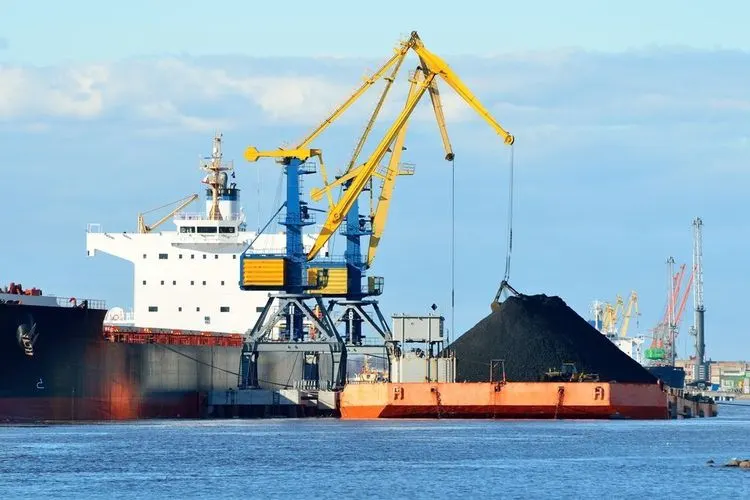
Shipping companies shipping coal around the world are in the crosshairs of some financiers who are cleaning up their businesses in the absence of a truly global initiative by nations to cut the dirtiest fossil fuel.
A sign that investors are taking the initiative is that six European firms, which together represent more than 5% of the estimated annual capital needs of the bulk industry of $ 16 billion, told Reuters that they have shown their exposure to ships, coal transport, either reduce it or consider it.
Such freighters - gigantic ships up to 270 meters (885 feet) in length that can carry hundreds of thousands of tons of cargo - are the cheapest way to move coal and other commodities like iron ore and grain in bulk.
Swiss Re (OTC: SSREY) told Reuters news agency that from 2023 it will no longer cover the transportation of steam coal through reinsurance contracts where it covers a portfolio of insurance policies. She withdrew from direct insurance for coal shipments in 2018.
"There is a lot more pressure on insurance companies when it comes to ESG," said Patrizia Kern-Ferretti, head of marine at Swiss Re Corporate Solutions, referring to the area of sustainable investments. "I hear from brokers that they are struggling to place coal policies on the insurance market," she added. "More and more companies are applying direct guidelines."
Esben Saxbeck Larsen, senior portfolio manager at Danica Pension, Denmark, said she preferred greener shipping companies as they had the best risk / return characteristics. The fund maintains a "close dialogue" with companies about their ESG strategies.
"If we are not comfortable with the answers, we are not investing in the company," he added, without going into the details of the methodology.
These pressures pose new challenges for the shipping industry that have so far been little at the center of the coal debate as policymakers and investors focus on the production and consumption of the fuel rather than transporting it.
Andreas Sohmen-Pao, chairman of BW Group, which operates a diversified fleet of oil and gas tankers, offshore vessels and bulk carriers, said ESG pressures on investors and banks - the industry's financiers - are increasing.
"How that affects bottom line is another question. Sometimes a sector is shunned and returns only get better when supply decreases," he added.
"Everyone has to do what they think is right. Sometimes you can also achieve counter-intuitive effects.
Good money can be made moving coal, which accounts for about 30% of the volume of cargo, and prices have hit record highs given the shortage of fuels such as natural gas that the pandemic-recovering global economy needs.
And demand will continue for decades after major consumers like China and India failed to join a pact to phase out coal-fired power at the UN climate talks held in Glasgow this week. As Europe and the United States shut down coal-fired power plants, Asian countries are building nearly 200 new ones.
Khalid Hashim, managing director of Precious Shipping, one of Thailand's largest dry cargo carriers, said investors should focus on consumers and producers of coal.
"All we do is take the coal from the place of origin to the place of consumption, like a messenger delivering its message," he added. "Attacking the shipowners seems like the easiest way out as we have no voice".
CAPESIZE CHARGES
The six firms that spoke to Reuters about their coal concerns own, finance, insure or reinsure together more than $ 1 billion in capital in the bulk industry, based on the estimated value of the marine assets.
Major shipping financiers in the broader sense are currently providing the industry with nearly $ 290 billion in loans annually, with capital requirements for the bulk segment estimated by analysts and Reuters to be around $ 16 billion.
The investor retreat, part of a broader financial industry move away from fossil fuels, threatens to drive up financing and insurance costs for some shipping companies in the bulk carrier sector, which accounts for nearly half of the world's ocean freight.
London-based specialist asset manager Marine Capital, which owns and operates marine facilities on behalf of institutional investors, said it expected donors not to support investments in the largest bulk carriers that typically carry coal, known as Capesize ships .
"Small bulk carriers below Panamax size have relatively modest amounts of coal they carry, and our experience suggests that financial institutions consider their relationship to coal to be negligible," said Tony Foster, CEO of Marine Capital.
Another prominent marine investor, Tufton Investment Management, said it has been increasingly curtailing its exposure to coal exploration, particularly steam coal, since 2018 by giving preference to charterers who are less likely to use the fuel promote.
"For example, we prefer farms to miners and utilities," said Paulo Almeida, the chief investment officer.
Regardless, at least two major ports are undergoing major changes: Antwerp, for example, has turned away from coal, while Peel Ports is converting its former coal import terminal at Hunterston in Scotland to run offshore wind turbines, dry docks for ships, aquaculture and energy recycling.
APPLY LIPSTICK
Some bulk carriers are trying to stay one step ahead of the climate curve by realigning their business away from fossil fuels. Others, who have made erratic profits over the past few years, are reluctant to turn away from the returns that coal offers.
The Monaco-based company Eneti is one of the first-mentioned and has completely withdrawn from the bulk shipping sector this year in order to supply special ships for the offshore wind sector.
"An important consideration when we got out of the bulk sector was steam coal," CEO David Morant told Reuters, saying the attempt to clean up coal transport was "just lipstick."
"As a listed company, renewable energies through offshore wind power are growing faster, more environmentally friendly and more attractive for our investor base".
Purus Marine, whose founding shareholder is the leading US investment company Entrust Global, also claims to focus on more environmentally friendly sectors.
"Our business model is to own ships and maritime infrastructure that operate in the offshore renewable energy, seafood, ferry and climate-friendly sectors of industrial shipping," said CEO Julian Proctor.
HIGHER SHIP PRICES
The effects of higher prices for shipping coal would be felt most in Asia, which consumes 80 percent of the world's coal supply and is more dependent than other regions on coal-fired power generation.
Although emissions from burning coal are the largest contributor to climate change, many developing countries make it a priority to power a rapidly growing population rather than switch to renewable energy.
An abrupt move away from coal would drive up logistics costs for producers and consumers, according to Vuslat Bayoglu, managing director of the South African investment firm Menar, which holds shares in South African thermal coal, anthracite and manganese producers.
"The worst scenario would be that countries would be plunged into darkness and industries hit hard, which would usher in some kind of world economic crisis," he added. "This would be highly irresponsible as many countries are in the process of leaving a long period of recession and COVID-related decline behind them."