
Nvidia Stock Drops 3% Amid Antitrust Probe in China
Antitrust investigation in China and escalating U.S.-China tech tensions put Nvidia and other chipmakers in the spotlight.
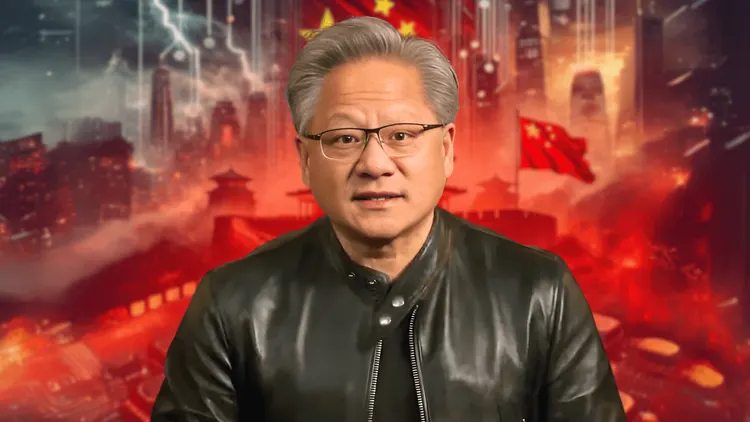
Nvidia (NVDA), the global leader in graphics processing units (GPUs) and artificial intelligence (AI) hardware, witnessed its stock dip nearly 3% during mid-day trading on Monday. The decline follows an announcement by China's State Administration for Market Regulation (SAMR) that it has initiated an antitrust investigation into Nvidia’s business practices. The move comes as part of broader scrutiny by Beijing aimed at balancing competition in its domestic semiconductor industry while responding to increasing restrictions imposed by the United States on chip technology exports to China.
The Mellanox Acquisition Under the Microscope
The crux of China’s antitrust probe lies in Nvidia's 2020 acquisition of Mellanox Technologies, an Israeli chip design company, for $6.9 billion. At the time of the acquisition, Chinese regulators granted approval with specific conditions, including prohibitions against bundling Mellanox products with Nvidia’s offerings and commitments to supply products to Chinese companies on fair terms.
However, recent developments suggest Chinese regulators suspect potential violations of these conditions. The allegations point to the possibility that Nvidia’s integration of Mellanox’s technology might limit competition in the sector, particularly as China seeks to reduce its reliance on foreign semiconductor technology. Nvidia, which has been central to advancements in AI and high-performance computing, stands at the forefront of this geopolitical and economic battleground.
Broader Implications for U.S. Chipmakers
The repercussions of this investigation extend beyond Nvidia. Fellow semiconductor firms Advanced Micro Devices (AMD) and Marvell Technology (MRVL) also experienced declines of 4.4% and 5.2%, respectively. This reflects investor concerns about the vulnerability of U.S. chipmakers to increasing regulatory pressure from China, particularly as the Biden administration tightens export restrictions on advanced semiconductor technologies.
In a related move, the U.S. government recently announced restrictions on the export of 24 types of semiconductor manufacturing equipment and three types of software tools used in chip design and production. Additionally, 140 Chinese entities accused of aiding Beijing’s chip development efforts have been added to the U.S. trade blacklist. These measures aim to curb China’s ambitions to achieve self-sufficiency in semiconductors, a key component of its technological and military strategies.
Legal Challenges Closer to Home
Adding to Nvidia’s troubles, a lawsuit filed in September by Texas-based startup Xockets alleges that Nvidia and <a class="tvreplink" target="_blank" href="https://www.tradingview.com/chart/?symbol=Nasdaq%3AMSFT">Microsoft (MSFT) engaged in monopolistic practices and patent infringement related to advanced data processing units (DPUs). Xockets claims its patented technology, adopted by Mellanox in 2016 without authorization, has been exploited by Nvidia post-acquisition.
The lawsuit underscores growing tensions between established tech giants and smaller innovators over intellectual property rights. If substantiated, such claims could deepen scrutiny of Nvidia’s business practices and provide ammunition for regulators in the ongoing Chinese probe.
The Geopolitical and Market Fallout
This antitrust investigation marks another chapter in the intensifying technological standoff between the U.S. and China. As Washington imposes sweeping restrictions to limit China’s access to cutting-edge semiconductor technology, Beijing is leveraging its regulatory powers to counterbalance the influence of dominant U.S. companies in its domestic market.
For Nvidia, the stakes are particularly high. The company has been a key beneficiary of surging demand for GPUs and AI-focused hardware, driving its market value to unprecedented levels. However, its dependence on the Chinese market—one of the largest consumers of advanced semiconductors—means any regulatory clampdown could significantly impact revenue streams and market share.
Conclusion
Nvidia’s antitrust challenges in China highlight the increasingly precarious position of U.S. tech giants operating in foreign markets under geopolitical strain. As Beijing sharpens its regulatory tools and Washington ramps up export restrictions, Nvidia and its peers face a delicate balancing act: navigating compliance in China while aligning with U.S. national security priorities. The coming months will reveal whether Nvidia can weather these headwinds or face deeper market corrections.