
Mixed US economic data fuels recession fears on Wall Street
Markets expect the Fed to hike rates further this year before changing course in 2023
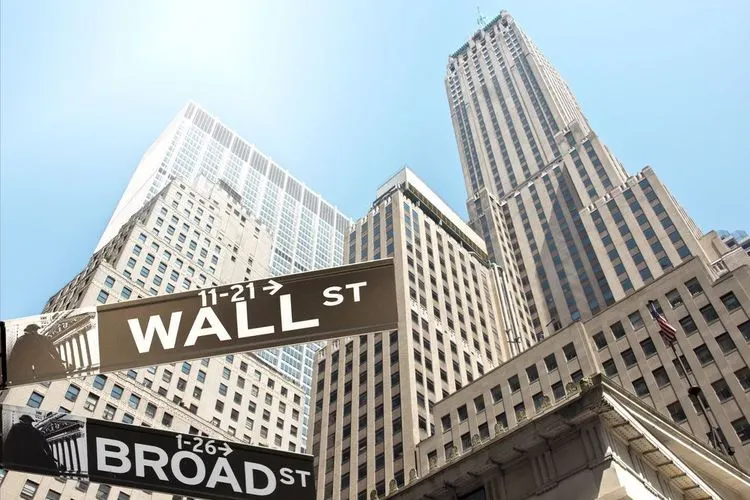
Investor fears that the US economy is overheating are giving way to recession fears as analysts fear the Federal Reserve's rapid monetary tightening could stall growth.
Markets are pricing in an aggressive stance for Fed rate hikes in the coming months, while signaling expectations that the central bank will change course and start cutting rates next year.
"We've seen the consumer squeezed by higher living costs and monetary policy, which could lead to a consumer-led recession," said Erin Browne, portfolio manager at Pimco.
Economic reports released over the past two weeks have added to the feeling of uncertainty. Important surveys of the US service and manufacturing sectors by the Institute for Supply Management showed that US companies are hiring fewer new employees. The weekly jobless claims figures also point to slowing momentum. However, Friday's monthly employment report pointed to robust hiring, while inflation in May hit its highest level since late 1981.
Jan Hatzius, chief economist at Goldman Sachs, said there was "no doubt the job market is cooling off," adding that "vacancies and layoffs are falling, jobless claims are rising, the ISM -Employment indices in manufacturing and services have fallen to contractionary levels and many listed companies have announced a hiring freeze or slowdown."
Still, Hatzius said "fears of an impending US recession have eased somewhat" after figures showed the US economy added 372,000 jobs in June, far beating expectations.
The June jobs report also bolstered expectations that the Fed will hike rates by 0.75 percentage point at the end of July, taking the central bank's policy rate from 0-0.25 percent to a range of 2.25-2.5 percent in early 2022 percent would bring.
The rate hikes have already pushed up the cost of borrowing in the US, triggered sharp selling in the corporate bond market, triggered the worst sell-off on Wall Street in the first half of the year since 1970 and helped the dollar surge against its peers.
This combination has resulted in financial conditions reaching their most severe since the coronavirus crisis began in 2020, according to an index compiled by Goldman. A tightening of financial conditions usually affects the economy as a whole and weighs on production.
Even after the strong jobs report, an ongoing Atlanta Fed economic forecast suggests manufacturing will contract at an annualized rate of 1.2 percent in the second quarter of this year, after falling 1.6 percent in the first quarter.
Andrew Hollenhorst, Citigroup's chief US economist, noted that while the strong June jobs report "strongly contradicts the view that the US economy is in or near a recession," the Fed's focus on "A slowdown in the economy to curb inflation significantly increases the risk of a recession in 2023." He added that the very tight labor market could make a "soft landing" that much more difficult.
There are also warning signs in the US Treasury market. Two-year government bond yields are about 0.04 percentage points higher than ten-year bonds. The so-called inversion of the yield curve, where yields on shorter-dated securities are higher than their longer-dated counterparts, is usually viewed as a gloomy sign for the economic outlook.
For the past five decades, every yield curve inversion has been followed by a US recession within six months to two years. The first yield curve inversion this year in March would put the US headed for a recession by early 2024 at the latest, a prediction mirrored in other parts of the market.
"Right now, there is a lot of uncertainty. Investors have very different probabilities as to whether the recession will hit in the next 12 or 24 months," said John Madziyire, Vanguard's head of US Treasuries. "But what has definitely happened is a deterioration in consumer and business sentiment."
This worsening outlook is also reflected in the Fed's rate hike expectations. Trading in the futures market suggests investors expect the Fed to hike interest rates to a peak of around 3.5 percent by February 2023, before beginning a rate cut below 3 percent by November of that year.
A US inflation report this week will shed more light on the expected trajectory of Fed rate hikes. According to a FactSet poll, Wall Street economists expect the annual rate of consumer price growth to rise to 8.8 percent in June, up from 8.6 percent in May.
"With last week's jobs report still showing solid wage gains amid a record-breaking job market, barring a significant disappointment in inflation this week, the Fed should be on track to raise rates at its upcoming meeting by a further [0.75 percentage points]," according to the economists at Deutsche Bank.