Kairos Power and Google Team Up to Lead the Future of Nuclear Energy
Google Partners with Kairos Power to Deploy Small Modular Reactors, Advancing Clean Energy Goals
 Editorial Team (ET)October 5, 2026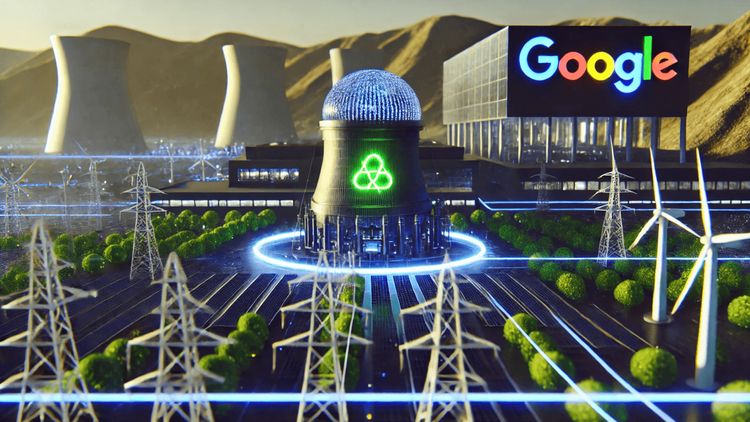
Google has taken a decisive step toward revolutionizing its energy sourcing by entering a landmark agreement with Kairos Power. This collaboration is set to power Google’s data centers with small modular reactors (SMRs), marking a significant moment in the global transition to clean energy. With a commitment to deploy the first reactor by 2030 and expand to 500 MW of capacity by 2035, this partnership is poised to change the landscape of energy solutions for tech giants.
An Unprecedented Partnership for Clean Energy
The Master Plant Development Agreement between Google and Kairos Power isn’t just a purchase of clean energy—it's a partnership aimed at innovation. Kairos Power will develop, construct, and operate advanced nuclear plants, while Google will purchase energy, ancillary services, and environmental attributes through power purchase agreements (PPAs). These plants will be strategically located to supply clean electricity to Google's data centers, helping the company meet its ambitious 24/7 carbon-free energy goals by 2030.
This agreement marks the first corporate deal in the U.S. for multiple deployments of a single advanced reactor design. The significance of this cannot be overstated—Google is effectively accelerating the commercial viability of SMRs, a key technology in the future of carbon-free power generation.
The Role of Kairos Power’s SMR Technology
Kairos Power is leveraging its cutting-edge fluoride salt-cooled high-temperature reactor (KP-FHR) technology to bring modular nuclear energy to the market. By adopting an innovative vertical integration strategy, the company is positioning itself to deliver reactors that are safer, more efficient, and quicker to deploy than traditional large-scale nuclear plants.
One of the key features of the KP-FHR reactor is its use of molten salt as a coolant, coupled with solid TRISO (tri-structural isotropic) ceramic fuel. This design allows for a safer, low-pressure system that can operate at higher temperatures, increasing overall efficiency. The KP-FHR system is expected to be a cornerstone of Google’s clean energy strategy, enabling reliable, carbon-free power.
Why SMRs Are a Game-Changer for Google
SMRs, such as those developed by Kairos Power, offer a modular and scalable solution to energy challenges. Unlike traditional nuclear power plants, SMRs can be built in factories and transported to their deployment sites, significantly reducing construction time and costs. This makes them an attractive option for corporations like Google, which require dependable and carbon-free energy to power their operations.
Google’s current reliance on renewable energy sources like solar and wind is commendable but has limitations due to intermittency. By integrating SMRs into its energy portfolio, Google can ensure a stable, 24/7 supply of clean power, allowing the company to meet its net-zero goals without compromise.
The Strategic Importance of the Partnership
This deal is more than just a power purchase agreement; it represents a long-term collaboration aimed at developing next-generation energy solutions. The agreement allows Kairos Power to deploy a series of reactors under an iterative development model, with each deployment improving upon the last. This iterative approach will help Kairos Power drive down costs, improve efficiency, and accelerate the commercialization of its reactor technology.
As Kairos Power CEO Mike Laufer said, “Our partnership with Google will enable Kairos Power to quickly advance down the learning curve as we drive toward cost and schedule certainty for our commercial product.” The collaboration is a blueprint for how corporations and innovators can work together to scale cutting-edge technologies.
Google’s Commitment to 24/7 Carbon-Free Energy
Google has long been a leader in corporate sustainability. The company was the first to sign corporate purchase agreements for renewable energy, and it continues to set new benchmarks for clean energy adoption. This partnership with Kairos Power is the latest example of Google’s forward-thinking approach to energy sourcing, aiming to ensure that every watt of electricity it uses comes from carbon-free sources by 2030.
Google Senior Director of Energy and Climate, Michael Terrell, emphasized the broader impact of this agreement: "This landmark announcement will accelerate the transition to clean energy as Google and Kairos Power look to add 500 MW of new 24/7 carbon-free power to U.S. electricity grids." The deal not only supports Google’s operations but also sets a precedent for how advanced nuclear technologies can contribute to a greener grid for everyone.
Molten Salt Reactors: The Technology Behind the Partnership
Molten salt reactors (MSRs) like the KP-FHR are a type of nuclear reactor that use molten fluoride salts as a coolant. These reactors are safer and more efficient than traditional nuclear designs because they operate at low pressure and can reach higher temperatures. Kairos Power’s version of the MSR uses solid fuel rather than liquid fuel, further enhancing its safety profile.
The use of TRISO fuel, which is encased in multiple layers of ceramic and graphite, makes the reactor more resistant to high temperatures and physical damage, ensuring safe operations. These advanced features position Kairos Power’s reactors as an essential component of the future energy mix.
The Road Ahead for Kairos Power and Google
With the first commercial deployment targeted for 2030 and a full fleet expected by 2035, the partnership between Google and Kairos Power is laying the foundation for a future where advanced nuclear energy plays a key role in corporate sustainability strategies. By 2035, these reactors will contribute 500 MW of capacity to U.S. grids, helping Google and other corporations transition to cleaner energy sources.
Kairos Power’s ability to iterate and improve its reactor designs with each deployment will be crucial in driving down the cost of SMRs and making them a viable option for a broader range of industries. As this partnership evolves, it will serve as a model for how companies can collaborate to advance cutting-edge technologies that benefit both business and the environment.
Conclusion: A Bold Step for Clean Energy
Google and Kairos Power’s collaboration represents a bold step toward the future of clean, reliable energy. This partnership not only supports Google’s net-zero goals but also positions Kairos Power’s SMR technology as a key player in the energy transition. By 2030, Google will be using energy from some of the most advanced reactors ever built, setting a new standard for corporate sustainability.
The success of this partnership could have far-reaching implications, accelerating the adoption of nuclear energy across various sectors and regions, ultimately helping to combat climate change and ensure a stable, clean energy future.