
Nuclear Energy Collaboration: Argentina and El Salvador Sign MoU
El Salvador partners with Argentina to advance nuclear energy development, marking a pivotal step towards energy security and sustainability.

In a landmark agreement, Argentina and El Salvador have signed a Memorandum of Understanding (MoU) to advance nuclear energy development. This agreement, formalized between the National Atomic Energy Commission of Argentina (CNEA) and the Agency for the Implementation of the Nuclear Energy Program of El Salvador (OIPEN), is a crucial step in El Salvador's efforts to diversify its energy mix and reduce dependence on external resources.
The MoU was signed by Germán Guido Lavalle, President of Argentina's CNEA, and Daniel Alejandro Álvarez, Director of El Salvador’s OIPEN. It aims to facilitate cooperation between the two countries in nuclear technology, focusing on peaceful uses and sustainable development.
Argentina’s Expertise in Nuclear Energy
Argentina has long been a leader in nuclear energy within Latin America. The country operates three nuclear reactors and is currently constructing the RA-10 multipurpose reactor, a 30 MWt reactor. With decades of experience in nuclear technology, Argentina has built a reputation for innovation and leadership in the field, making it an ideal partner for countries looking to develop nuclear energy programs.
Argentina’s expertise extends beyond reactor operations to include training and research. It has supported numerous Latin American nations in developing nuclear capacities through its educational institutes, where experts are trained in the latest nuclear technologies. This tradition of knowledge-sharing will play a pivotal role in helping El Salvador build a sustainable nuclear energy program.
El Salvador’s Nuclear Energy Ambitions
El Salvador is at the early stages of developing its nuclear energy program. The country's energy matrix is currently reliant on external resources, creating vulnerability to global energy market fluctuations. Recognizing the need for greater energy security, President Nayib Bukele has emphasized the importance of adopting nuclear energy as part of the country’s long-term strategy.
At the International Atomic Energy Agency (IAEA) General Conference in Vienna, Álvarez outlined El Salvador’s ambitions, focusing on creating a diversified energy matrix that relies less on external sources, preserves the environment, and improves the lives of its citizens. Nuclear energy is seen as a key pillar in achieving these goals, offering a reliable, low-carbon alternative to fossil fuels.
Key Areas of Collaboration
The MoU sets out several important areas of cooperation between Argentina and El Salvador, including the exchange of scientific and technical information, joint research initiatives, expert missions, and capacity-building programs. These efforts are designed to equip El Salvador with the necessary knowledge and skills to implement a safe and sustainable nuclear energy program.
Argentina’s long tradition of educating nuclear professionals will be instrumental in training Salvadoran experts. Under this agreement, Argentina will provide access to its academic institutions, allowing El Salvador to develop the local capacity needed for the peaceful use of nuclear energy.
Statements from Key Leaders
Germán Guido Lavalle, President of Argentina’s CNEA, expressed pride in supporting El Salvador's nuclear ambitions, highlighting the importance of building local capacities and promoting peaceful nuclear technology. "This is undoubtedly a great step in the development of nuclear energy for El Salvador, and we at CNEA are proud to be able to accompany and assist in this very important initial stage," said Lavalle.
Daniel Alejandro Álvarez, Director of El Salvador’s OIPEN, underscored the transformational impact nuclear energy will have on the country’s energy security and economic development. Álvarez emphasized that nuclear energy would enable El Salvador to achieve reliable and affordable electricity while also contributing to the country's economic and scientific growth.
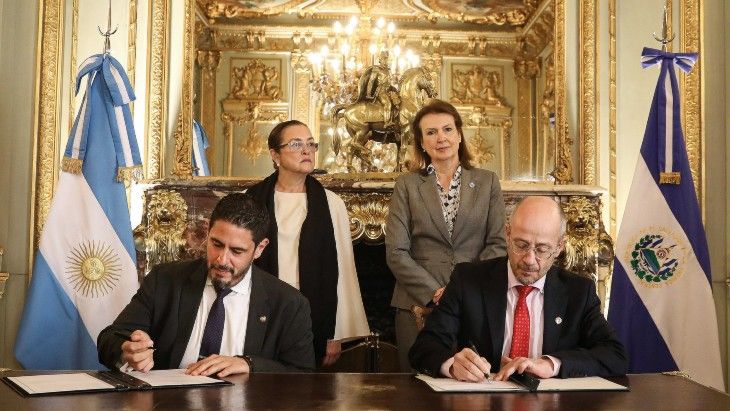 (Image: CNEA)
Broader Impact of the Agreement
The MoU between Argentina and El Salvador signifies not only a bilateral agreement but also a broader commitment to peaceful nuclear development in Latin America. By fostering international cooperation in nuclear energy, both countries are setting an example of how collaboration can accelerate the adoption of sustainable and reliable energy technologies.
Argentina's support will allow El Salvador to advance its nuclear program while adhering to the highest international safety and operational standards. As El Salvador continues to develop its nuclear capabilities, the country will be better positioned to secure its energy future and contribute to global efforts to combat climate change.
Conclusion
The MoU between Argentina and El Salvador represents a pivotal moment in El Salvador’s energy transition. With Argentina’s support, El Salvador is on track to develop a nuclear energy program that will enhance its energy security, drive economic growth, and reduce its environmental footprint. As the two nations collaborate, their efforts will serve as a model for other countries in the region looking to pursue peaceful nuclear energy development.