Japanese Scientists Uncover 200 Million Tonnes of Battery Metal Reserves in Pacific Ocean
Japan's Groundbreaking Discovery Could Revolutionize Battery Production and Resource Self-Sufficiency
 Editorial Team (ET)October 5, 2026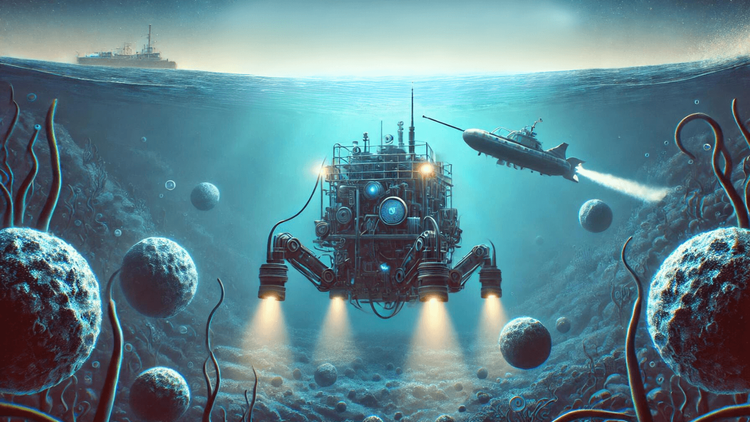
Japanese researchers have uncovered a staggering 200 million tonnes of manganese nodules brimming with essential battery metals within the Pacific Ocean, marking a significant stride in the nation’s quest for sustainable resources.
The discovery, made by a team of experts from the University of Tokyo and the Nippon Foundation, reveals that these fist-sized nodules cover a vast expanse of the seabed near Minamitorishima, a remote island in Tokyo's territory.
Significance of the Discovery
These metal-rich nodules, located at depths of approximately 5,500 meters, are akin to the polymetallic nodules found in the Clarion-Clipperton Zone. They contain substantial quantities of cobalt, nickel, and copper in addition to manganese. According to estimates, the deposit boasts 610,000 tonnes of cobalt—equivalent to 75 years of Japan’s consumption—and 740,000 tonnes of nickel, sufficient for 11 years of use.
Upcoming Extraction Plans
The Nippon Foundation and associated entities are poised to commence large-scale extraction of these nodules next year. The goal is to deliver the mined materials to Japanese companies capable of processing them. By 2026, a joint venture with multiple Japanese firms is expected to be established to develop these minerals as locally sourced materials. The University of Tokyo will lend its expertise by conducting detailed analyses of the extracted materials.
Historical Context and Current Survey
The presence of these nodules was first detected during a 2016 survey conducted by the university and other organizations. A comprehensive sampling survey carried out from late April to early June this year enabled the calculation of the deposit estimates, solidifying the significance of the find.
Challenges and Industry Perspectives
However, extracting these nodules is not without its challenges. BMO analyst Colin Hamilton emphasized the complexity of mining at such depths. “Extraction will not be simple, and we see this as a potential test case for the benefits versus disadvantages of deep-sea mining of materials relating to the global fuel to materials transition,” Hamilton noted in a recent brief. He also highlighted that several key metals consumers are hesitant to purchase deep-sea-sourced materials until further studies assess the potential environmental impact of these activities. Major global banks, including Credit Suisse, Lloyds, NatWest, Standard Chartered, ABN Amro, and Banco Bilbao Vizcaya Argentaria, have implemented policies that preclude funding for deep-sea exploration and extraction.
Future Demand and Industry Impact
Demand for nickel and cobalt is projected to surge dramatically in the coming decades. A White House paper forecasts that demand for these metals will increase by 400% to 600% as battery-powered technology supersedes oil and gas-powered systems.
The Metals Company (Nasdaq: TMC), a pioneer in seabed nodule extraction, announced in early June the successful production of the world’s first cobalt sulphate derived exclusively from seafloor polymetallic nodules.
Regulatory Developments
Meanwhile, the International Seabed Authority (ISA) is in the process of developing the world’s first regulations for underwater mining, aiming to finalize the code by 2025. Despite the current absence of formal rules, deep-sea mining could technically commence as early as July, coinciding with the ISA’s forthcoming meeting.
This monumental discovery underscores Japan’s potential to significantly enhance its resource self-sufficiency while contributing to the global transition to sustainable energy. However, the path forward will undoubtedly require careful navigation of environmental, technical, and regulatory challenges.