
Iron Ore Market Treads Water as EU Tariffs Offset China’s Fiscal Optimism
Navigating Iron Ore’s Balancing Act: How EU Tariff Hikes and China’s Fiscal Moves Shape Global Markets
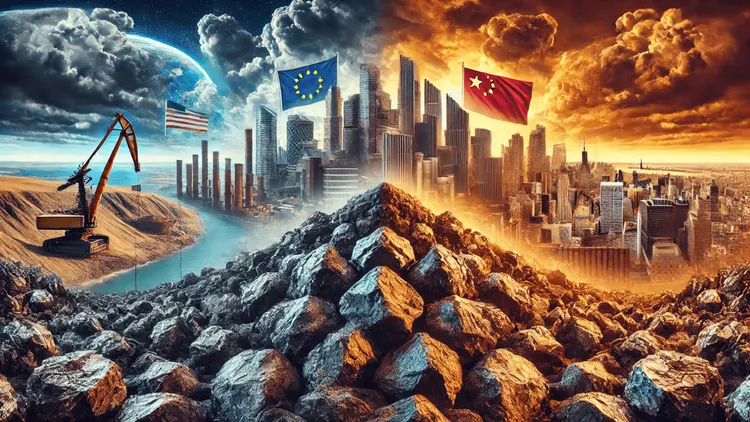
Iron ore futures have been treading water this week, reflecting the complex balance between heightened economic friction and fresh hopes of fiscal recovery. The EU’s recent decision to raise tariffs on Chinese electric vehicles has cast a shadow over steel demand, while China’s proposed fiscal stimulus, aimed at reviving its economy, shines a light of optimism. These counterbalancing forces have left iron ore prices in a narrow range, maintaining market tension as global economic powers navigate competing priorities.
The EU’s Tariff Hike on Chinese Electric Vehicles
In a move aimed at protecting its domestic market, the European Union raised tariffs on Chinese-built electric vehicles (EVs) by as much as 45.3%. This decision, marking the end of a high-profile trade investigation, is expected to dent China’s steel and iron demand, as automotive manufacturing relies heavily on steel for vehicle frames, engines, and parts.
The tariff increase creates a ripple effect, casting doubts on demand for steel-related products in China and the broader European market. As the EU attempts to curb reliance on Chinese imports, market analysts warn that such decisions may strain the global steel and iron ore supply chains, impacting not just trade relations but also the prices of essential commodities.
China’s Fiscal Stimulus: A Ray of Hope?
China, on the other hand, is pushing to restore its economic vitality through a substantial fiscal stimulus package. Reports suggest that Beijing may approve an additional 10 trillion yuan in debt issuance over the next few years, a move intended to stimulate domestic growth amid economic slowdown. This prospect has injected cautious optimism into the iron ore market, as such stimulus would likely increase steel demand for infrastructure and industrial projects.
China’s ambitious plan could elevate the demand for iron ore, counteracting some of the negative impacts of the EU tariff hike. However, with international scrutiny and ongoing concerns about debt levels, China’s ability to execute this plan without facing economic repercussions remains a key consideration for investors.
Iron Ore Market Overview
The iron ore market has been largely rangebound in response to these opposing forces. In China, the most-traded January iron ore contract on the Dalian Commodity Exchange (DCE) edged 0.38% higher to 785.5 yuan ($110.18) per metric ton. Conversely, on the Singapore Exchange (SGX), the benchmark December iron ore contract dropped slightly by 0.29% to $103.55 a ton. The market’s cautious tone mirrors the precarious balance between supply concerns from Europe and demand hopes from China.
Impact of Tariffs and Stimulus on Iron Ore Prices
The EU’s tariff hike has prompted concerns about weakened demand, particularly if Chinese automakers seek alternative markets. However, the expectation of China’s massive debt-fueled fiscal stimulus offers a potential lifeline, helping to keep the market in check. For traders, this situation presents a dilemma: tariffs might dampen demand in one sector, while stimulus spending could boost it in another.
Steel Production and Demand Outlook
China’s steel production is beginning to feel the seasonal pinch as winter approaches. Analysts expect output growth to slow, especially as margins narrow and environmental warnings affect certain regions. Reduced construction activities due to cold weather are further squeezing steel demand, which might pressure prices in the coming months. Galaxy Futures analysts indicate that while there may be limited short-term gains, the long-term outlook hinges on demand stabilization and policy shifts.
Performance of Related Steelmaking Ingredients
Steelmaking materials are also reacting to these market conditions. On the DCE, coking coal and coke—a critical component for steel production—saw declines, with prices dropping 1.01% and 0.27%, respectively. As steel production slows, demand for these inputs typically wanes, aligning with the broader iron ore trend.
Mixed Responses in Steel Benchmarks on Shanghai Futures Exchange
The Shanghai Futures Exchange showed mixed performance in steel benchmarks. While rebar gained 0.23% and wire rod rose by 0.89%, hot-rolled coil slipped by 0.06%, and stainless steel dipped 0.22%. This variation underscores the market’s ongoing struggle with uncertain demand and shifting global trade policies.
Baoshan Iron & Steel Profit Decline: A Snapshot of Market Strain
Adding to these concerns, Baoshan Iron & Steel, China’s largest listed steelmaker, reported a nearly 65% decline in its third-quarter net profit. This decline reflects the broader pressures facing steelmakers amid faltering demand and shrinking margins. As China’s domestic market absorbs the brunt of the EU tariffs, the potential for recovery may be hindered by lackluster demand and financial strain on major players like Baoshan.
Long-term Projections for Iron Ore and Steel Markets
Looking ahead, the iron ore market is expected to remain volatile, balancing between the challenges posed by the EU’s tariff hikes and the hopes tied to China’s fiscal stimulus. If China follows through on its debt issuance, it may help stabilize demand, though recovery could be slow. The iron ore sector may continue to experience fluctuations until a clearer picture emerges from both the EU’s trade policies and China’s economic maneuvers.
Analysts’ Notes on Steel Output and Price Pressures
Galaxy Futures has warned of further price pressures, noting that as colder weather stifles construction demand, steel fundamentals will likely deteriorate. Narrowing profit margins and stricter environmental regulations may also contribute to a deceleration in steel output.
Geopolitical Tensions and Trade Implications
As the EU-China trade conflict deepens, the iron ore and steel markets may face new disruptions. Potential trade shifts could emerge as countries reassess their reliance on Chinese exports, possibly leading to long-term structural changes within the industry.
Environmental Policies and Industrial Impact
China’s commitment to environmental regulations has led to stricter policies in northern regions, further affecting industrial output. These environmental restrictions could limit steel production, putting additional pressure on the industry to adapt to regulatory demands.
Winter’s Effect on Steel Demand and Production
Winter traditionally dampens steel demand as construction projects slow. This seasonal effect is expected to further reduce production in the coming months, amplifying price pressures as the market prepares for its annual slowdown.
Investment Implications in a Rangebound Market
For investors, navigating this rangebound iron ore market requires careful consideration of both risks and potential opportunities. The juxtaposition of tariff challenges against stimulus promises presents a complex landscape, with rewards favoring those who can gauge the impacts of policy changes on commodity markets.
Conclusion
The iron ore market stands at a crossroads, influenced by the EU’s tariff hike on Chinese EVs and China’s proposed fiscal stimulus. As the world’s largest steel consumer, China’s economic maneuvers will be closely monitored by investors and stakeholders. In a rangebound market, careful analysis of these geopolitical and economic factors is crucial for anticipating the next shift in iron ore prices.