
How Warren Buffett Pocketed $11.5 Billion Amid Global Market Chaos
As global billionaires reel from massive losses, Warren Buffett quietly racks up double-digit gains — proving once again that patience, prudence, and timeless value investing still reign supreme.
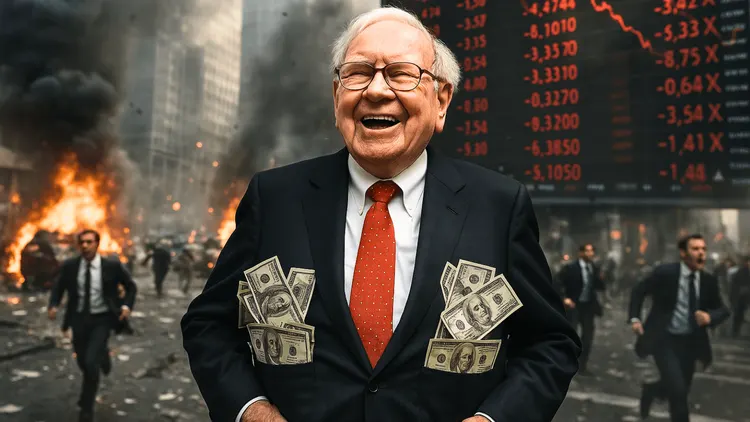
While global markets have been thrown into chaos, and some of the wealthiest individuals on the planet have seen billions erased from their fortunes, Warren Buffett’s net worth has bucked the trend. The legendary investor, now 94 years old, has added $11.5 billion to his fortune in 2025, lifting his net worth to $153.5 billion. That makes him one of only two individuals in the top 20 of the Bloomberg Billionaires Index to have gained wealth this year.
It’s a remarkable feat, especially given the backdrop of economic volatility. Global equities have been battered by President Donald Trump’s sweeping tariff announcements, a move that triggered a massive selloff wiping more than $500 billion off the collective wealth of the world’s richest 500 individuals. But even amid the carnage, Buffett’s steady hand and disciplined investing philosophy have helped him navigate the storm better than most.
A Sea of Red and a Rare Island of Green
As panic selling gripped Wall Street, fortunes vanished in the blink of an eye. Elon Musk, still the richest person in the world, saw his net worth crater by $134.7 billion, plunging below $300 billion for the first time since late 2023. Others weren’t spared either. Tech titans, real estate moguls, and financial barons all watched helplessly as their valuations crumbled.
Yet Buffett’s Berkshire Hathaway held firmer than most. The stock has declined 8.8% since April 2, modest in comparison to the S&P 500’s 10.7% drop. The cushion wasn’t accidental. It’s the result of a carefully constructed portfolio and an insurance-heavy business model that thrives in precisely the sort of conditions currently roiling the broader market.
The Power of Diversified, Durable Holdings
Buffett’s fortune isn’t the product of high-flying tech gambles or meme-stock hype. It’s grounded in the real economy. Berkshire Hathaway owns railroads, insurance giants, utility companies, and a wide array of American industrials—businesses that, while not glamorous, generate predictable cash flow.
This year, those boring businesses proved to be Buffett’s secret weapon. The property and casualty insurance segment, in particular, stood out. It continues to generate income and remain largely insulated from global supply chain disruptions and tariff tensions. While other investors ran for cover, Buffett’s holdings in this space acted as a buffer, absorbing shocks that devastated other sectors.
Why Buffett Isn’t Just Lucky
To chalk up Buffett’s 2025 gains to luck would be a mistake. This is a man who has repeatedly warned about overvalued markets, overleveraged portfolios, and speculative bubbles. When others were reaching for yield, he was hoarding cash. When others went all-in on AI and crypto, Buffett leaned on American railroads and insurance float.
Even his decision to trim major stakes in companies like Apple and Bank of America in recent quarters now appears prescient. Both stocks have seen sharp double-digit declines since Trump’s tariff announcement. Buffett saw it coming. Or at the very least, he positioned Berkshire to weather it better than almost anyone else.
Fourth Richest—and Rising
As of early April, Buffett is now the fourth-richest person on the planet. His only peer in wealth gains this year is Francoise Bettencourt Meyers, the L’Oreal heiress, who added $1.8 billion to her fortune and currently ranks 19th on Bloomberg’s list. That speaks volumes. In a field dominated by tech wealth—often subject to the whims of algorithms, trends, and quarterly earnings misses—Buffett’s rise is a reminder that value investing still works.
Opportunity in the Ashes
Don’t be surprised if Buffett uses this downturn to go shopping. Historically, some of his best deals have come when others are scrambling for liquidity. While he’s avoided big acquisitions in recent quarters, the current climate might present precisely the kind of distressed deals he loves.
Think back to the financial crisis of 2008. While Wall Street was in freefall, Buffett struck high-profile deals with Goldman Sachs and General Electric, earning massive returns in the process. The current market panic could present similar opportunities. With billions in cash on Berkshire’s balance sheet, the Oracle of Omaha has plenty of dry powder.
Berkshire’s Future: Built for Storms
At 94, Buffett’s age is impossible to ignore, and succession planning remains a topic of investor interest. But Berkshire is more than Buffett alone. With lieutenants like Greg Abel and Ajit Jain running the show behind the scenes, the conglomerate’s foundation appears secure.
More importantly, Buffett’s discipline is embedded in the DNA of the company. It’s a culture of value, prudence, and long-term thinking. In a world increasingly obsessed with short-term metrics, quarterly beats, and viral trends, Berkshire remains a stoic outlier.
Tariffs, Turmoil, and the Buffett Blueprint
President Trump’s surprise tariffs may have destabilized markets and ignited a wave of wealth destruction, but they also offered a stark reminder of how fragile most fortunes are. When the tide goes out, as Buffett famously said, you find out who’s been swimming naked.
This year, the tide receded quickly—and violently. But there stood Buffett, fully clothed and carrying a lifeboat. His ability to preserve and even grow wealth in this environment speaks not just to his genius, but to the timeless relevance of his principles.
Conclusion: A Legacy Reaffirmed
In a year marked by uncertainty, market chaos, and staggering losses, Warren Buffett once again reminded the world why he’s in a class of his own. His $11.5 billion gain in 2025 isn’t just about money—it’s a validation of his approach to investing, risk, and patience. When the dust settles and the markets find their footing, it’s likely Buffett’s gains will look even more impressive in hindsight.
At 94, he’s not chasing trends, tweeting market-moving statements, or launching flashy startups. He’s doing what he’s always done: buying good businesses at fair prices and holding them for the long haul. And in this storm, that strategy just made him billions.