Glencore pleads guilty to bribery charges and pays $1.5 billion in fines
Prosecutors say the commodities trader approved millions of dollars in corrupt payments to access oil in Africa
 Ibrahim Al-TarikOctober 1, 2026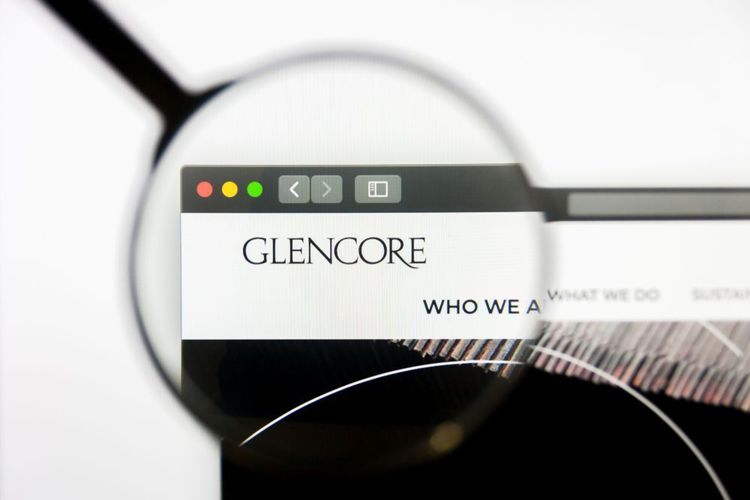
Glencore will plead guilty to multiple counts of bribery and market manipulation and pay fines of up to $1.5 billion after US, UK and Brazilian investigations uncovered corruption at one of the world's largest commodity traders.
Britain's Serious Fraud Office (SFO) on Tuesday indicted its subsidiary Glencore Energy UK on seven counts of profit-making bribery and corruption related to oil deals in Cameroon, Equatorial Guinea, Ivory Coast, Nigeria and South Sudan.
In a statement, the SFO said it believes "Glencore officials and employees paid over $25 million in bribes, with company approval, for preferential access to oil."
In the US, Glencore has pleaded guilty to two separate criminal cases and has agreed to pay approximately $1.1 billion in fines and confiscations. One involved a decades-long bribery scheme, and the second, Glencore's US commodity trading arm pleaded guilty to involvement in an eight-year program to manipulate US heating oil price benchmarks.
Attorney General Merrick Garland spoke of "the largest ever criminal prosecution by the US Department of Justice for a conspiracy to manipulate commodity prices in the oil markets."
Glencore said it would pay a total of approximately $1.5 billion in penalties, including $1.1 billion USD to US authorities, USD 40 million to the Brazilian prosecutor's office and an amount to the UK to be determined at a sentencing hearing.The company had a USD 1.5 billion provision in February for theGlencore
for a period of three years to assess internal compliance issuesGillies
, a consultant at the Natural Resource Governance Institute, said: "Commodity traders, including Glencore, have a miserable record when it comes to corruption so it's good to see there are consequences."
"Glencore's financial performance will not suffer significantly from this penalty, particularly given the current commodity price environment. But it is high by anti-corruption standards and this is an important signal for the industry."
In 2018, the US Department of Justice launched a full-scale investigation and ordered the company to provide documentation regarding its compliance with the country's money laundering laws and the Foreign Corrupt Practices Act in Nigeria, the Democratic Republic of the Congo and Venezuela.
The UK Financial Services Authority (SFO) followed suit in 2019, opening an investigation into Glencore over "suspicion of bribery," which it codenamed "Operation Azoth."
A Glencore attorney said Tuesday the company would plead guilty. Glencore is accused, among other things, of paying 10.5 million euros in bribes to induce officials from the Société Nationale des Hydrocarbures and the Société Nationale de Raffinage to favor Glencore's operations in Cameroon.
Attorney Faras Baloch, representing the SFO, said the company bribed agents to "help them procure crude oil cargoes or obtain an unreasonably cheap price for those cargoes".
Glencore is also accused of paying €4.7 million in bribes between July 2011 and April 2016 to influence officials to favor the company in oil deals in Ivory Coast.
The investigation has cast a long shadow over the company and challenged the culture of one of the world's largest commodity traders.
Longtime CEO Ivan Glasenberg retired last year, becoming the latest in a line of high-profile figures to leave the company, including former oil division head Alex Beard, who left in 2019.
Lisa Osofsky, Director of the SFO, said: "This significant investigation, which has brought the SFO to court in less than three years, is the result of our expertise, our tenacity and the strength of our partnership with the US and other jurisdictions."
The company, which moves millions of tons of metals, minerals and oil worldwide, is also facing investigations by Swiss and Dutch authorities, the timing and outcome of which are still uncertain.
Last July, a former Glencore oil trader in New York pleaded guilty to a plot to bribe government officials in Nigeria in exchange for lucrative oil deals.
The allegations in the original US Department of Justice investigation, which date back to 2007, came during Glasenberg's 19-year reign at the helm of the company.
Glasenberg and his senior staff took the company public in 2011, in what was then one of the largest IPOs ever in London. Some of the funds were used to transform the company from a pure-play commodities trader to a mining company through a 2013 merger with Xstrata and a series of acquisitions.
However, the company has struggled to shake off a reputation for sometimes shady activity, which many investors saw as part of its DNA and dating back to its days as a private trading house.
Analysts said the settlement of the allegations is a step forward for new CEO Gary Nagle, who took the helm at Glencore last year after more than two decades with the company.
Kalidas Madhavpeddi, Chairman of Glencore, said: "Glencore today is not the company it was when the unacceptable practices behind this wrongdoing arose."
Glencore's shares have soared this year to their highest level since the company's IPO 11 years ago, on the back of higher oil and metal prices and strong business results.