Fueling the Future: France's Drive to Bolster Nuclear Power
France's Nuclear Renaissance: A Bold Step Towards a Greener Future
 Editorial Team (ET)September 26, 2026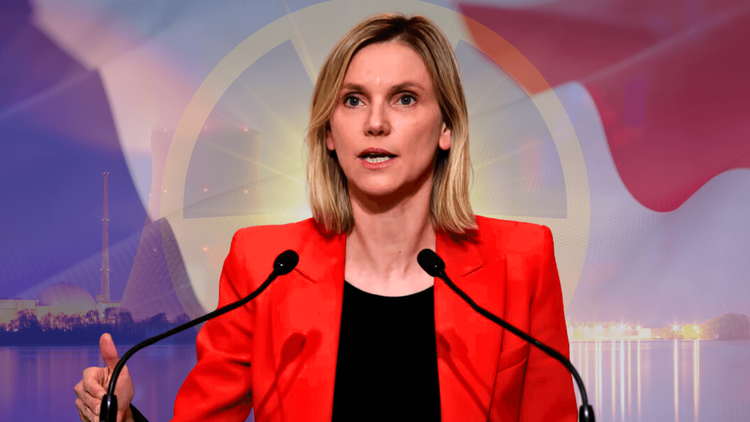
France, a country renowned for its commitment to nuclear energy, is set to embark on an even more ambitious journey towards a greener future. Energy transition minister Agnes Pannier-Runacher has declared the government's intention to build eight new nuclear reactors, in addition to the six previously announced. This bold move is driven by a singular purpose: to reduce France's heavy dependence on fossil fuels, which currently account for more than 60% of the nation's energy consumption.
The Need to Reduce Fossil Fuel Dependency
France's dependence on fossil fuels has long been a matter of concern. With over half of its energy coming from non-renewable sources, the nation is far from meeting its climate goals. Minister Pannier-Runacher has set a challenging target: to lower the share of fossil fuels in France's energy mix to just 40% by the year 2035. This ambitious endeavor aligns with the global push for sustainable energy practices and combatting climate change.
The Scope of the Expansion
The heart of this expansion lies in the construction of eight new nuclear reactors, though the specific reactor types are yet to be disclosed. The primary objective is to generate an additional 13GW of power. To put this in perspective, it's roughly equivalent to the combined power output of eight EPR (European Pressurized Reactor) reactors. Minister Pannier-Runacher emphasizes that the focus is on achieving the desired power output, rather than committing to a particular technology.
Previous Nuclear Expansion Plans
This recent announcement builds upon the foundation laid in September 2022, when France declared its intention to expand its nuclear fleet by six EPR reactors. The goal was to commence work on these reactors before May 2027, marking a significant step in the country's nuclear energy revitalization.
Future Prospects and International Sales
Looking ahead, EDF, the French nuclear operator, has set an ambitious target of constructing reactors at a rate of up to 1.5 per year throughout the 2030s. This ambitious plan underscores France's commitment to nuclear energy as a pivotal component of its energy strategy. Minister Pannier-Runacher also has her sights set on international markets. She plans to visit the Czech Republic and India, two countries where EDF hopes to secure contracts for the construction of reactors. However, competition remains fierce, especially in the face of the American Westinghouse Corporation.
Conclusion
France's decision to expand its nuclear reactor fleet represents a significant step towards achieving its energy and environmental goals. By reducing its reliance on fossil fuels and investing in nuclear power, France aims to play a leading role in the transition to a cleaner, more sustainable energy future.