
From White House to Tesla: Musk Races from DC to EV
Elon Musk’s political pivot reassures investors after Tesla reports its worst quarter in years, reviving hopes for a leadership refocus.
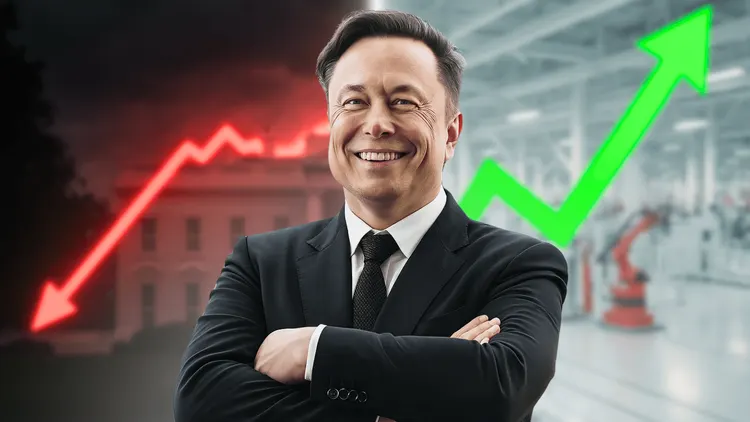
Tesla made a dramatic U-turn on Wednesday after a rough morning in the markets. Shares of the electric vehicle juggernaut surged over 5% midday following a Politico report claiming CEO Elon Musk will soon reduce his involvement with the Trump administration. The development comes on the heels of Tesla’s worst quarterly delivery numbers in nearly three years, raising fresh questions about leadership focus and brand strategy in a tense macroeconomic and political climate.
Tesla's Rocky Start to Q1: Delivery Numbers Miss by a Mile
Before the stock’s midday rally, Tesla was reeling. The company revealed it delivered just 336,681 vehicles in Q1, falling well short of the 390,342 units expected by analysts. This marked Tesla's weakest quarter since Q2 2022 and triggered an early 4% plunge in share price.
Tesla attributed the dip in part to a retooling of its Model Y production lines across all four of its global factories. While the refreshed Model Y only launched in March, Tesla claims the transition led to “several weeks of lost production” early in the quarter. Despite this, the company says the ramp-up of the new Model Y is “going well.”
But Wall Street wasn’t buying the optimism. Demand worries loomed large, especially with registration data from Europe indicating Tesla’s once-dominant brand may be losing steam in key markets. In countries like France, Norway, and the Netherlands, registrations plummeted by more than 60% year-over-year in some cases. These aren’t just numbers—they’re warning signs of deeper structural issues within Tesla's demand pipeline.
Political Baggage: Is Musk’s Image Tarnishing Tesla’s Brand?
Elon Musk’s increasing political visibility—especially his recent alignment with Donald Trump’s inner circle—has raised eyebrows across the business world. According to Politico, President Trump has informed his Cabinet that Musk will soon step back from his current government role. The nature of this role has been opaque, though Musk has been reported to wield informal influence over tech and energy policy.
This impending step-back, reportedly taking place “in the coming weeks,” appears to have reassured investors worried that Musk’s focus was shifting too far from Tesla’s day-to-day operations. As one senior official told Politico, Musk may remain in an “informal” advisory capacity. Still, for many on Wall Street, even a partial return to Tesla is seen as a potential catalyst for renewed focus and stability.
Dan Ives, a veteran Tesla analyst at Wedbush and longtime bull, has been vocal in urging Musk to “change course.” In a sharp note released Wednesday, Ives stated the delivery numbers were “a disaster on every metric,” adding, “We are not going to look at these numbers with rose-colored glasses.” His call to action was blunt: Musk needs to re-engage with Tesla before investor confidence erodes further.
From Cult Figure to Controversial CEO: Musk’s Public Perception Problem
Musk is no stranger to controversy, but the stakes have never been higher. His public persona, once synonymous with futuristic innovation and boundless ambition, has become increasingly divisive. Social media outbursts, flirtations with conspiracy theories, and now deep political entanglements have added volatility to Tesla's brand image.
In regions like Scandinavia, typically a stronghold for EV adoption, Tesla is now seeing a dramatic reversal. Denmark, Sweden, and Norway posted some of the steepest registration declines, with numbers dropping between 60-65% compared to last year. While economic headwinds and EV market saturation may play a role, many analysts suspect that Musk’s growing political baggage is driving the downturn.
In recent months, Tesla dealerships in Europe have faced protests. Incidents of violence against Tesla drivers in certain regions have been reported. Whether these are isolated events or part of a broader anti-Tesla sentiment is unclear, but they signal a shift in public perception that Tesla can't afford to ignore.
Liberation Day Looms: Tariffs, Trade, and Tesla’s Uncertain Path
Coinciding with the Musk report, President Trump is expected to hold a press conference today outlining new tariffs under what he’s calling “Liberation Day.” The event could further reshape the trade landscape for EV manufacturers. Tesla, which depends heavily on international markets and global supply chains, is not immune to these political crosswinds.
The timing of Musk’s reported exit from government engagement may be strategic—either self-imposed or orchestrated by the administration—to avoid further distractions during a politically sensitive period. Either way, it signals a potentially significant shift in the power dynamics between Tesla and Washington.
Where Tesla Goes from Here
Tesla also reported that it produced 362,615 vehicles in Q1 and deployed 10.4 GWh of energy storage products. While these numbers are still impressive by any metric, they don’t make up for the shortfall in deliveries or the broader erosion in brand sentiment. Tesla's next big test will be its Q1 earnings report on April 22, which could either reinforce investor fears or offer some much-needed reassurance.
For now, investors are clinging to hope that Musk’s pivot back to Tesla will mark a return to focus, stability, and innovation. But make no mistake—the clock is ticking. Tesla no longer dominates the EV space unchallenged. Legacy automakers are catching up. Chinese EV manufacturers are expanding rapidly. And consumers are no longer willing to look past the headlines when making a five-figure purchase decision.
Conclusion
Tesla may have clawed back some market confidence today, but serious questions remain. Elon Musk stepping away from his political engagements is a welcome move for investors—but it’s just the beginning. The company must now prove it can regain its footing in global markets, rebuild its brand, and refocus leadership attention on its core mission: making world-class electric vehicles.
All eyes will be on April 22. Until then, the road ahead for Tesla remains bumpy, uncertain, and highly scrutinized.