EU warns of 'regression' on fossil fuels as coal supplants Russian gas
Ursula von der Leyen says the focus should remain on renewable energy investments as countries try to avert an energy crisis
 Ibrahim Al-TarikSeptember 29, 2026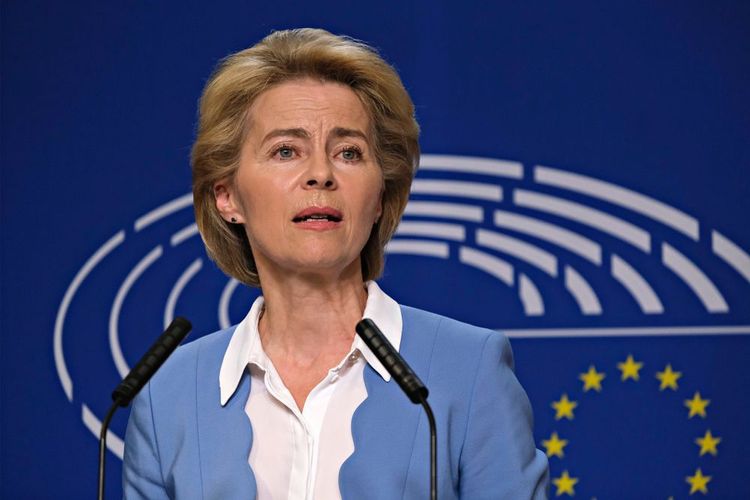
The President of the European Commission has warned EU member states to backtrack on their long-term efforts to cut fossil fuel consumption after Germany, Austria and the Netherlands said they would start up coal-fired power plants after Russia cut gas supplies.
Ursula von der Leyen said governments must continue to focus on "massive investments in renewable energy".
"We need to make sure we use this crisis to move forward and not retreat to dirty fossil fuels," she said in an interview. "It's a fine line and it's not yet clear if we're going to take the right path.
Countries are concerned about further cuts in gas supplies, which EU leaders say were orchestrated by the Kremlin.
The impending, albeit temporary, surge in coal consumption has fueled fears that European countries could use the crisis to delay switching to less polluting alternatives.
Rob Jetten, the Dutch climate and energy minister, said Monday the country would change laws requiring coal-fired power plants to operate at a maximum capacity of 35 percent.
Germany and Austria on Sunday announced emergency restarts of idle coal-fired power plants after Russia reduced the capacity of the Nord Stream 1 pipeline by 60 percent last week. The pipeline, which runs through the Baltic Sea to Germany, is one of the main routes for Russian gas to Europe. EU officials fear Moscow could further curb supplies ahead of the winter.
Russia blames technical problems on the pipeline for capacity reductions. However, it has refused to make up the deficit through other pipeline routes.
Other EU countries, including Italy, are expected to follow Germany in restarting coal-fired power plants. Member states are facing increasing economic pressure from energy shortages as benchmark European gas prices rose more than 50 percent over the past week. Gas is at least six times more expensive in the eurozone than it was before the pandemic.
Von der Leyen said the EU had "taken emergency measures" to respond to the threat of falling supplies from Russia, including energy saving measures and prioritizing which industries receive gas. She praised Germany's recent efforts to save energy, calling it one of the EU's most effective tools.
The Commission President cited figures showing that European gas consumption fell by 9 percent in the first quarter compared to the same period last year. Industry has cut gas consumption in part in response to record-breaking prices. If consumers turned down their thermostats by 2 degrees, it could significantly reduce gas consumption, she added.
The EU wants to accelerate plans to increase electricity production from renewable energy sources while finding ways to diversify its gas supply, such as importing liquefied natural gas (LNG) from other regions by sea.
Von der Leyen said the Commission is doing everything so that the EU can say in future that "we have made the right decisions".
Moscow's invasion of Ukraine has added urgency to the EU's plans to switch to renewable energy. With the "REPowerEU" plan, the EU wants to reduce its dependence on Russian energy, diversify its gas sources and expand its wind and solar capacities.
Von der Leyen highlighted a recent trip to the eastern Mediterranean, where the EU hopes gas shipments from the waters of Israel, Cyprus and Egypt could eventually provide additional LNG for Europe.
She also said producers such as Norway and Azerbaijan would ramp up production to provide the EU with alternatives to Russian gas supplies, which accounted for up to 40 percent of the EU's total gas supply prior to the invasion of Ukraine.
REPowerEU would increase investment in renewable energy and streamline planning rules so projects, including wind farms, could be built faster, she said.
"We now know that they are not only good for our climate, but also for our energy security and independence."