Election 2024: Key Stocks to Watch for a Trump or Harris Presidency
Market Volatility and Sector-Specific Opportunities in a High-Stakes Election Year
 Editorial Team (ET)October 5, 2026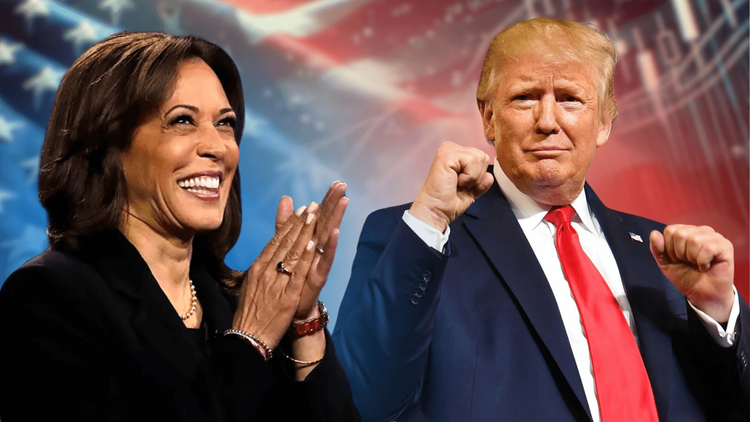
The 2024 U.S. presidential election is already proving to be one of the most watched events in recent history, and it has Wall Street on high alert. With a close race between Donald Trump and Kamala Harris, investors are preparing for a surge of market volatility. Analysts and strategists are examining how each candidate’s policies could influence sectors from financials to healthcare, identifying areas that could offer strong returns depending on the election outcome.
With the S&P 500 up 21% so far this year, investors are in an unusually strong position heading into Election Day. Yet, they’re bracing for significant shifts as the stakes remain high for both the economy and the markets. In this article, we explore the top portfolio plays for a Trump or Harris presidency, analyzing where key opportunities may lie for investors looking to navigate the election with confidence.
Market Uncertainty and Volatility
Uncertainty surrounding the 2024 election outcome is already creating a volatile environment in the markets. The race between Trump and Harris has investors reassessing risk and considering potential hedges as they await results. Historically, close elections tend to generate market fluctuations, and this year is no exception. Analysts suggest preparing portfolios with a mix of defensive assets and targeted sector plays to mitigate risk and capitalize on potential opportunities under either administration.
Portfolio Plays in a Trump Victory
A Trump presidency is expected to bring a suite of deregulatory measures, coupled with a pro-business agenda that would impact various sectors. Investors are turning their attention to three key areas where Trump’s policies could have the most impact: financials, gold, and managed-care insurers.
Financial Sector Gains
Under Trump, the financial sector stands out as a prime candidate for growth, as a Republican administration would likely loosen regulatory constraints on financial institutions. Kurt Reiman, co-lead of UBS Global Wealth Management’s ElectionWatch, suggests that financials are poised to benefit, particularly if Republicans control both the White House and Congress. Looser regulations could enable increased mergers and acquisitions (M&A) activity, along with enhanced capital returns to shareholders, giving financial firms a potential boost.
Gold as a Safe Haven
In times of economic uncertainty, gold has long been a reliable hedge. Eric Diton, president of Wealth Alliance, points out that Trump’s anticipated increase in government spending could trigger inflation, making gold an attractive option for investors. With national debt levels expected to rise further, gold’s safe-haven appeal would likely strengthen under Trump, driving demand and potentially pushing prices to new highs.
Managed-Care Insurers
Healthcare remains a central focus, and Trump’s support for privatized healthcare programs such as Medicare Advantage makes managed-care insurers another key investment target. Analysts see companies like Humana, UnitedHealth, and CVS Health benefiting from a Trump administration, which would likely foster a regulatory environment more favorable to private-sector health initiatives. Oppenheimer’s Michael Wiederhorn identifies Humana as a particularly strong play, with Medicare Advantage accounting for a significant portion of its revenue.
Portfolio Plays in a Harris Victory
A Harris presidency, on the other hand, is expected to prioritize sustainability, affordable housing, and social support. These focus areas could create opportunities for specific sectors, such as electric vehicles, homebuilders, and discount retailers.
Electric Vehicle (EV) Industry Boost
Harris’s platform supports expanded access to electric vehicles (EVs) through the continuation of federal tax incentives for EV buyers. The $7,500 credit for new EVs and $4,000 for used ones, which the Biden-Harris administration has championed, is anticipated to persist under Harris. Dan Ives of Wedbush sees this as a bullish scenario for EV manufacturers like Tesla, General Motors, and Ford, who would benefit from sustained incentives and increased consumer demand.
Homebuilders Poised for Growth
Affordable housing is a major component of Harris’s economic agenda, making the homebuilding sector another potential winner under her leadership. Harris’s plan to increase the supply of affordable housing could drive demand for companies like D.R. Horton, which specializes in entry-level homes. Tyler Batory, an analyst with Oppenheimer, suggests that homebuilders are uniquely positioned to benefit from Harris’s policy initiatives, especially as she aims to address the housing crisis by increasing housing availability and affordability.
Discount Retailer Surge
A Harris administration’s focus on social equity and economic support for low-income households is expected to benefit discount retailers. Michael Binetti of Evercore notes that companies like Burlington Stores and Ross Stores could experience an uptick in demand as consumers seek value amid a challenging economic landscape. With the potential for expanded social support programs, low-income consumers would have greater purchasing power, driving sales in the off-price retail segment.
Preparing for Election-Driven Market Shifts
For investors, the upcoming election presents both challenges and opportunities. On one hand, the uncertainty is a call for caution; on the other, each candidate’s policies offer distinct pathways to profit. Trump’s focus on deregulation and corporate tax cuts could open doors for financials and gold, while Harris’s focus on sustainability and social equity could drive demand in the EV, homebuilding, and retail sectors.
As the election unfolds, investors should prepare for a bumpy ride, with the potential for significant market shifts in response to either outcome. By positioning portfolios with targeted investments, investors can navigate the election landscape and take advantage of sector-specific opportunities based on the prevailing political direction.
Conclusion
The 2024 election stands as a pivotal moment for U.S. markets, with each candidate’s policies promising unique impacts across key sectors. A Trump administration could bring deregulation and fiscal expansion, favoring sectors like financials and managed-care insurers, while a Harris administration is likely to prioritize sustainability and social initiatives, offering potential growth for EVs, homebuilders, and discount retailers. Investors should assess their portfolios with both outcomes in mind, preparing to pivot based on the election results. The months ahead may be turbulent, but with a proactive strategy, investors can position themselves to succeed, regardless of who takes the White House.