Does Habeck still represent German interests?
Spicy questions to Economics Minister Robert Habeck (Greens) from employees of a refinery
 Gabriel ThomasOctober 2, 2026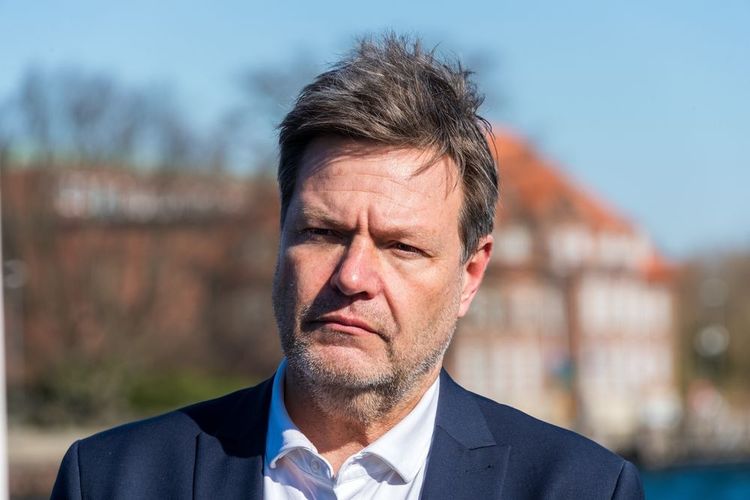
"We need Russian oil. We have our homes, our families. If (the government) wants to stop it, then this area is dead," Thorsten Scheer, 60, told AFP at the refinery in the town of Schwedt, on the border to Poland.
The facility, which employs 1,200 people, processes only Russian crude oil from a branch of the Druzhba pipeline, the world's longest oil pipeline.
It supplies around 90 percent of the oil consumed in and around Berlin, including Berlin-Brandenburg Airport, and many local businesses depend on the revenue they bring to the region.
Economics Minister Robert Habeck traveled to Schwedt on Monday to answer questions from refinery employees, which met with a mixed response.
Standing on a table in front of the works canteen, Habeck tried to reassure the workers, dressed in green and orange coveralls, that the government would look at alternative ways to keep the plant running.
Employees, however, accused him of serving US interests and trying to drive a wedge between Germany and Russia. "Are you sure that you represent German interests?"
"Yes, war is nonsense. We are perfectly aware of that," said one worker to the crowd.
"But why should we suddenly ban a business partner who has delivered reliably for decades? We get a raw material and we process it. If this raw material is interrupted for political correctness, that's not okay in my opinion."
Another 48-year-old worker, who declined to be named, told AFP the situation is "stressful for everyone" as their jobs are "at stake."
"In my opinion, the war is not Germany's business," he said. "If (the oil embargo) ended the war, fine. But it won't. Putin will peddle his oil elsewhere."
Habeck, a member of the Greens, also faced hostility from environmentalists who said they had managed to shut off oil supplies to the PCK plant before his visit.
In response to the war in Ukraine, Germany has ruled out an immediate embargo on all Russian energy sources, particularly gas.
However, the largest European economy has already reduced its oil imports from Russia from 35 percent before the Russian invasion to 12 percent of total imports.
The PCK refinery, however, poses a thorny problem - especially since the site is majority-owned by Russian oil giant Rosneft, which is controlled by the Kremlin.
In late 2021, Rosneft announced plans to increase its stake in the refinery from 54 percent to 92 percent by buying shares from Shell.
The German Federal Cartel Office approved the transaction a few days before the outbreak of war, but the Ministry of Economics is examining whether it can still be stopped.
Habeck identified three elements that must come together to keep the plant afloat: new oil shipments from other countries via ships arriving in the port of Rostock, government financial support, and a new ownership structure to wrest control of Rosneft.
The minister said he was "well aware" that there was "a lot of uncertainty" for workers.
"I would appreciate it if you would see me not just as your enemy, but as someone who is genuinely trying to save this site, keep it alive and lead it into the future," he said.
But after the meeting, as workers lined up to help themselves to grilled burgers and sausages, many were unconvinced of his plans.
"It's an experiment. We all just have to hope it works," said Steffen Thierbach, 64.