
Dan Ives: Jensen Huang Is "10% Politician, 90% CEO" and Nvidia’s Secret Weapon
Wall Street may be cautious, but Dan Ives argues Nvidia’s dominance in AI chips and global tech makes its upside far greater than the market realizes.
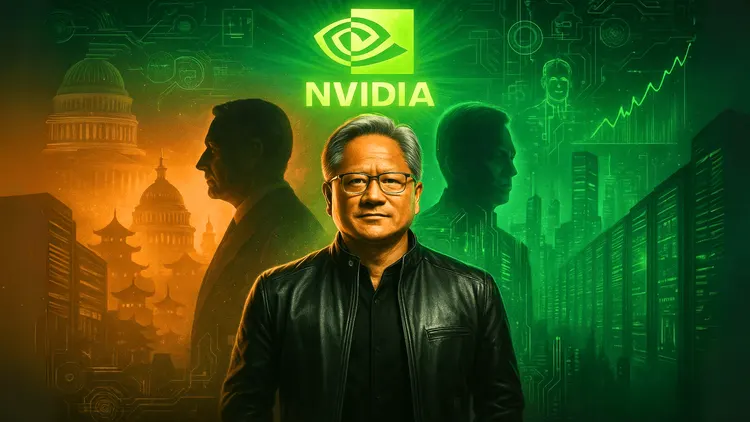
Nvidia has once again delivered record earnings, beating expectations on both revenue and profit. Yet despite the strong results, shares dipped slightly, leaving investors debating whether the run-up in Nvidia’s valuation has peaked. Dan Ives, managing director and senior equity research analyst at Wedbush Securities, believes Wall Street is missing the bigger picture. In his view, Nvidia is only in the early stages of an acceleration that could redefine the next decade of technology.
A Data Center Miss That Doesn’t Change the Story
While Nvidia’s results were broadly impressive, its data center revenue came in below some analyst expectations. For skeptics, that was a red flag. But Ives argues that this is transitional noise. He insists the real story lies in what’s coming next, especially as data center growth reaccelerates over the next several quarters. According to Ives, Wall Street is still underestimating Nvidia’s growth trajectory by 25 to 30 percent, setting up the stock for another round of bullish momentum.
One of the biggest questions hanging over Nvidia is China. The company reported no sales of its H20 chips to Chinese customers this past quarter due to U.S. export restrictions. Competition within China is intensifying, and regulatory uncertainty continues to cloud the outlook. But Ives maintains that China will remain a key part of Nvidia’s future, calling it a potential fifty-billion-dollar market as soon as next year. He views the current pause as temporary, arguing that a “green light” for renewed sales will arrive within the next 45 to 60 days. If that happens, it could be a game changer for Nvidia’s revenue stream.
Ives acknowledges that the biggest risk to Nvidia is geopolitical. The company is caught in the middle of U.S.-China tensions, with semiconductor exports playing a central role in the broader standoff. Any escalation could delay or restrict Nvidia’s ability to tap the Chinese market. Still, Ives believes the upside far outweighs the risks. He describes Nvidia as the “biggest chip on the poker table” when it comes to U.S.-China technology competition.
Perhaps the boldest part of Ives’ thesis is his market cap forecast. He sees Nvidia hitting a five-trillion-dollar valuation by early 2026. That would cement Nvidia not just as a leader in AI chips but as one of the most valuable companies in history. With Jensen Huang at the helm — a man Ives calls “10% politician, 90% CEO” — the company’s blend of technological dominance and strategic navigation of global politics could make that target more realistic than skeptics assume.
Nvidia may have been the last of the “Magnificent Seven” tech giants to report earnings, but according to Ives, the real catalyst for the sector is still ahead. He points to U.S.-China negotiations, future chip agreements, and the evolution of AI adoption as the forces that will shape technology stocks through the rest of the year. He expects tech stocks broadly to rise another eight to ten percent, fueled by both strong fundamentals and continued investor enthusiasm for AI-driven growth.
Why Nvidia Remains the Top Pick
When pressed on which stock from the Magnificent Seven he would buy today, Ives was unequivocal: Nvidia. In his view, there is only one company that can truly claim to be fueling the AI revolution at scale. While software companies will ultimately capture much of the value from AI applications, Nvidia remains the godfather of the industry, providing the indispensable chips that power the movement.
Ives also sees software as the “golden goose” of AI over the long term, suggesting that companies like <a class="tvreplink" target="_blank" href="https://www.tradingview.com/chart/?symbol=Nasdaq%3AMSFT">Microsoft and Snowflake are positioned to thrive as AI use cases multiply. Still, without Nvidia’s semiconductors as the foundation, none of that growth would be possible. It is this central role that makes Nvidia both the riskier and more rewarding bet in the ongoing AI revolution.
Conclusion
Dan Ives’ bullish stance on Nvidia cuts against the grain of cautious investors worried about China, data center misses, or valuation concerns. He argues that the Street is misreading short-term noise and underestimating long-term momentum. With a $5 trillion market cap on the horizon, a massive potential rebound in Chinese sales, and its central role in powering AI worldwide, Nvidia may well prove that its best days are still ahead. For Ives, the doubters remain, but the case for Nvidia as the defining company of the AI era only grows stronger.