
Christine Lagarde promises continued high interest rates
The statements made by the ECB President in Davos are fueling expectations of further major interest rate hikes
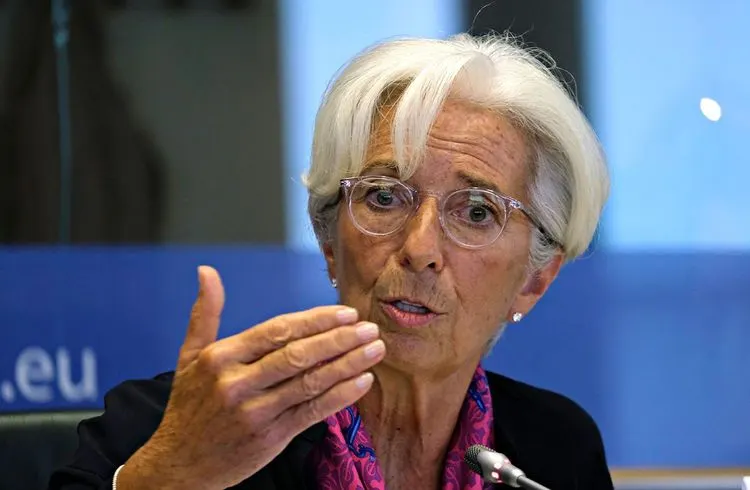
Christine Lagarde warned financial markets on Thursday that the European Central Bank was determined to "stay the course" and signaled more big rate hikes to bring down inflation.
The ECB President told the World Economic Forum in Davos that markets should abandon their view that the central bank will soon slow rate hikes amid signs that euro-zone inflation has peaked.
"I would urge [financial markets] to reconsider their position; they would be well advised to do so," she said at a podium.
Immediately after Lagarde's hawkish comments, the euro rose 0.2 percent against the dollar to trade at $1.0821. Borrowing costs for eurozone governments also rose.
The ECB Governing Council is expected to raise the key interest rate on deposits by 50 basis points to 2.5 percent at its next meeting on February 2. Lagarde's comments raise the odds of another 50 basis point hike at the next council meeting in March.
Silvia Dall'Angelo, senior economist at asset manager Federated Hermes, said: "In the short term, the ECB's path is set and interest rates will continue to rise in the coming months".
The ECB has hiked interest rates by a total of 2.5 percentage points over the past year to combat a rise in prices that saw inflation hit an all-time high of 10.6 percent in October. However, interest rates in the Eurozone are still lower than borrowing costs in the US and UK.
Markets are increasingly anticipating that US interest rates are nearing their peak and that the US Federal Reserve will switch from a half-point to a quarter-point rate hike in the coming months. This anticipation of smaller rate hikes in the US has led to speculation that other rate-setters may follow suit.
However, Krishna Guha of market research firm Evercore ISI explained that the ECB is "earlier in the tightening cycle than the Fed" and that its "default path" is to continue with half-point hikes at both the February and March meetings.
Lagarde added that headline inflation, core inflation and all other inflation measures remain a concern for the central bank in Frankfurt. "Inflation is way too high by all accounts," she said.
Headline inflation has eased in recent months, but the core inflation rate - which excludes food and energy price developments and is considered a better gauge of underlying price pressures - rose to 5.2 percent in December, from 5 percent in the previous month.
"It will take a few months for core inflation to fall to levels that calm the ECB," said Frederik Ducrozet, an economist at Pictet Wealth Management. "Virtually all ECB officials seem to be united in their fight against inflation, doves and hawks alike."
Lagarde said interest rates would need to stay "in the restrictive territory" long enough to ensure inflation is brought back to the bank's 2 percent target "in time".
The commissioner's comments came as Italian government bonds sold off during the day and the yield on the country's 10-year bond rose 0.09 percentage point to 3.83 percent. Bond yields are inversely related to prices and tend to rise when higher interest rates are expected.
The sell-off extended to other euro-zone bonds as well: Germany's two-year government bond yield rose during the day, up 0.06 percentage points to 2.51 percent by late morning.
The regional Stoxx Europe 600 fell 1.3 percent, with all sectors in negative territory. The German DAX and the French Cac 40 each lost 1.4 percent.
Lagarde added that the euro zone's robust labor market could lead to higher wages.
"The labor market in Europe has never been as dynamic as it is now," she said. "Unemployment is at its lowest level compared to the last 20 years. And also the participation rate, which is also important, is at a very, very high level and is fairly homogeneous across the euro area."
The head of the ECB was pleased with the improved signals from the economy in the euro zone. "The news has been a lot more positive over the past few weeks," she said. "It will not be a brilliant year [2023], but much better than feared."