China threatens major military exercises around Taiwan over Pelosi's visit
The drills off the island's east coast in response to the US President's trip would be the first to be conducted by Beijing
 Gabriel ThomasSeptember 20, 2026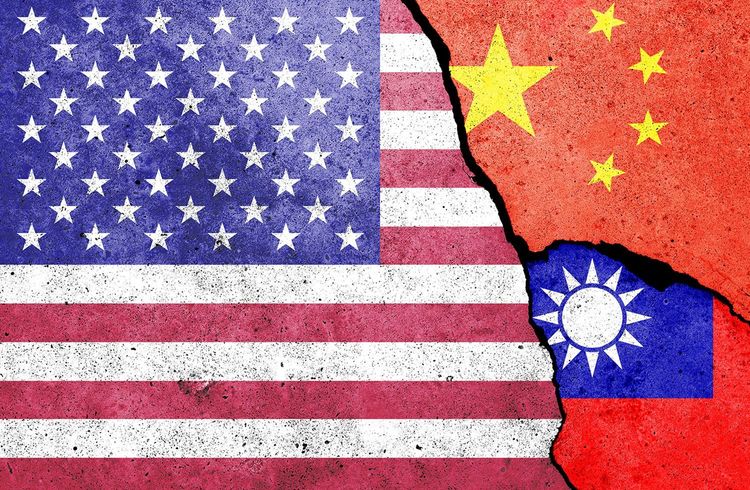
China has threatened to hold major military drills around Taiwan this week. It was in irritation that US House Speaker Nancy Pelosi is the most prominent American representative to visit the island in a quarter century.
Shortly after Pelosi landed in Taipei late Tuesday, China announced that the People's Liberation Army would hold live fire drills in several locations around Taiwan, including off the east coast, where the PLA has become much more active over the past year.
The Chinese warning came after the PLA held air and naval maneuvers in the South China Sea and the Taiwan Strait earlier this week, as well as a series of military exercises in other coastal areas, before Pelosi flew to Taiwan.
"From the evening of August 2, the People's Liberation Army of China will begin a series of joint military operations," the PLA said. "These operations are intended as a stern deterrent against the proliferation of negative US moves on the Taiwan issue and as a dire warning of 'Taiwan independence' forces conspiring for 'independence'."
The 82-year-old Democrat's visit has become a test of how far Beijing will go to thwart foreign support for Taiwan. It will also test the US-China ability to manage a crisis in an increasingly strained relationship that is at its lowest point since the two countries began relations in 1979.
Upon her arrival, Pelosi issued a statement saying that her visit "recognises America's unwavering commitment to supporting Taiwan's vibrant democracy while the world faces a choice between autocracy and democracy."
The trip, which was also rejected by the White House over fears it could spark a crisis, has been heavily criticized by the Chinese government.
Qin Gang, the Chinese ambassador to Washington, called the trip a "reckless and provocative move," while China's foreign ministry said it will have "severe implications" for US-China relations.
Pelosi is the senior US official to visit Taiwan during his tenure since then-Speaker Newt Gingrich went to Taipei in 1997. China claims Taiwan as part of its sovereignty and has repeatedly warned that the PLA would not stand by and see Pelosi attempt the visit.
The PLA said Tuesday it would conduct drills in the waters and airspace north, southwest and southeast of Taiwan, and hold long-range live fire drills in the Taiwan Straits and waters off the east coast of Taiwan.
David Finkelstein, a veteran PLA expert who heads the China and Indo-Pacific division at think tank CNA, said he could not recall China ever conducting major exercises off the east coast of Taiwan.
"Should the PLA conduct the drills, which would not be surprising given their rhetorical lockdown, you could say it would be a classic 'show of force'," Finkelstein said.
It could not be confirmed if the PLA has started any of the exercises its eastern command said were imminent. China frequently claims to have conducted military activities near Taiwan, which Taipei denies.
Taiwan's defense ministry said China's threat to hold edged weapons training areas is aimed at threatening the country's key ports and urban areas, and unilaterally harming regional peace and stability.
"This step is not good for China's international reputation and hurts the feelings of people on both sides of the straits," the defense ministry said. "China's warmongering moves are clearly aimed at psychologically intimidating our citizens."
To underscore concerns about possible Chinese reactions, the US Air Force plane carrying Pelosi and her delegation did not fly directly to Taipei from its previous station in Kuala Lumpur, but took a major detour via Borneo and the Philippines.
Meia Nouwens, a PLA expert at think-tank International Institute for Strategic Studies, said the US military may have avoided the skies over the South China Sea -- which China has claimed as its own and has increasingly militarized -- because the PLA had started to station missiles on artificial islands that could pose a threat to the planes.
Hours before Pelosi's arrival, Chinese Foreign Minister Wang Yi accused the US of stirring up trouble and undermining its "one China policy," recognizing Beijing's view that Taiwan belongs to China.
China has threatened an invasion if Taipei does refuse to submit to its control indefinitely, but some military experts believe that Beijing's military stance is aimed more at deterring US engagement in Taiwan than at an imminent invasion, claiming that China and "The US is determined to avoid an escalation.
Pelosi flew to Taiwan despite objections from the White House, which claimed her visit would unnecessarily increase tensions with Beijing.
Ahead of her landing in Taipei, Secretary of State Antony Blinken warned China on Monday against engaging in any escalating activity in response to Pelosi's visit.The
White House proclaimed Rte said there are signs that China is preparing a military response that could include launching missiles in the Taiwan Straits for the first time since the last major Taiwan crisis in 1995-96.
Despite earlier suggestions from analysts that Pelosi could keep the visit short and understated so as not to further fuel tensions with China, she is staying overnight and has a busy schedule ahead of her on Wednesday.
On Wednesday morning, Pelosi will visit the Taiwanese parliament and then meet with President Tsai Ing-wen. She will then have lunch at the Taipei Guest House, a Japanese colonial building where the Ministry of Foreign Affairs receives dignitaries, and visit a human rights memorial.
That would give her visit a higher profile than Gingrich's, who spent just a few hours in Taipei 25 years ago.
"The Chinese are always trying to undermine precedents," said Vincent Chao, former assistant to Secretary of State Joseph Wu and former head of the political department at the Taiwanese Mission in Washington, "but we must fight back and defend precedents lest our international space become further narrowed .