
Canada Plans Tariffs on Critical Minerals and Solar Products from China
Canada Expands Tariffs to Protect Local Industries Amid Rising Tensions with China
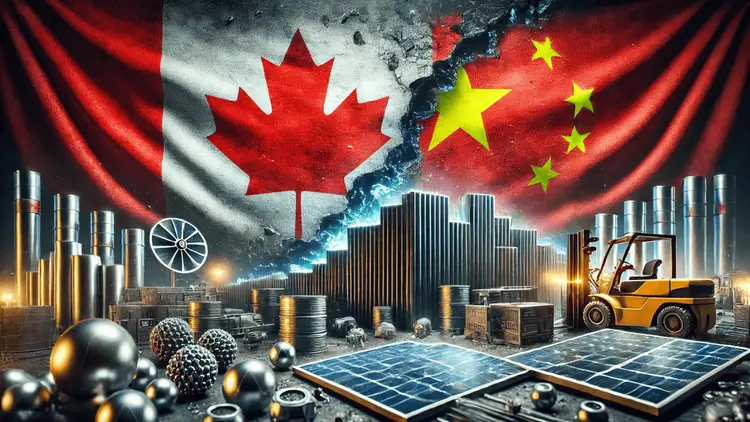
Canada is taking a stronger stance against Chinese imports with plans to impose new tariffs as early as next year. The move, detailed in the government’s latest fiscal update, reflects Ottawa’s efforts to protect domestic industries from cheap Chinese goods and curb the broader market distortions caused by Beijing’s trade practices.
Prime Minister Justin Trudeau’s government has already taken significant measures, including a 100% tariff on all Chinese electric vehicles and a 25% tariff on Chinese steel and aluminum imports. Now, the fiscal update outlines additional tariffs targeting specific industries that are integral to Canada’s economic growth.
New Tariffs Target Critical Sectors
The upcoming tariffs will initially apply to certain solar products and critical minerals. These changes are expected to take effect early next year, signaling Canada’s commitment to safeguarding key industries, particularly in renewable energy and resource extraction.
By 2026, further tariffs will be applied to semiconductors, permanent magnets, and natural graphite—resources and technologies that are essential for advanced manufacturing, clean energy infrastructure, and the development of emerging technologies.
The decision is a calculated response to China’s state-backed trade policies, which have been accused of flooding global markets with cheap, oversupplied goods. Trudeau’s government has reiterated its commitment to preventing these practices from undermining Canadian manufacturers and workers.
A Response to Market Distortions
Trudeau’s administration has been vocal in its criticism of China’s oversupply strategy, which artificially depresses prices and creates unfair competition for domestic businesses. In a statement included in the fiscal update, the government stressed the need to act decisively to ensure fair market conditions.
These tariffs are also part of a broader strategy to align Canada with its biggest trading partner, the United States. The move reinforces Ottawa’s message to Washington that Canada is committed to shared economic priorities, especially as U.S. President-elect Donald Trump prepares to reintroduce tough trade policies against China.
Canada’s Alignment with U.S. Policies
The new tariffs come amid rising trade tensions between the United States and China. President-elect Trump has already vowed to impose steep tariffs on Chinese goods. He has also warned Canada to address issues at its border, threatening to introduce a 25% tariff on Canadian exports if action is not taken.
Ottawa’s decision to extend tariffs on Chinese imports is a signal that Canada intends to remain aligned with U.S. economic interests. By targeting industries that are key to both nations’ economies, Canada is positioning itself as a reliable partner while simultaneously protecting its domestic market.
The Economic and Political Impact
The move to impose tariffs on Chinese imports will have far-reaching implications for the Canadian economy. By curbing the influx of low-cost Chinese goods, the government aims to create a level playing field for Canadian industries, particularly in manufacturing, critical minerals, and clean energy. This, in turn, could lead to increased domestic investment, stronger local supply chains, and job creation.
However, there are concerns about the potential for rising costs for Canadian businesses and consumers. Tariffs often result in higher prices, which could impact affordability, particularly in sectors like renewable energy and technology. Critics argue that while the tariffs may protect domestic industries, they could also provoke retaliatory measures from China, complicating trade relations further.
Politically, the new tariffs send a strong message to Beijing while solidifying Canada’s alignment with Washington. Trudeau’s government is leveraging its trade policies to demonstrate unity with the United States, a move that may help ease tensions and protect cross-border economic stability.
Looking Ahead
While details regarding the full extent of the tariffs remain under wraps, the government has promised further announcements in the coming months. Industries involved in renewable energy, critical minerals, and high-tech manufacturing are expected to see both challenges and opportunities as these measures take effect.
The coming year will be pivotal for Canada’s trade relations and economic policy. As the government rolls out these tariffs, it will face the dual challenge of protecting local industries while managing the broader economic impact on businesses and consumers. For now, Trudeau’s administration remains steadfast in its belief that these measures are necessary to prevent harmful market distortions and ensure long-term economic resilience.