
Can Nickel Recover from Its 2023 Nightmare?
Nickel's Plunge: Unraveling the Biggest Metals Upset of 2023
In a mostly lackluster year for metals trading, nickel emerged as the worst performer and might not see a reprieve anytime soon.
The world of metals trading in 2023 has been marked by mixed fortunes. While some metals managed to hold their ground, nickel, a crucial component in stainless steel and electric vehicle batteries, took a substantial hit. In this article, we delve into the reasons behind nickel's staggering decline and its implications for the metals market. We also contrast nickel's fate with that of copper and other industrial metals to provide a comprehensive overview.
Global Economic Headwinds
The backdrop of 2023 was far from favorable for metals. Global economic headwinds, including trade disputes, supply chain disruptions, and inflation concerns, cast a shadow over the market's stability. However, one of the most significant sources of uncertainty was China's growth outlook. As the world's largest consumer of metals, any slowdown in China's economy had a ripple effect across the industry.
Nickel's Annual Drop
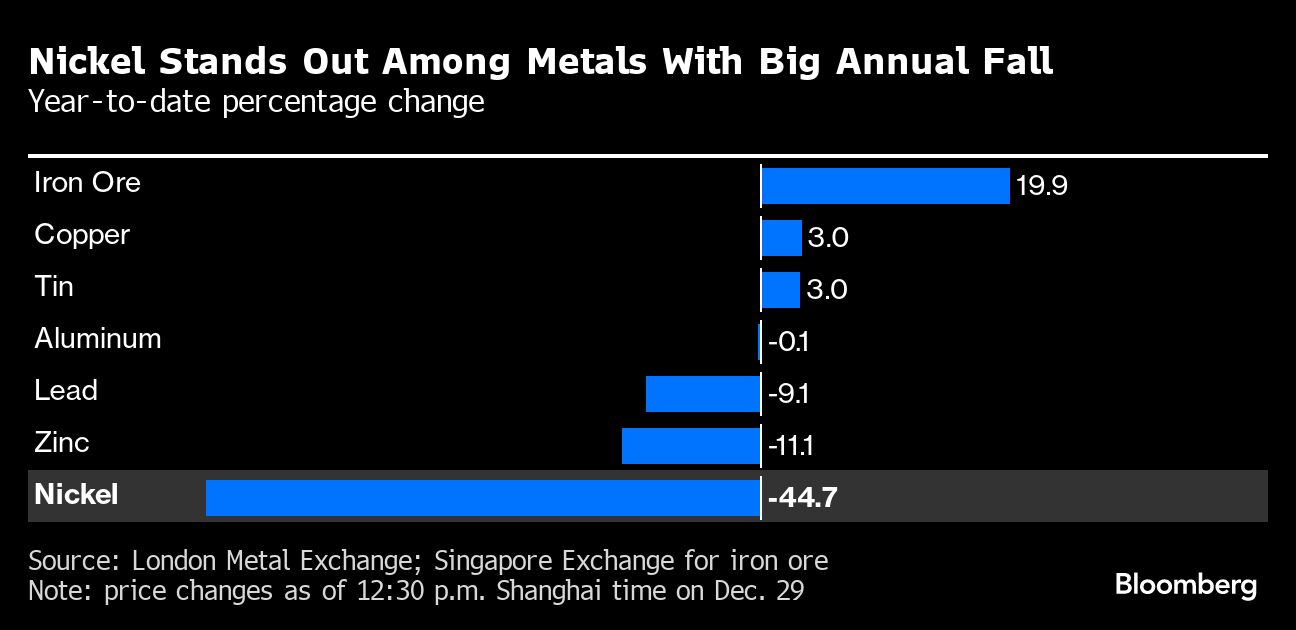
Nickel's performance in 2023 has been nothing short of dismal. It is on track to post an annual drop of over 40% on the London Metal Exchange (LME), marking the most significant decline since the 2008 financial crisis. This decline stands in stark contrast to other industrial metals, such as copper, which managed a 3% gain, and iron ore, with an advance of approximately 20% in Singapore.
Supply and Demand Dynamics
The primary culprits behind nickel's freefall are supply and demand dynamics. The market has been inundated with a flood of new material from Indonesia, the world's top producer of nickel. This surge in supply has overwhelmed demand growth, which has significantly waned in recent times. Huatai Futures analysts aptly pointed out, "Nickel supply continues to grow, but consumption is showing no sign of improvement."
Investor Sentiment
Investors have shown a bearish sentiment towards nickel, with net-short positions among the top 20 brokers on the Shanghai Futures Exchange at their highest level in at least six months. This negative sentiment reflects the prevailing concerns about nickel's future prospects.
Copper's Resilience
In contrast to nickel's woes, copper managed to secure an annual gain. This turnaround came in the fourth quarter, fueled by optimism that the Federal Reserve would begin cutting interest rates in the coming year. Goldman Sachs Group Inc. even issued a bullish note, predicting that copper prices would reach $10,000 a ton within the next 12 months.
Year-End Metal Prices
As we approach the end of 2023, the latest metal prices tell a revealing story. Zinc has risen slightly, standing at $2,645 a ton, while copper has experienced a marginal drop to $8,608 a ton. However, nickel continues to struggle, with a 1.5% decline, leaving it at $16,480 a ton.
In conclusion, nickel's staggering decline in 2023 serves as a stark reminder of the unpredictable nature of the metals market. Global economic headwinds, supply and demand imbalances, and investor sentiment have all played their part in nickel's dismal performance. On the other hand, copper's resilience and positive outlook offer a glimmer of hope for the industry. As we move into 2024, the metals market remains a dynamic and evolving landscape worth keeping a close eye on.