
Are flying taxis the next big investment?
Many wonder not If but When Taxis will take off into the air.
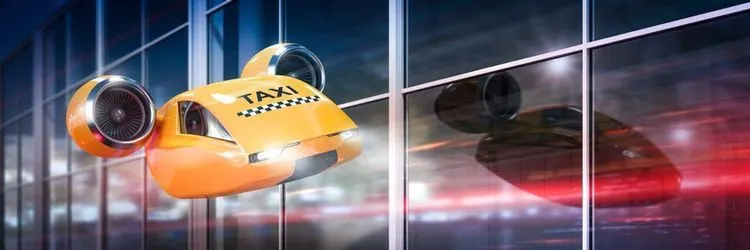
Getting to an event by taxi is nothing unusual or fancy. But imagine coming into the voting booth in a flying taxi to cast your vote for the next US president. Even if it has nothing to do with the presidential elections, some companies want to start the world's first flying taxi services in 2024. For starters, United Airlines has announced that it will buy 200 electric flying taxis from Archer Aviation, the electric aircraft startup that it hopes will fly passengers to the airport. California-based Archer says its taxis will be able to fly 60 miles at 150 miles per hour. As part of a $ 1 billion contract, the US airline and regional airline Mesa Airlines want to buy the electric whiz kid (eVTOL) from Archer. The aim is to use eVTOL taxis to fly passengers over congested highways to hub airports. "With the right technology we can curb the impact of aircraft on the planet, but we need to identify the next generation of companies that will make this happen early and find ways to help them take off," said United Airlines chief executive Scott Kirby in a statement. The company lost more than $ 7 billion in the past year to aircraft hanging on the ground and had to rely on government aid to avoid laying off thousands of employees. However, like other airlines, the company has pledged to offset all of its carbon emissions by 2050. Archers aircraft could save 47 percent of emissions per passenger on the route between Hollywood and LAX. Industry watchers and proponents see flying cars becoming part of the global transportation network, and it is forecast that annual passenger traffic in the air will reach $ 7.2 billion by 2035. Archer is certainly not the only company in this segment, but one of many that is involved in the race for air transport. The European airline Airbus is also planning to transport the participants and the public with its CityAirbus air taxi for the 2024 Olympic Games in France. The flying taxi company Volocopter, a German startup supported by Intel and Daimler, is planning trips to city centers with its electric air taxi VoloCity. In early 2019, Geely, the Chinese owner of Volvo and Lotus, acquired Terrafugia, a US aviation car developer that plans to bring its VTOL to market by 2023. Rolls-Royce also has its own eVTOL concept. At the same time, ride sharing company Uber sold its Elevate air taxi unit in December. However, this type of locomotion is still in its infancy. The companies involved still face a number of technical, regulatory and infrastructural challenges in getting their respective air taxi services off the ground. But make no mistake ... it will come, and much faster than everyone thinks. Wall Street may be skeptical about investor obsession with speculative stocks that advertise unproven technology, but it is unusually optimistic about flying taxis. "These vehicles will be 100 times quieter, they will be significantly safer, they will be significantly cleaner and significantly cheaper," Wall Street investment banker Ken Moelis said Thursday on CNBC's Squawk Alley.