
Warren Buffett’s Disappointment as Ketchup Runs One Way, Kraft Singles Another
Kraft Heinz splits into two as shifting consumer tastes force a rethink of the 2015 megamerger.
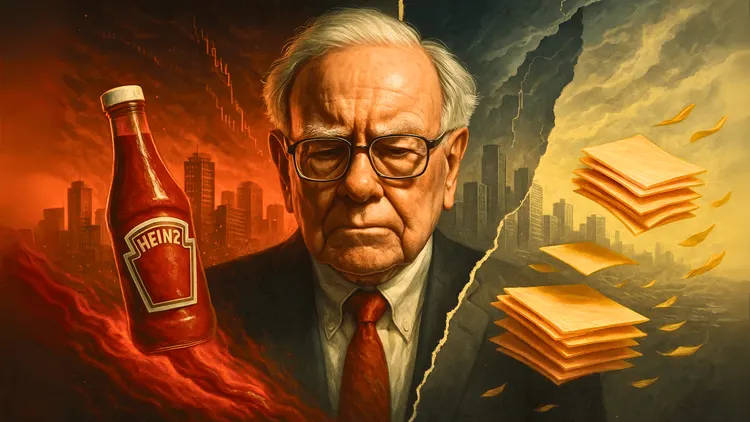
Ten years ago, Kraft and Heinz joined forces to create one of the largest food manufacturers on the planet. The marriage of Heinz ketchup with Kraft Mac & Cheese was supposed to be unstoppable, a merger designed to dominate grocery shelves worldwide. Yet a decade later, the union has unraveled. Consumers moved on, choosing fresh, organic, and less processed options, while Kraft Heinz clung to nostalgia and scale. The company is now splitting into two entities, marking the end of a corporate experiment that never lived up to its promise.
The origins of Kraft Heinz’s megamerger trace back to Warren Buffett and 3G Capital. In 2013, they acquired H.J. Heinz for $23 billion, a deal that instantly signaled ambition. Two years later, they orchestrated a merger with Kraft, creating a $28 billion revenue powerhouse. It was hailed as the fifth-largest food and beverage company in the world, and Wall Street was dazzled. The theory was simple: cost cutting plus brand loyalty would drive lasting profits. But theories rarely hold up when tastes shift as quickly as they did in the 2010s.
A Decade of Decline
From the very start, Kraft Heinz struggled with the clash between consumer trends and its traditional offerings. Velveeta, Kool-Aid, Kraft Singles, and Oscar Mayer hot dogs no longer defined dinner tables the way they once did. Health-conscious shoppers wanted fewer preservatives and more authenticity. Store brands offered cheaper alternatives with little noticeable difference. Meanwhile, aggressive cost-cutting stripped away innovation, leaving the company unable to adapt. By 2019, Kraft Heinz was forced to slash the value of its brands by $15.4 billion, an admission that the strategy was failing.
Buffett’s Disappointment
Warren Buffett, whose Berkshire Hathaway owns a 27 percent stake, has openly admitted that he overpaid for Kraft Heinz. The deal, once celebrated, became one of his rare investment missteps. Berkshire has watched its stake lose billions in value as Kraft Heinz stock tumbled nearly 70 percent since the merger. Buffett opposed the split, frustrated both by the $300 million breakup cost and by the decision to exclude shareholders from a vote. Speaking to CNBC, Buffett put it bluntly: “It certainly didn’t turn out to be a brilliant idea to put them together, but I don’t think taking them apart will fix it.” He added that he was disappointed by the move, a rare flash of candor from one of the most patient investors in modern history.
The Breakup Plan
Kraft Heinz will divide into two companies. One, temporarily named Global Taste Elevation Co., will focus on high-growth, flavor-driven brands like Heinz sauces, Philadelphia cream cheese, and Kraft Mac & Cheese. The other, called North American Grocery Co., will oversee legacy grocery staples such as Oscar Mayer, Maxwell House, and Lunchables. Carlos Abrams-Rivera, the current CEO, will lead the North American business, while a new leader will be appointed to run the global arm. The split is expected to close in the second half of 2026, with both companies retaining headquarters in Chicago and Pittsburgh.
Kraft Heinz is not alone in its restructuring. Food giants across the industry have been breaking up, chasing agility in a marketplace that punishes sluggish conglomerates. Kellogg split into two, with Mars acquiring its snacks arm. Keurig Dr Pepper announced a similar move, dividing coffee and cold beverages. These separations reflect a broader truth: scale alone no longer guarantees success. Consumers now dictate the market with their wallets, and big food brands must move quickly or risk irrelevance.
For Kraft Heinz, the breakup represents a final attempt at reinvention. By separating high-growth brands from the slower, legacy portfolio, each company can focus on its strengths. Global Taste Elevation can chase international markets hungry for sauces and cream cheese, while North American Grocery can optimize familiar staples for cost-conscious households. Yet questions remain. Can either business reignite excitement in brands that many see as relics of another era? Or is this merely a cosmetic fix for deeper issues that money and restructuring cannot solve?
Conclusion
The undoing of the Kraft Heinz merger is more than a corporate maneuver. It’s a symbol of how quickly cultural and culinary tastes evolve, and how even the most iconic brands must keep pace. What began as a marriage of giants ends as a cautionary tale about scale, strategy, and the limits of nostalgia. Kraft Heinz’s next chapter will test whether legacy brands can be reborn or if they will remain reminders of a golden age that has long passed.