
US Democrats pass infrastructure bill
The value is $ 1 trillion
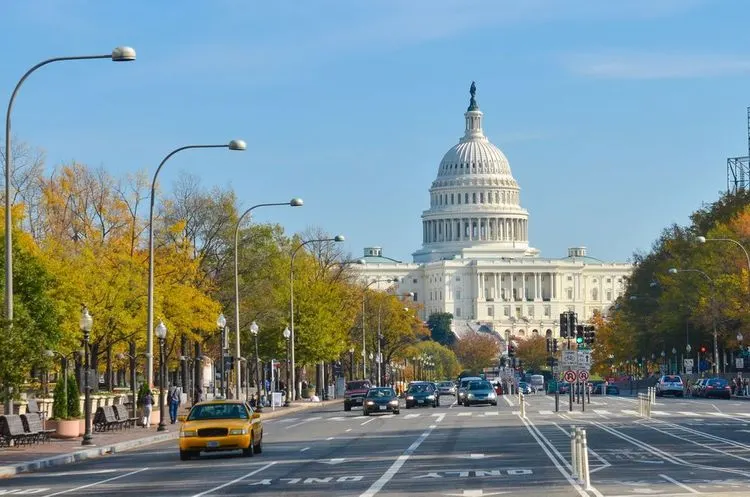
After a day-long stalemate, the Democrats have overcome the differences between progressives and centrists and passed a $ 1 trillion package for highways, broadband networks and other infrastructure improvements that President Joe Biden can put up for signature.
The 228-26 vote late Friday is a significant triumph for Biden's Democrats, who have been debating the ambitious spending laws that make up the bulk of his domestic agenda for months.
Biden's administration will oversee the largest modernization of American roads, railways, and other transportation infrastructures in a generation that he promised will create jobs and make the United States more competitive.
The Democrats still have a lot of work to do when it comes to the second pillar of Biden's domestic policy program: a far-reaching expansion of the social safety net and programs to combat climate change. At a cost of $ 1.75 trillion, this package would be the largest addition to the American safety net since the 1960s, but the party is struggling to pull itself together behind it.
Democratic party leaders had hoped to pass both bills from the House of Representatives on Friday, but postponed passage after center supporters called for an impartial statement of costs - a process that could take weeks.
After hours of closed-door sessions, a group of Center Democrats promised to vote in favor of the bill by November 20 - provided the impartial Congressional Budget Office determines the cost is in line with White House estimates.
"Welcome to my world. This is the Democratic Party," House spokeswoman Nancy Pelosi told reporters earlier in the day. "We are not a step party".
The $ 1.75 trillion bill cleared a procedural hurdle early Saturday by 221 votes to 213 that will allow Democratic leaders to quickly call a final vote in due course.
The stalemate came just days after the Democrats lost control of the state elections, which raised fears that they might lose control of Congress in the next year.
The Infrastructure Bill was passed with the support of 13 Republicans, keeping Biden on his promise to pass a bipartisan bill. The term "infrastructure week" had become a punchline in Washington during the four years in the White House of his predecessor Donald Trump, when plans to focus on these investments were repeatedly thwarted by scandals.
"Generations of today will look back and know that America won the economic competition of the 21st century," Biden said in a statement.
WANT TO GO FORWARD
The party is keen to show it can advance the president's agenda and stave off challenges in the 2022 midterm elections, where Republicans will seek to regain control of both houses of Congress that they lost to the Democrats under Trump.
Congress is also faced with an impending deadline of December 3 to avert a politically embarrassing government standstill and an economically catastrophic insolvency of the federal government.
With a wafer-thin majority in Congress and a united Republican opposition, Democrats need unity to pass laws.
The infrastructure bill, which passed the Senate in August with 19 Republican votes, would fund a massive upgrade of America's roads, bridges, airports, seaports, and rail systems while expanding broadband Internet services.
The Build Back Better package includes provisions on childcare and preschool, elderly care, healthcare, prescription drug pricing, and immigration.
It would bolster the credibility of Biden's pledge to cut U.S. greenhouse gas emissions by half by 2030 at the UN Climate Change Conference in Glasgow, Scotland, from 2005 levels.
Republicans are unanimously opposed to this bill as they see it as a dramatic expansion of government that would harm businesses.
"This may be a black day for America," said Republican MP Glenn Grothman, who described the law's childcare and preschool provisions as a "Marxist" attempt to get the federal government to raise children.
The non-partisan U.S. The Joint Committee on Taxation estimates that the Social Expenditure Bill would generate $ 1.48 trillion in new tax revenue over the next decade, which is less than the cost of $ 1.75 trillion.
Pelosi and other senior Democrats have said it does not take into account increased tax enforcement and savings from lower prescription drug prices.