The Ripple Effect of Uranium Supply Cuts on Global Energy Markets
Navigating the New Era of Uranium Development: Global Shifts and Strategic Insights
 Editorial Team (ET)September 26, 2026
The uranium market is witnessing a significant shift, spurred by strategic moves in production and an uptick in global demand for nuclear energy. A recent development has seen Kazakhstan, the world's leading uranium producer, implement a substantial cut in its output forecasts. This decision has reverberated across the industry, prompting uranium project developers to recalibrate their strategies in anticipation of a more favorable market landscape.
The Spark from Kazakhstan
Kazatomprom's announcement of a reduction in its 2024 production guidance by up to 14% has sent shockwaves through the uranium sector. This bold move underscores a strategic recalibration in response to market dynamics and sets the stage for a tighter supply scenario.
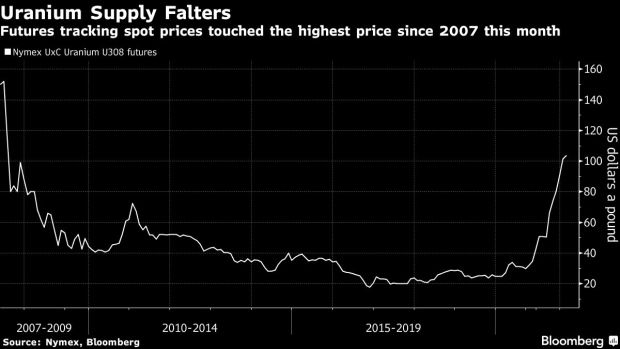 Source: Nymex, Bloomberg
Impact on Global Uranium Supply
The immediate aftermath of Kazakhstan's production cut has been a palpable sense of urgency among utilities and energy companies. With the specter of supply constraints looming, the industry is on high alert for potential disruptions and price fluctuations.
Looking beyond the immediate horizon, the long-term implications for the uranium market appear robust. The strategic contraction of supply from Kazakhstan is likely to act as a catalyst, enhancing the value proposition of new and existing uranium projects.
Countries such as China, Japan, South Korea, and France are spearheading a renaissance in nuclear energy, driven by the dual imperatives of energy security and carbon neutrality. This resurgence is poised to underpin a sustained demand for uranium, providing a bullish backdrop for the market.
Uranium Developers Respond
Brandon Munro, CEO of Bannerman Energy Ltd, articulates a vision of optimism for the sector. With the Etango project in Namibia slated for production by the end of 2026, Bannerman is positioning itself as a key player in diversifying the global uranium supply chain.
Echoing this sentiment, JOHN BORSHOFF of Deep Yellow Limited. forecasts a golden era for uranium producers, buoyed by enduring high prices and robust demand. The Tumas project in Namibia, expected to commence production in 2026, exemplifies Deep Yellow's strategic thrust into this burgeoning market.
The Strategic Importance of Diversification
Utility companies, in their quest for energy security, are increasingly prioritizing diversification of their uranium sources. This strategic imperative is fostering a conducive environment for new off-take agreements, further invigorating the uranium development landscape.
The Role of Off-take Agreements
Off-take agreements are emerging as a linchpin in the uranium supply chain, offering a measure of predictability and stability in a volatile market. These agreements not only bolster supply chains but also provide a critical revenue stream for project developers.
Economic and Environmental Consideration
Nuclear power, with its promise of cost-effectiveness and minimal carbon emissions, stands at the forefront of the transition to sustainable energy. The economic rationale, coupled with environmental imperatives, underscores the strategic relevance of uranium in the global energy mix.
The Future of Nuclear Power
Advancements in nuclear technology, alongside a nuanced regulatory framework, are paving the way for a new era in nuclear energy. This evolving landscape presents both challenges and opportunities for uranium developers.
Regulatory hurdles and market volatility represent significant challenges for the uranium sector. Developers must navigate these complexities while addressing environmental concerns and public skepticism about nuclear energy.
The safe disposal of nuclear waste and the management of public perception are critical issues that the industry must address. Transparent, responsible practices are essential for sustaining public trust and advancing the nuclear agenda.
Investment in Uranium Mining
The uranium market is attracting keen interest from investors, drawn by the sector's growth prospects and strategic importance. Identifying and capitalizing on investment opportunities requires a nuanced understanding of market trends and geopolitical dynamics.
Role of International Cooperation
Global partnerships in nuclear energy are crucial for advancing the agenda of sustainable, secure energy. International cooperation facilitates the sharing of best practices, technological innovation, and regulatory harmonization, benefiting the entire uranium ecosystem.
Conclusion: The Outlook for Uranium Development
The uranium development sector stands at a crossroads, buoyed by strategic production cuts, rising demand for nuclear energy, and a favorable investment climate. As developers navigate the challenges and opportunities ahead, the long-term outlook for uranium remains promising, underscored by a collective commitment to energy security, environmental sustainability, and technological innovation.