
The AI Gold Rush Hasn’t Gone Full Bubble, Says Goldman Sachs
Goldman Sachs’ Peter Oppenheimer says today’s AI-fueled rally may resemble past bubbles, but strong fundamentals keep it on solid ground—for now.
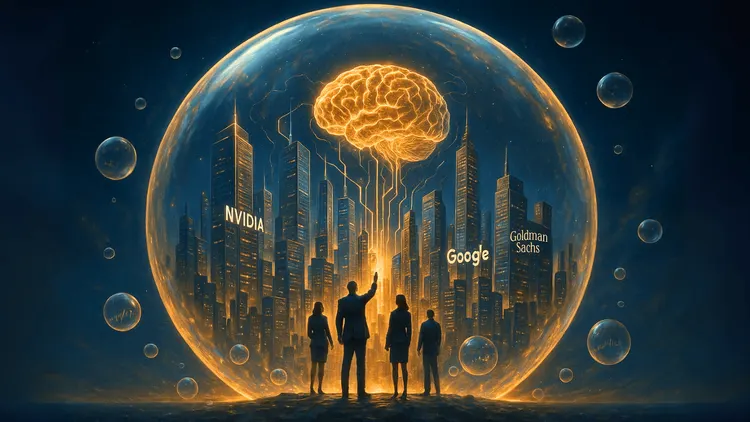
The market may feel euphoric, but Goldman Sachs insists we’re not living through a bubble—at least not yet. Investors might be tempted to draw comparisons to the late 1990s or the 2021 tech surge, but Peter Oppenheimer, Goldman’s chief global equity strategist, argues the fundamentals tell a different story. His latest report paints a picture of a market walking a fine line between exuberance and realism, with artificial intelligence sitting squarely at the center of it all.
Echoes of the Past, But Not a Repeat
Oppenheimer acknowledges that some patterns mirror previous bubbles. Valuations are rising, leadership is narrowing, and capital intensity is creeping higher, particularly in AI. The emergence of vendor financing in the sector feels eerily reminiscent of the dot-com days when companies burned cash to chase growth. Yet, this time, the balance sheets look stronger, the earnings more tangible, and the innovation far more grounded in productivity than hype.
In the late 1990s, the market swelled on expectations rather than results. Today’s AI-driven rally, powered by heavyweights like Nvidia, <a class="tvreplink" target="_blank" href="https://www.tradingview.com/chart/?symbol=Nasdaq%3AMSFT">Microsoft, and Google, is different. These companies are not speculative startups—they’re global titans generating billions in free cash flow. That distinction, Goldman argues, is what’s keeping this market from crossing into true bubble territory.
Concentration and the Case for Caution
Still, the numbers are staggering. The five largest U.S. tech companies now have a combined market value exceeding the entire EURO STOXX 50, along with the stock markets of the UK, India, Japan, and Canada. The top ten U.S. stocks, eight of which are tech-related, make up nearly a quarter of global equity value—around $25 trillion. That kind of concentration naturally raises eyebrows and prompts uneasy comparisons to previous eras of excess.
Oppenheimer concedes that the level of dominance among these giants can’t be ignored. When a handful of companies wield this much market power, even small shifts in sentiment can ripple across global portfolios. Yet, he insists that so far, investors’ enthusiasm remains grounded in reality. Strong margins, consistent earnings, and transformative innovation have underpinned Big Tech’s rise, not blind speculation.
Valuations Are High, But Not Irrational
Goldman Sachs doesn’t deny that valuations have become stretched, particularly in the AI and tech sectors. Oppenheimer’s note highlights elevated price-to-earnings and price-to-book ratios, as well as rich PEG multiples. But when compared with historical blow-offs, such as the dot-com bubble or the post-COVID surge, today’s numbers still fall short of mania levels.
The key difference, Goldman argues, lies in cash flow. Bubbles form when valuations detach from any realistic path to profitability. That’s not the case today. Nvidia, for instance, isn’t just a momentum play—it’s the backbone of the AI revolution, producing chips that power everything from data centers to autonomous systems. <a class="tvreplink" target="_blank" href="https://www.tradingview.com/chart/?symbol=Nasdaq%3AMSFT">Microsoft’s integration of AI across its software suite, and Google’s cloud-based expansion, are similarly driving real revenue growth rather than speculative hope.
The Role of AI and Innovation
The AI boom is the defining catalyst of this cycle, and its rapid development has investors on edge. Oppenheimer draws parallels to earlier tech revolutions—from railroads to the internet—each of which fueled waves of investment and wealth creation, but also periods of correction. The challenge is discerning which companies will emerge as sustainable leaders and which are destined to fade as competition intensifies.
Goldman believes that while the current rally is concentrated among a few players, it’s also sowing the seeds for future diversification. The firm expects a new generation of tech superstars to emerge from AI, cloud computing, and semiconductors, as innovation continues to ripple through the ecosystem.
Fundamentals Over FOMO
Perhaps the most striking takeaway from Oppenheimer’s report is its emphasis on fundamentals. This isn’t a market driven by “fear of missing out,” he argues, but one supported by robust earnings, balance sheet discipline, and a genuine productivity renaissance fueled by AI. The cautionary tone isn’t about predicting a crash—it’s about reminding investors that even rational rallies can get ahead of themselves.
Still, Goldman warns that the concentration of capital in a few megacaps leaves portfolios vulnerable. If the AI narrative falters or regulation tightens, the correction could be sharp. That’s why the bank’s advice is clear: diversify beyond the giants. Innovation doesn’t stop at Nvidia or <a class="tvreplink" target="_blank" href="https://www.tradingview.com/chart/?symbol=Nasdaq%3AMSFT">Microsoft, and the next big winners may already be forming quietly on the periphery.
A Rally With Roots, Not Bubbles
In essence, Goldman Sachs’ analysis serves as both reassurance and reminder. The market’s ascent may be steep, but it’s not untethered from reality. The foundations—strong profits, innovation, and real cash flows—remain intact. Yet, as history has shown, every boom tests the line between progress and excess. Whether today’s AI-fueled rally remains on the right side of that line will depend on investors’ discipline in the months ahead.
Oppenheimer’s conclusion strikes a balance between optimism and prudence. “While it appears we are not in a bubble yet, high levels of market concentration and increased competition in the AI space suggest investors should continue to focus on diversification,” he wrote. It’s a message that resonates across every bull market in history: stay invested, but stay aware.
Conclusion
The market may be dancing near the edge of exuberance, but according to Goldman Sachs, it hasn’t fallen into the abyss of irrationality. The difference lies in earnings, balance sheets, and the real-world application of technology. AI may be the spark, but fundamentals remain the fuel. Whether that balance holds as valuations climb will determine if this rally marks the beginning of a new era—or the next great cautionary tale.