
Texas Governor expands state´s medical cannabis program
Under the new bill, patients with PTSD and cancer will be given medical cannabis.
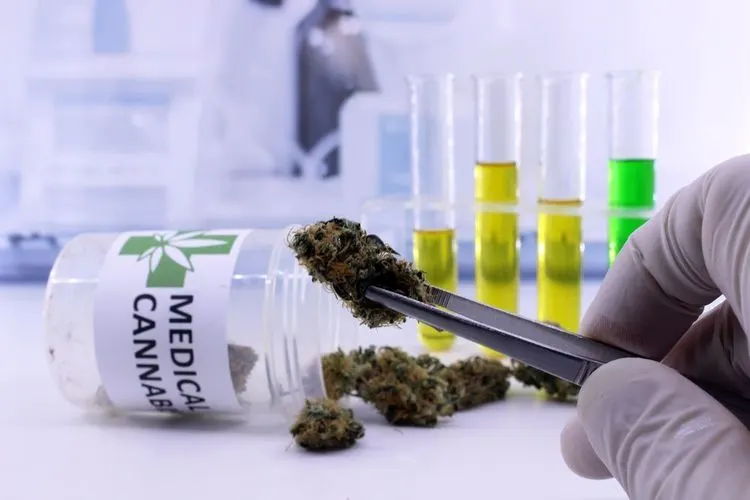
Texas Gov. Greg Abbott signed a bill on Tuesday expanding the state's medical marijuana program, despite cannabis activists saying the legislation doesn't go far enough. The measure, House Bill 1535 (HB 1535), was signed by the Republican governor after lawmakers in the Texas Senate made significant changes to the law last month. Under the bill, patients with post-traumatic stress disorder (PTSD) and all types of cancer will be eligible to use approved medical cannabis products under the Texas Compassionate Use Program. Under current regulations, only intractable epilepsy, Parkinson's, multiple sclerosis, ALS, terminal cancer, autism and many seizure disorders are listed as qualifying medical conditions for participation in the program. HB 1535 also raises the upper limit for THC in approved medical marijuana formulations to 1 percent of dry weight. Currently, according to the rules of the program, only cannabis drugs with a maximum THC content of 0.5 percent are allowed. An earlier version of the law that raised the THC limit to 5 percent and also added chronic pain as a qualifying condition was passed by the Texas House of Representatives in April. But when the measure was debated in the Senate last month, Republican Senator Charles Schwertner introduced a replacement version of the bill that removed chronic pain as a qualifying condition and backed the potency increase to 1 percent. "As a pharmacist and as a doctor, I firmly believe that our limited medical program, with proper rules and supervision, is the way forward for patients in Texas seeking symptom relief," said Schwertner as he presented the changes to the legislation . "I believe the evidence is starting to show that. I believe work needs to be continued, but certainly, the testimony is very strong from patients who suffer from some of these conditions." However, medical marijuana patient advocates say HB 1535 doesn't go far enough. A February survey by the University of Texas at Austin and the Texas Tribune found that 60 percent of Texans believe that small or large amounts of marijuana should be legalized for any purpose. Heather Fazio, director of Texans for Responsible Marijuana Policy, said the final version of the law was "unreasonably restrictive". "While we're glad the Compassionate Use Program is expanding, it's disappointing to see that Texas is making slow progress while other states, such as Alabama, are making headway with real medical cannabis programs," said Fazio. "So little is being done and we wish \[the lawmakers\] would do more." Medical cannabis patient and U.S. Army veteran Viridiana Edwards said she tried numerous pharmaceutical drugs to treat the PTSD, chronic pain and migraines that she suffered after being injured while serving in Afghanistan. The drugs provided only partial relief, and many caused unacceptable side effects, so that Edwards appeared to have no way out. "You kind of lose hope that you will find something that will help you," Edwards told the Texas Observer.