
Sweden Overturns Uranium Ban as District Metals Files Landmark Technical PEA
As Sweden officially eliminates its municipal veto and legal ban on uranium mining, District Metals files a landmark technical PEA for the polymetallic Viken deposit.
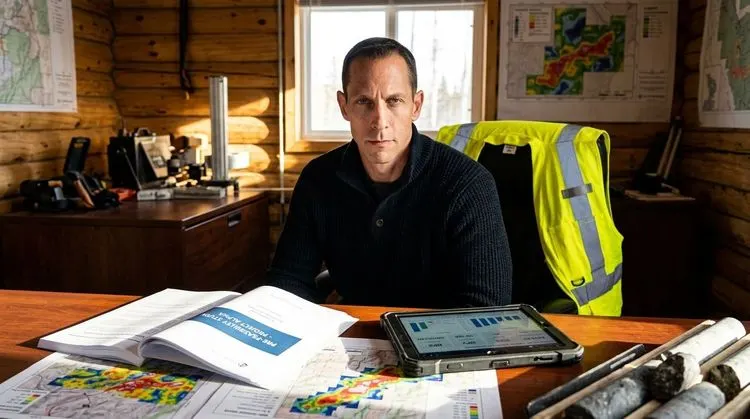
Sweden has officially turned the page on its nuclear past, setting the stage for a modern critical minerals resurgence.
On July 20, 2026, District Metals Corp. (TSXV: DMX | OTCQX: DMXCF) officially filed its independent technical report on the Preliminary Economic Assessment (PEA) for the polymetallic Viken Energy Metals Deposit on the SEDAR+ disclosure system. The filing arrives just days after Swedish legislation facilitating the development of uranium mining formally took effect, clearing away years of regulatory stagnation.
The proposed open-pit mining and processing operation in Jämtland County outlines an average annual output of 3.3 million pounds of U3O8 (1,269 tU) over a 13-year mine life, while simultaneously extracting valuable co-products including vanadium and potash. The processing plant schedule relies on approximately 77% Indicated mineral resources and 23% Inferred mineral resources. Garrett Ainsworth, Chief Executive Officer of District Metals Corp., characterized the PEA as a transformational milestone, pointing to globally significant economics that position Viken as one of the premier critical raw material opportunities in today’s sector.
The technical report, titled Preliminary Economic Assessment on the Viken Energy Metals Project, Jämtland County, Sweden, was authored by independent firm P&E Mining Consultants Inc with technical contributions from METS Engineering Group Pty Ltd in accordance with Canadian National Instrument 43-101 standards. While early-stage economic assessments incorporate geologically speculative Inferred resources, the filing represents a critical step that establishes the baseline for upcoming prefeasibility and feasibility work.
This commercial progress coincides with a total overhaul of Swedish mining law. Sweden holds over one million tonnes of uranium resources embedded within black alum shales across three main deposits. Although exploration and extraction were prohibited in 2018 under amendments to the national environmental code, the Swedish parliament voted in November 2025 to repeal the moratorium, bringing the repeal into force on January 1.
A follow-up piece of legislation enacted on July 15 sealed the deal. By removing uranium extraction from regulation as a "nuclear facility," the new law eliminates the requirement for explicit municipal consent as well as separate environmental code reviews. Removing the local veto effectively normalizes uranium permitting, putting it on equal footing with standard mining concessions.
The regulatory shift extends benefits across the regional mining landscape. Aura Energy Limited (ASX: AEE), which holds the nearby Häggån deposit in Jämtland containing vanadium, nickel, molybdenum, zinc, potash, and uranium, confirmed that the legislative changes remove the main local administrative bottlenecks that previously restricted project advancement. With legal pathways clarified and municipal vetoes eliminated, Sweden’s alum shales are transitioning from political talking points into pivotal cornerstones of Europe's long-term energy supply chain.
Source
This article is compiled from regulatory project disclosure filings and legislative records published on July 20, 2026, regarding District Metals Corp's SEDAR+ submission and the enactment of revised mining statutes by the Swedish Parliament.
Disclaimer
The author of this article has not been compensated for this content and does not own shares or hold financial positions in District Metals Corp. (TSXV: DMX), Aura Energy Limited (ASX: AEE), or any of the other companies mentioned in this article. This article is for informational purposes only, was prepared independently without company involvement, and utilized AI assistance for both the text and the accompanying image thumbnail. Investors should conduct their own due diligence before making investment decisions.