Pfizer promotes COVID-19 pill.
Nearly 90% effective, company says, according to analysis
 Gabriel ThomasOctober 5, 2026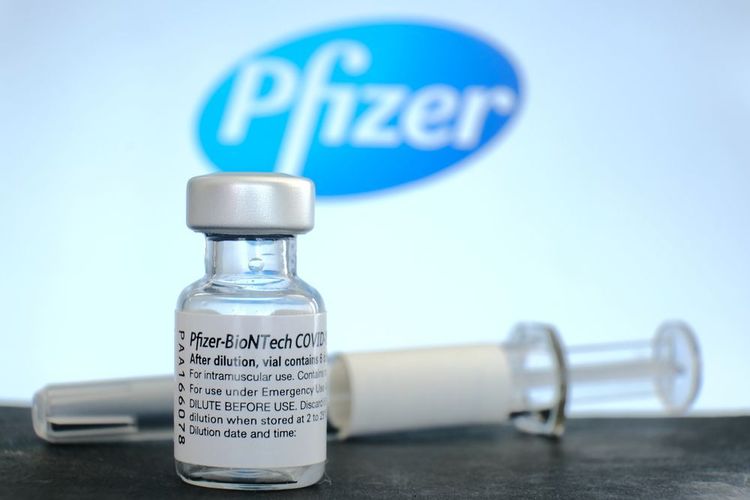
On Tuesday, stocks fell globally and the US dollar rose to nearly a week-long high as investors nervously watched the Omicron coronavirus spread and anticipated numerous central bank decisions coming this week.
Wall Street fell and US Treasuries rose across the curve after US producer prices rose more than expected in November, another data point that supports the view that inflation may remain uncomfortably high for some time.
"As the year draws to a close, mixed messages continue to prevail," said Lindsey Bell, chief money and market strategist at Ally Invest. "The unexpectedly high PPI has perturbed the market, especially tech stocks. However, bond yields don't seem to be worried about inflation as the 10-year bond is 20 basis points below pre-Thanksgiving levels."
The US Federal Reserve is expected to announce on Wednesday that it is accelerating the end of its pandemic-era bond purchases and announcing a turn to rate hikes next year to protect itself from soaring inflation.
Several central banks will meet this week, starting Tuesday with the two-day meeting of the Federal Reserve, followed by the European Central Bank on Wednesday, the Bank of England on Thursday and the Bank of Japan on Friday.
While some investors sit on the sidelines and hesitate to take new positions before the end of the year, others remain happy to "buy the dent," a strategy that succeeded during the strong rally of 2021, said Benjamin Bowler, equity analyst at the Bank of America (NYSE: BAC).
"Markets can keep running as long as they think they are on solid ground and it's only when they look down that gravity kicks in," Bowler wrote in a note on Tuesday. "You can convince yourself for a while that a less supportive Fed is not going to derail the rally.
Bowler said this market rally, fueled in large part by the Fed's stimulating bond buying policy, poses real risk, especially as current levels of inflation could limit the Fed's ability to do so.
At 2:40 p.m. EST (1940 GMT) the MSCI index for stocks around the world lost 0.87% and the pan-European STOXX 600 index lost 0.84%.
The Dow Jones Industrial Average fell 97.14 points, or 0.27%, to 35,553.81, the S&P 500 fell 41.76 points, or 0.89%, to 4,627.21, and the Nasdaq Composite fell 225.83 points, or 1 , 47% to 15,187.45.
The rapidly expanding variant of Omicron also dampened sentiment on Wall Street after the S&P index hit an all-time high last week.
Emerging market stocks lost 0.8%. The broadest MSCI index for Asia-Pacific stocks outside of Japan closed 0.85% lower after the Asian Development Bank (ADB) cut its growth forecast for emerging Asia to reflect the risks of the new virus variant.
The Chinese CSI300 index fell 0.67% after health officials in Tianjin found the country's first Omicron case.
The dollar index rose 0.191% while the euro fell 0.22% to $ 1.1258. Given the expectation that the Fed will tighten its monetary policy faster than the ECB, the euro is considered vulnerable.
The US 10-year Treasury yield was 1.4411% and the 30-year Treasury bond yield was 1.826%.
US crude closed at $ 70.73 a barrel, down 56 cents, or 0.8%, and Brent closed 69 cents down at $ 73.70, down 0.9% for the day. is equivalent to. Oil prices are still far from the levels above $ 85 a barrel they reached in mid-October before the variant was discovered.