
Opec allies to increase oil production
UAE rush - Crude oil prices soared
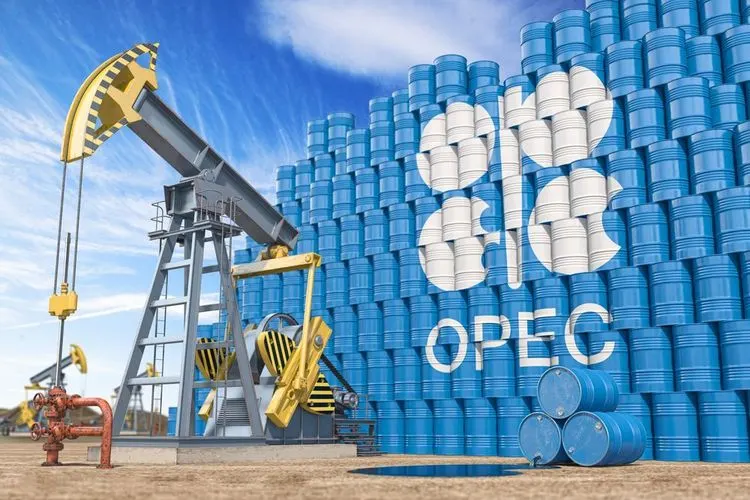
The UAE will encourage other OPEC members to increase oil production as Russia's invasion of Ukraine has pushed crude prices to their highest levels in more than a decade, according to a senior official.
The United Arab Emirates is the first Opec member to ask the alliance to increase production since Russian President Vladimir Putin sparked a global crisis by invading Ukraine two weeks ago.
Yousef al-Otaiba, the UAE ambassador to Washington, said in a statement to the Financial Times: "We support increases in production and will encourage Opec to consider higher production levels."
"The UAE has been a reliable and responsible supplier of energy to world markets for more than 50 years and believes that the stability of energy markets is vital to the world economy," he added.
The Emirati ambassador's statement came a day after US President Joe Biden imposed an immediate ban on imports of Russian crude oil, sparking fears that other countries would follow suit and block Russian energy flows.
The Biden administration has been urging oil producers to increase production to lower prices for weeks. But the Opec+ alliance, which includes Russia, has refused to go beyond a plan agreed last year to increase production by 400,000 barrels a day each month.
The international reference price for Brent crude peaked at $131.64 a barrel on Wednesday but fell sharply back to around $111 after the UAE's comments. Iraq also said on Wednesday it was ready to increase production if needed.
Later on Wednesday, UAE Energy Minister Suhail Al Mazrouei tweeted that the country remains "adhering to the Opec+ deal and the existing monthly production adjustment mechanism."
The UAE is a close ally of Saudi Arabia, the de facto leader of Opec, which has defied US calls for a production increase. Last year, however, Abu Dhabi became embroiled in a dispute with Riyadh over funding quotas.
It wasn't immediately clear whether the UAE coordinated its plans to get Opec to increase production with Saudi Arabia.
However, Abu Dhabi's stance will be welcomed by the Biden administration, which is concerned about rising prices at American gas pumps and the impact of rising energy costs on the global economy.
Analysts warn that there is hardly any spare production capacity worldwide and only Saudi Arabia is able to significantly increase its production and the UAE to a lesser extent. They add that even a coordinated move could have limited impact.
"They know there isn't enough spare capacity to fill a hole the size of Russia," said Energy Aspects' Amrita Sen. She added that it was not surprising that the UAE was the first Opec member to speak out in favor of increasing production, having previously indicated that it plans to increase its exports.
Some Opec members, including Nigeria, Angola and Malaysia, have consistently missed their production quotas since the most recent Opec+ deal last year.
In January, the group's total production was 900,000 b/d below its target, according to the International Energy Agency.
Mohammed Barkindo, the secretary general of OPEC, warned this week that there is currently no capacity in the world to replace Russia's exports of 7 million barrels [per day].
The Gulf states have sought a neutral stance on Russia's invasion of Ukraine, in part because it is part of Opec+, an alliance that has been in place for more than five years to keep oil prices at sustainable levels , work together to set funding levels.
The UAE is considered one of the US's most important Arab partners, but relations between Abu Dhabi and Washington have become increasingly strained in recent weeks.
The Gulf state, which took a temporary seat on the UN Security Council earlier this year, angered American politicians by abstaining on a US resolution condemning Russia's invasion of Ukraine.
The abstention reflected Abu Dhabi's growing frustration with the Biden administration, particularly what Emirati officials say Washington's hesitant response to attacks on the UAE by Iran-backed rebels in Yemen.
The US has deployed additional military assets to the UAE, which is part of a Saudi-led coalition that intervened in Yemen's civil war in 2015 to combat Iran-allied Houthis. However, Abu Dhabi wants Washington to designate the Houthis as a terrorist organization and impose tougher sanctions on the Yemeni group.
The Biden administration has been reluctant to do so, warning that such a move would exacerbate Yemen's humanitarian crisis.
The UAE is also concerned about the Biden administration's prospects of forging a deal with Iran to revive the 2015 nuclear deal, fearing it would embolden the Islamic Republic and its proxies.
Energy is the world's essential business and Energy Source is its newsletter. Every Tuesday and Thursday, Energy Source delivers breaking news, trend-setting analysis and insider information straight to your inbox. Sign up here.
Otaiba, one of the most influential Emirati officials, said last week that the UAE and the US "are going through a stress test, but I'm confident we'll get out of there and improve".
Helima Croft, executive director at RBC Capital Markets and former CIA analyst, said the US still had to offer Saudi Arabia something if it wanted to secure the world's top oil exporter's support in cutting oil prices.
"What does the US offer to Saudi Arabia contain to get it out of the Opec+ agreement?"
Relations between Riyadh and Washington have been strained since Biden took office. The president has slammed the kingdom for human rights abuses, including the killing of Jamal Khashoggi by Saudi agents in 2018, and has vowed to reassess ties with Saudi Arabia and not meet with Crown Prince Mohammed bin Salman, the daily ruler.