Most dangerous air pollution of the year in New Delhi
The city is darkened - the air quality index is 463
 Gabriel ThomasOctober 5, 2026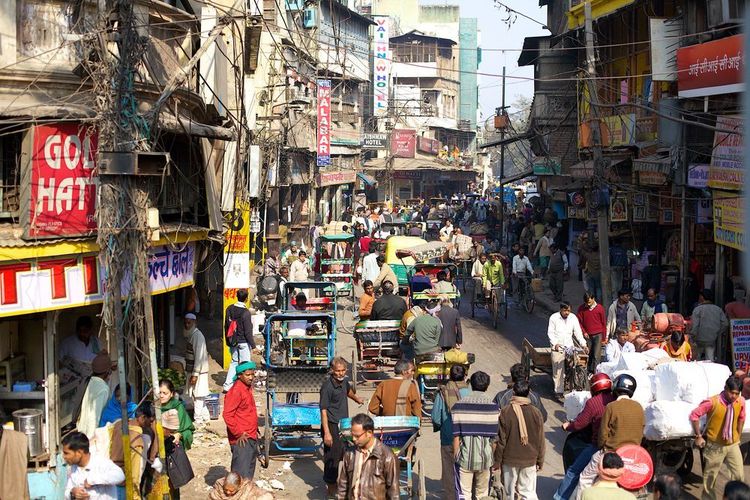
Residents of New Delhi woke up Friday under a blanket of smog that darkened the city. It was the most dangerous air pollution of the year after revelers broke a fireworks ban during the annual Hindu Festival of Lights in India - as usual.
New Delhi has the worst air quality of any capital city in the world, but even by its sad standards, the value of Friday - the morning after Diwali ended - was particularly bad, the price tag for celebrating India's biggest festival in the loudest, smokiest way possible will.
The Air Quality Index (AQI) rose to 463 on a scale of 500 - the highest value recorded in 2021, indicating "severe" conditions affecting even healthy people, not to mention those with existing respiratory diseases.
The AQI measures the concentration of the toxic fine dust particles PM2.5 in one cubic meter of air. In Delhi, a city of nearly 20 million people, PM2.5 averaged 706 micrograms on Friday, while the World Health Organization classifies anything above an annual average of 5 micrograms as unsafe.
PM2.5 in the air can cause cardiovascular and respiratory diseases such as lung cancer. And in India, more than a million people die from the toxic air every year.
On the morning after Diwali, thick smog turned the daylight in and around Delhi into twilight, when the lights of cars and buildings barely penetrated the fog and the ubiquitous debris of fireworks covered the ground.
"The fireworks ban appears to have been unsuccessful in Delhi, resulting in dangerous pollution adding to existing sources," said Sunil Dahiya, analyst at the Center for Research on Energy and Clean Air (CREA) .
Every year either the government agencies or the Indian Supreme Court impose a ban on fireworks. But the bans are apparently rarely enforced.
"There is no other country that likes to legislate and then get circumvented as ours. Today, Delhi is particularly confronted with the consequences of this quality of our lives," said Jairam Ramesh, a lawmaker and leader of the largest opposition Congress Party, in a Twitter post (NYSE: TWTR).
Delhi Environment Minister Gopal Rai said authorities were planning to install 20 anti-smog cannons to spray water into the air, thereby diluting the smog. However, there have also been calls for stricter measures such as a temporary ban on construction activities and the closure of high-polluting factories.
FROM FARM TO FIRE
To make matters worse, Diwali falls at a time when farmers in New Delhi's neighbors Punjab and Haryana burn the stubble left behind after the harvest to prepare their fields for the next harvest.
According to the monitoring data of the Federal Ministry of Geosciences, the stubble fires are responsible for up to 35% of the PM2.5 values in New Delhi.
A rare period of clear skies in October due to intermittent rains and strong winds gave Delhi's residents the cleanest air in at least four years.

In the winter months, however, air pollution in northern India skyrockets as the lower temperatures and lower wind speeds keep the pollutants in the air longer.
Ambrish Mithal, a doctor at Max HealthCare Hospital in New Delhi, is annoyed with the lack of efforts to make the capital more livable and ventes his frustration at the deteriorating AQI scores.
"It is terrible for allergy sufferers and asthmatics. We will continue to argue about the reasons and are doomed to suffer," he wrote in a post on Twitter.
The Indian government is often accused of not doing enough about pollution as it gives priority to economic growth to raise living standards in the world's second most populous country.
On Monday, Prime Minister Narendra Modi said at the COP26 climate summit in Glasgow that India would achieve net zero emissions by 2070, but some experts held that target for at least two decades too late.