
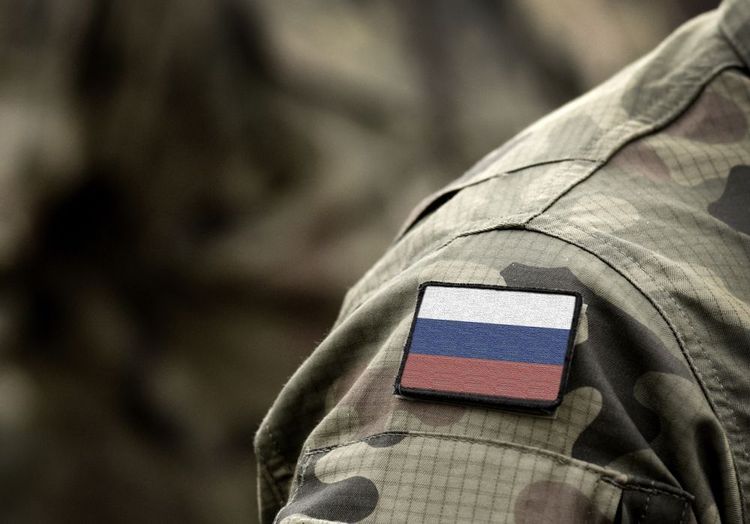
Russia has admitted for the first time that it suffered heavy casualties in Ukraine as its forces bombed frontline towns and devastated urban areas in one of the most devastating days of the week-long invasion.
After several days of refusing to admit to significant battlefield casualties in the "special military operation", Russia now said 498 of its soldiers had died in Ukraine and another 1,597 were injured.
However, on Wednesday evening there were indications that Russian forces may have taken Kherson, which would be the first provincial capital in Ukraine to fall.
Igor Kolykhayev, mayor of Kherson, said Russian troops were in the city and had entered the city hall, according to a Facebook post referenced by the English-language Kyiv Independent newspaper. In the post, Kolykhayev stated that there were no more Ukrainian forces in the southern city.
Other media also reported this development, but it could not be independently verified. The Ukrainian embassy in the US declined to comment and the administration of Joe Biden only stated that it had seen the reports.
The Kherson situation underscores the fact that the Russian invasion has had more success in southern Ukraine than in the north and east of the country.
US officials said the Russian military was encountering more resistance and more logistical hurdles than expected. Efforts to advance on the Ukrainian capital Kiev have slowed as Russian soldiers have run out of fuel and food.
The Russian admission of losses came at a time when the human and economic toll of the war was becoming increasingly clear: Civilian casualties were rising fast, and 874,000 people were fleeing Ukraine on a scale that the UN said would lead to the largest refugee crisis in Europe this century.
Russia's admitted death toll is nearly five times its total losses in Syria and underscores the scale of the resistance its forces have faced. Ukraine claims Russia's losses are far higher, but has not released its own casualty figures.
Sanctions are hampering Russia's economy and its huge commodities market is being shunned by refiners, banks and shipping companies. Worries about the conflict and its economic impact pushed oil prices even higher above $100, with Brent crude, the international benchmark, hitting an eight-year high of $113.
Index provider MSCI said on Wednesday it would remove Russian stocks from its widely followed emerging market indices, warning that sanctions had made the country's stock market "unlivable". Fitch and Moody's joined rival S&P Global in downgrading Russia's credit rating to junk level.
The exodus of Western companies from Russia accelerated, and Boeing shut down major business units, including parts and maintenance for the country's airlines. Boeing thus joins a fast-growing list of companies such as Apple, ExxonMobil, BMW, Ford, Siemens and Nike that are going out of business.
Shocking images from Ukraine have led to international condemnation of Russia, and an overwhelming majority of the UN General Assembly called on Russia to withdraw all troops immediately. The vote in the emergency session was 141 to 5, with 35 abstentions. Major countries abstaining included China, India and Vietnam.
Secretary of State Antony Blinken said the US remains open to a diplomatic solution, but called on Russia to first halt military operations in Ukraine. "De-escalation, withdrawal of troops, that would open the way to diplomacy," he said.
Blinken said he would fly to Brussels on Thursday to continue coordination with Nato and G7 allies and then travel on to Poland and Moldova.
The Pentagon said the Russian military had stepped up its missile and artillery attacks on Kiev in the past 24 hours, but added that Russian troops had made no "significant advances" on the capital.
According to a US official, the Pentagon has also begun delivering Stinger anti-aircraft missiles to Ukraine after Kiev called on Washington and its Western allies to supply more weapons.
In the run-up to the invasion, the White House had been reluctant to supply Stinger missiles, which the US had provided to the mujahideen during the then Soviet Union's invasion of Afghanistan.
Footage of destroyed buildings made it clear that Russian forces had increased their use of heavy artillery, rockets and air strikes on urban targets.
"Many of our towns and villages are now suffering from Russian terror," said Ukrainian Defence Minister Oleksii Reznikov.
Across the country, troop movements, reinforcements and a shift in the use of heavy weapons to urban areas have set the stage for a critical phase of the conflict in which Russia is expected to accelerate its ground offensives in the coming days.
As Russian forces advance into the country, troops have begun patrolling some towns, often receiving a hostile reception from locals. Videos taken by residents of Melitopol on Wednesday show large crowds directly opposing Russian troops, holding Ukrainian flags, marching and shouting "Go home", "Melitopol is Ukrainian" and other slogans.
Biden said it was "clear" that Russia was deliberately attacking civilians.
His government on Wednesday imposed new export controls on the sale of oil and gas production equipment to Russia and advanced technology for military use to Belarus. The measures come at a time when American and European officials are discussing a ban on oil and gas imports from Russia.