
Meta to Become Major Nuclear Energy Buyer with New Vistra and SMR Deals
Big Tech’s pivot to baseload power accelerates as the social media giant secures 20-year agreements with Vistra, Oklo, and TerraPower to fuel the AI revolution.
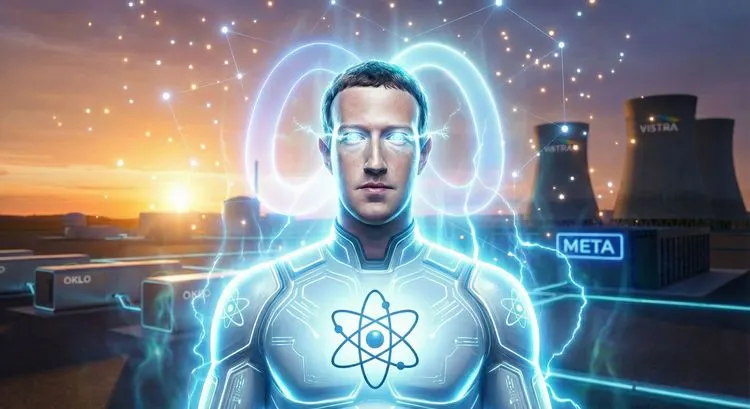
Mark Zuckerberg is officially going fission. While the world has been fixated on the digital architecture of the metaverse and the generative capabilities of Llama models, Meta Platforms (Nasdaq: META) has been quietly orchestrating a massive physical infrastructure pivot to keep the lights on. On Friday, the tech giant revealed it has secured agreements to procure up to 6.6 gigawatts of nuclear power by 2035, a staggering figure that cements its status as one of the largest corporate buyers of nuclear energy in American history.
This isn’t just about keeping servers humming; it is a direct response to the voracious energy appetite of artificial intelligence. As data centers drive U.S. power demand upward for the first time in two decades, Meta is looking past wind and solar to the steady, carbon-free baseload of the atom. The company’s strategy is a two-pronged approach that marries the reliability of existing infrastructure with the futuristic promise of Small Modular Reactors (SMRs).
The bedrock of this new energy portfolio lies in the American heartland. Meta has inked 20-year agreements with Vistra Corp. (NYSE: VST) to purchase electricity from three legacy plants: Perry and Davis-Besse in Ohio, and Beaver Valley in Pennsylvania. This deal does more than just secure electrons; it provides the financial certainty Vistra needs to extend the operational lives of these facilities. With licenses running through at least 2036, and Beaver Valley partially cleared until 2047, these plants will serve as the reliable workhorses for Meta’s immediate compute needs.
But the more adventurous side of the portfolio involves bets on technology that hasn't even hit the grid yet. Meta is partnering with Oklo Inc. (NYSE: OKLO) and the Bill Gates-backed TerraPower to develop the next generation of nuclear energy. The agreement with Oklo aims to bring up to 1.2 gigawatts of capacity online in Ohio, with a target deployment as early as 2030. Jacob DeWitte, Oklo’s co-founder and CEO, noted that Meta’s backing is crucial for the early procurement and development phases that often stall unproven technologies.
Simultaneously, the deal with TerraPower focuses on funding the development of two reactors capable of generating 690 megawatts by 2032. If all goes to plan, the agreement grants Meta rights to energy from up to six additional reactors by 2035. While proponents argue that SMRs will eventually slash costs through factory-based assembly, critics remain skeptical about whether these companies can achieve the necessary economies of scale, especially given the lack of commercial SMR operations in the U.S. today.
The sheer scale of this procurement cannot be overstated. A typical nuclear plant generates roughly one gigawatt of power; Meta is effectively asking for nearly seven of them. This aggressive posturing sent immediate ripples through the market on Friday morning, with Oklo shares surging nearly 20 percent and Vistra climbing 8 percent in premarket trading.
However, the shockwaves from this announcement are set to travel much deeper down the supply chain. With major producers like Cameco (TSX: CCO) and Kazatomprom largely sold out for the near term, this sudden injection of 6.6 GW of demand forces the industry to look upstream. This scenario paints a bullish picture for the junior mining sector, particularly for development-stage companies in politically stable jurisdictions like the United States and Canada. As utilities and hyperscalers scramble to secure "unencumbered" uranium to fuel these future reactors, the market should keep a close watch on North American explorers and developers who possess the actual pounds in the ground needed to make these energy dreams a reality.
Joel Kaplan, Meta’s chief global affairs officer, framed the agreements as part of a broader legacy, referencing a similar deal struck last year with Constellation Energy (Nasdaq: CEG) in Illinois. By locking down long-term nuclear assets, Big Tech is signaling that the future of AI isn't just about code, it's about concrete, cooling towers, and uranium. Investors and industry watchers alike should keep their eyes peeled; the race to power the AI revolution has officially gone atomic, and the hunt for fuel is just beginning.