
The Great Copper Squeeze of ’26: Why Your AI Habit is Costing $13,000 a Ton
From the Andes to AI Data Centers, a Perfect Storm of Mine Collapses and Political Trade Wars Has the Global Economy Scrambling for Wire.
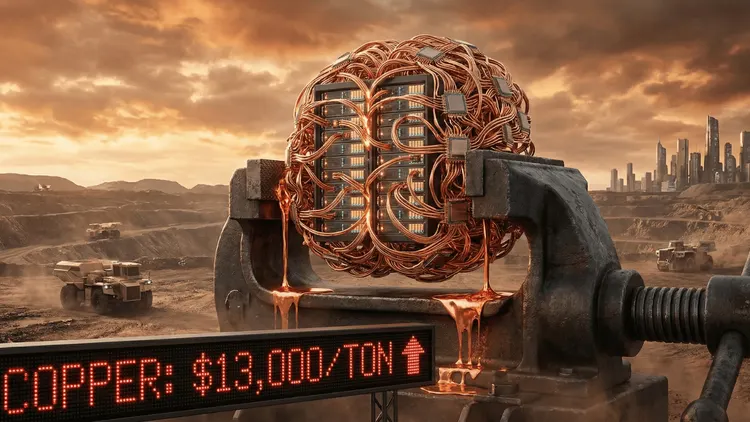
Forget gold or lithium; the most precious metal of 2026 is the humble, reddish material currently holding the global economy together by a very fraying wire. If you have tried to buy electrical cabling lately, or simply glanced at the London Metal Exchange, you already know the bad news. Copper prices have shattered records, screaming past $13,000 per metric ton. While the tech evangelists promised us a wireless future, they neglected to mention that the cloud is actually grounded in millions of tons of copper wiring, and we are rapidly running out of it.
The current crisis is a perfect, if painful, storm of geology, geopolitics, and insatiable demand. For years, analysts warned of a looming deficit, but the reality has arrived with the subtlety of a sledgehammer. The driver isn't just the electric vehicles idling in driveways or the wind turbines dotting the horizon; it is the data centers powering the artificial intelligence boom. These AI facilities are energy-dense beasts, requiring up to four times the copper of traditional servers to keep their cooling systems running and their power connections live. We are effectively digging up the Andes to teach chatbots how to write poetry, and the earth is starting to push back.
Supply has not just stalled; it has capitulated. In a disastrous run of bad luck for the mining industry, three of the world’s most critical copper arteries were severed in late 2025. Indonesia’s Grasberg mine, the second-largest on the planet, was crippled by a deadly mudslide that hammered its block cave system. Almost simultaneously, seismic activity flooded Ivanhoe’s Kamoa-Kakula complex in the DRC, while a tunnel collapse at Codelco’s El Teniente in Chile halted expansion plans in their tracks. These aren't minor hiccups; they are structural failures in the global supply chain that have left smelters, particularly in China, scrambling for ore that simply isn't there.
The mining giants are responding the only way they know how: by getting bigger. Unable to find new deposits, geologists have uncovered only 14 major finds in the last decade compared to nearly 240 in the previous era, companies are buying each other instead. The latest titan to emerge is the proposed $50 billion merger between Anglo American and Canada’s Teck Resources. It is a defensive play to create the world’s fifth-largest producer, a necessary consolidation in an industry where it takes 15 years to bring a new mine from discovery to production.
The outlook is decidedly tight. BloombergNEF estimates a supply deficit could hit as early as this year, and with smelters facing thin margins and miners terrified of ramping up too quickly, relief seems distant. We are entering an era where the hardware of the future is constrained by the hard rocks of the present. Until the industry can figure out how to dig faster, deeper, and cleaner, the red metal is going to stay squarely in the green.