
Knock Knock, It’s Opendoor—and It’s Blowing Off the Hinges
Retail investors ignite a new meme stock rally, propelling Opendoor to multi-month highs as short sellers scramble.
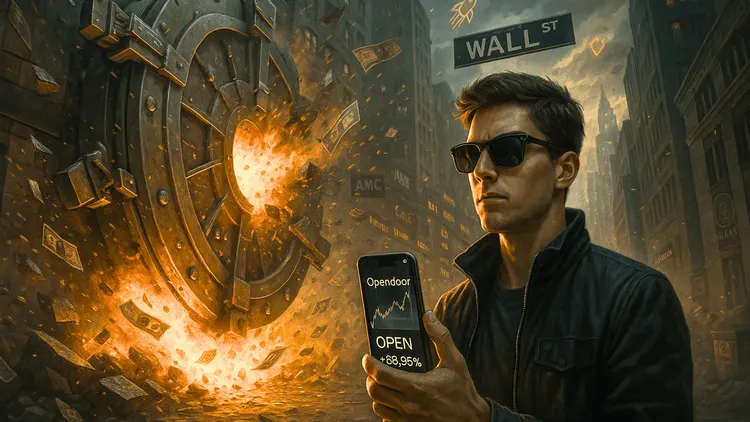
Opendoor Technologies is once again at the center of a retail trading whirlwind, and the numbers are staggering. The company’s stock surged more than 30% in early trading on Monday, piling on top of an 188% gain from the previous week. What started as a struggling iBroker platform on life support just a few months ago has transformed into the latest darling of speculative retail traders. Shares of Opendoor, once trading below $0.50, now sit above $4 as of late morning, marking a near 800% increase in less than a month.
Retail traders, fueled by meme stock enthusiasm and high-stakes short interest, have reignited a GameStop-style movement. Activity on Reddit’s infamous WallStreetBets forum has exploded, with thousands of posts detailing bullish plays on Opendoor. Many cite similarities to 2021’s short squeezes, comparing the stock’s setup to past runs in GameStop and AMC. But Opendoor’s recent gains are not merely the product of online hype—they come amid a resurgence in speculative trading that’s swept across the Nasdaq this summer.
Driving this wave of bullishness is EMJ Capital’s Eric Jackson, the fund manager who made a name for himself calling the turnaround at Carvana. In a widely shared X thread, Jackson laid out his bull thesis for Opendoor, stating that he believes the company could post its first positive EBITDA quarter this August. He boldly pegged a price target of $82 per share—a 20-fold jump from where the stock currently trades.
Jackson’s post has reverberated across financial social media. Traders are latching on to his credibility, recalling how he saw promise in Carvana when few others did. With Carvana now enjoying a market cap north of $10 billion, the idea of lightning striking twice has captured the imagination of the retail crowd. The comparison has been made repeatedly: Carvana clawed its way back from near collapse, and now Opendoor may be charting a similar path.
Opendoor’s fundamentals, however, paint a more cautious picture. The company has yet to post a single profitable quarter since going public via SPAC in December 2020. In May, it faced the very real threat of delisting from the Nasdaq after spending over 30 days trading under the $1 threshold. And just last month, it settled a class-action lawsuit over its pricing algorithm’s failure to adapt to the shifting housing market—an issue that critics say has weighed heavily on the company’s ability to compete.
Yet the market isn’t trading on fundamentals right now. It’s trading on momentum, narrative, and the hunger for massive upside. Short interest in Opendoor stock had ballooned to more than 25% of its float by the end of June, making it a prime target for a squeeze. When you combine that with an influx of retail capital, a prominent bull case from a respected fund manager, and the platform effect of Reddit and X, the result is a powder keg of volatility.
Volume has soared. According to VandaTrack data, retail trading activity in Opendoor has spiked to levels not seen since its SPAC debut. Traders are throwing caution to the wind, piling in with leveraged call options and margin plays. Many see it as a gamble worth taking, a shot at catching the next 10-bagger in a market hungry for narrative-driven moves.
This surge in Opendoor mirrors a broader trend in 2025 where beaten-down tech and growth names are suddenly roaring back. Whether it’s Carvana, Opendoor, or even the remnants of the meme stock era like GameStop and AMC, retail traders are reclaiming their appetite for risk. With inflation cooling, interest rates steady, and speculative fervor returning, the market is primed for stories over spreadsheets.
But as always, the question remains—how long can this last? Opendoor’s meteoric rise is built on belief, not earnings. And while belief can drive a stock for a time, it rarely sustains a valuation without underlying business growth. Traders know this. Some are in for the squeeze. Others are in for the ride. Few are pretending that fundamentals justify an $82 price target—yet they’re still buying.
Wall Street is watching closely. Institutions burned by previous meme stock runs are recalibrating their short exposure. Some are even joining the momentum, attempting to ride the wave while hedging the risk. But everyone knows how these stories usually end. Volatility cuts both ways, and while today’s move is dramatic, tomorrow could be just as sharp in the other direction.
Still, in this market environment, Opendoor has become the symbol of what’s possible. A broken business with a passionate retail base, a redemption arc fueled by hope, and a short float begging to be squeezed. Whether it’s a second act or just another speculative spike, Opendoor has captured the attention of the investing world once again.
Conclusion
Opendoor’s rally is a spectacle—part revival story, part meme-driven mania. While there’s reason to be cautious given its checkered financials and history, the stock’s performance in recent weeks shows the power of retail momentum and the enduring appeal of speculative narratives. Whether Opendoor can capitalize on this moment and turn it into long-term shareholder value remains to be seen. But for now, it’s riding high on a wave of belief, and that, in today’s market, is sometimes all it takes.