Inflation arrives at a 13-Year high
Despite the strong increase markets are still not showing signs of weakness.
 Frank M. StockerOctober 5, 2026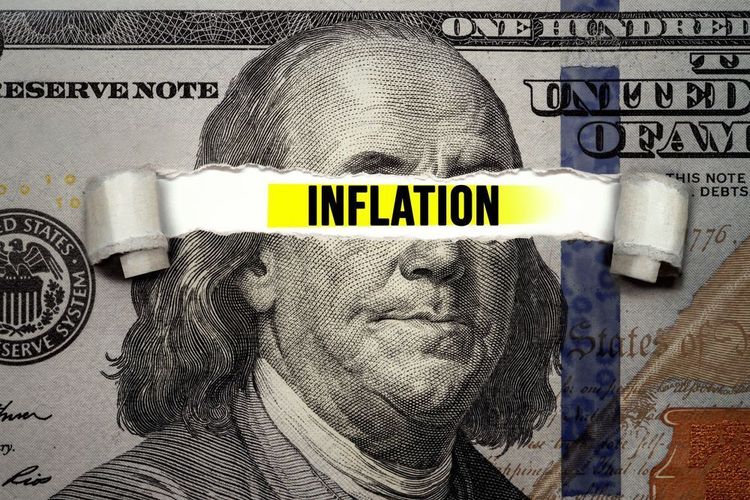
Wall Street stocks and most financial markets have simply brushed aside the news that inflation has accelerated to the fastest pace in more than a decade. On Thursday morning, the U.S. Department of Labor announced that consumer prices, also known as consumer price index (CPI), rose 5% year-over-year in May, above Wall Street's expectations and the fastest pace since August 2008. The CPI, a meter that represents a basket of groceries, energy, groceries, housing costs and sales across a spectrum of goods, climbed faster than the Wall Street consensus of 4.7%, marking the largest CPI gain since August 2008 when it was Clocked in at a sultry 5.3%, just before the financial crisis hit and sent the economy into a great depression. Used car and truck prices rose 7.3% m / m and 29.7% over the past 12 months, while the new vehicle index rose 1.6% m / m and 3.3% over the past 12 months - the fastest increase in a decade. However, the energy index remained unchanged from month to month despite the huge spike in gasoline prices this year. The gasoline index has risen 56.2% in the past 12 months and has contributed to an overall increase in energy prices of 28.5% over that period. Food prices have remained comparatively tame with an increase of 2.2% in the past year. Another report released on the same day shows that the number of jobless claims for the week ending June 5 was 376,000, higher than the Wall Street consensus of 370,000 but still one of the lowest levels in the pandemic -Era. Though inflation readings are well above anything seen in more than a decade, the Federal Reserve largely dismissed them, saying the current surge is due to temporary factors that will resolve over the months, including the fact that comparisons with the previous year, when much of economic activity remained restricted, were easy. The financial markets seem to agree. Wall Street stocks hit new highs while core Treasuries remained stable as investors brushed aside the inflation report. The favorite benchmark of the broader market, the S&P 500 Index (SPX), rose by half a percentage point to a new all-time high of 4,239 points. The index is now up 12.9% since the beginning of the year. The healthcare sector was among the top performers of the day with the Health Care Select Sector SPDR Fund (XLV) gaining 1.70% while the retail sector was among the notable laggards with the SPDR S&P Retail ETF (XRT) gaining 1.70% , 14% gave in. Meanwhile, the 10-year Treasury yield fell 0.05 percentage points to 1.44%. The price of gold rose 0.27% during the day, changing hands at $ 1,901 an ounce. The dollar, which can appreciate in anticipation of higher US interest rates, fell 0.1%. The Cboe's Vix Index, also known as Wall Street's fear meter, slipped to 16.1 points, below its long-term average of around 20 and well below the intraday level of 85 it saw during the peak of the coronavirus virus. Crisis reached in March 2020. "The markets are finally getting used to the idea that US inflation will be temporary," Mimi Rushton, co-head of global FX sales at Barclays, told the Financial Times. Still, the Fed will no doubt keep a close eye on inflation trends from now on. Although the recent surge can largely be attributed to temporary base effects, the consumer price index, along with recent trends towards higher wages, is likely to fuel discussions about reducing inflation. The Fed has taken small steps towards this goal. On Wednesday, the Fed announced plans to begin selling corporate bonds through the Secondary Market Corporate Credit Facility ("SMCCF"), an emergency credit facility that helped support credit markets during the pandemic. With this move, the central bank completes the move away from the market support programs it launched last year as part of a Covid-19 bailout program. Five of these emergency facilities expired at the end of 2020. Most Federal Reserve policymakers, however, expect rates to stay near zero well into 2023.