India’s Nuclear Renaissance: Unveiling the Power of Kakrapar 4
Atomic Achievement: Kakrapar 4’s Grid Connection Marks a New Era
 Editorial Team (ET)September 27, 2026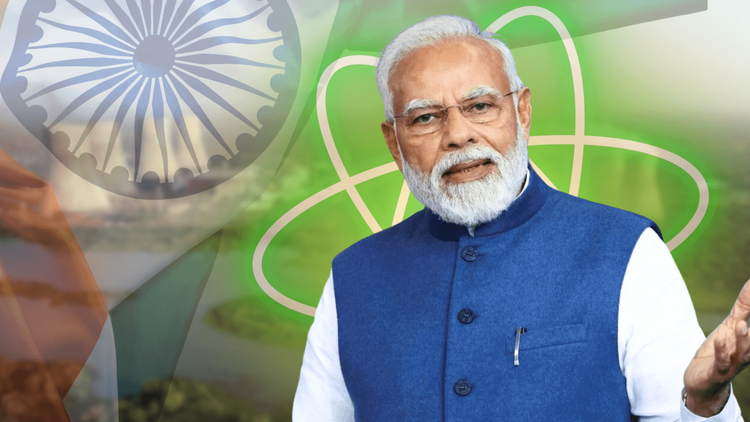
India's journey towards becoming a self-reliant energy powerhouse took a significant leap forward with the recent announcement by the Nuclear Power Corporation of India Ltd (NPCIL). The news of Kakrapar 4, a cutting-edge 700 MWe unit, connecting to the grid on February 20, heralds a new era in India's nuclear energy sector. Achieving first criticality on December 17, this milestone is not just a technical achievement but a bold statement of India's capabilities and ambitions in the nuclear domain.
India's Leap in Nuclear Energy
The Indian nuclear energy sector has been marked by steady and strategic growth, aligning with the broader vision of sustainable and self-sufficient energy production. The addition of Kakrapar 4 to India's energy grid embodies this vision, showcasing the country's commitment to expanding its nuclear capacity.
Kakrapar 4: A Milestone Achievement
Kakrapar 4 represents the culmination of years of indigenous research, development, and engineering excellence. This 700 MWe pressurised heavy water reactor (PHWR) is a testament to India's advancements in nuclear technology, marking a significant step forward in the nation's energy independence journey.
The reactor reached its first criticality in December, a critical step demonstrating the reactor's ability to sustain a nuclear chain reaction under controlled conditions. The subsequent connection to the grid in February is a moment of pride and a significant technical accomplishment for the NPCIL and the entire Indian nuclear industry.
The Significance of Prime Minister Modi's Visit
Prime Minister Narendra Modi's visit to the plant on February 22, during which he formally dedicated the 700 MWe PHWRs to the nation, underscores the national importance of this project. His presence highlighted the government's support for nuclear energy as a key component of India's energy strategy.
Atma Nirbhar Bharat: A Nuclear Perspective
The project aligns with the Atma Nirbhar Bharat (self-reliant India) initiative, demonstrating India's capability in designing, constructing, commissioning, and operating advanced nuclear reactors with significant domestic industry participation.
The Role of Nuclear Power in 21st Century India
Prime Minister Modi's assertion that nuclear power will play an increasingly significant role in India's energy mix reflects a strategic vision. It acknowledges the clean, reliable, and scalable nature of nuclear energy as essential for India's growing power needs.
Future Nuclear Projects and Capacity Expansion
The NPCIL's announcement of eight reactors under construction and ten more in the planning stages signals an ambitious expansion plan. These projects aim to significantly boost India's nuclear capacity, contributing to an installed capacity of 22,480 MWe by 2031-32.
The reactors currently under construction, including the next two 700 MW PHWRs in Rajasthan and four VVER reactors supplied by Russia, represent the future of India's nuclear energy landscape. These projects, along with the Prototype Fast Breeder Reactor at Kalpakkam, are crucial for India's energy security and sustainability goals.
The Road Ahead: 2031-32 and Beyond
The planned expansion and the vision for 2031-32 highlight India's long-term commitment to nuclear energy. This forward-looking strategy is not just about meeting energy demands but also about contributing to global efforts against climate change.
The Global Context: India's Position
India's nuclear energy developments are keenly watched by the international community. The country's progress and technological advancements position it as a significant player in the global nuclear energy sector.
The Environmental Angle
Nuclear energy's role in reducing carbon emissions is a critical aspect of India's energy strategy. By investing in nuclear power, India is taking a proactive stance in the fight against climate change, highlighting the importance of clean energy sources in achieving environmental sustainability.
Despite the optimism, challenges such as public perception, safety concerns, and technological hurdles remain. Addressing these issues is essential for the continued growth and acceptance of nuclear energy in India.
Public Perception and Nuclear Safety
Enhancing public understanding and trust in nuclear safety protocols is crucial. The NPCIL and the Indian government are committed to maintaining the highest safety standards and engaging with the public to educate and reassure them about the benefits and safety of nuclear power.
India's nuclear energy sector is on the brink of a transformative era, marked by significant advancements and ambitious expansion plans. The grid connection of Kakrapar 4 is a milestone that not only showcases India's technological prowess but also its commitment to a sustainable and self-reliant energy future. As India continues to navigate the challenges and opportunities of nuclear power, the nation stands as a testament to the potential of clean, reliable, and scalable energy solutions.