
Impact of US Presidential Election on Mining Industry
Many existing projects are at a crossroads, with more changes to follow should Joe Biden secure victory.
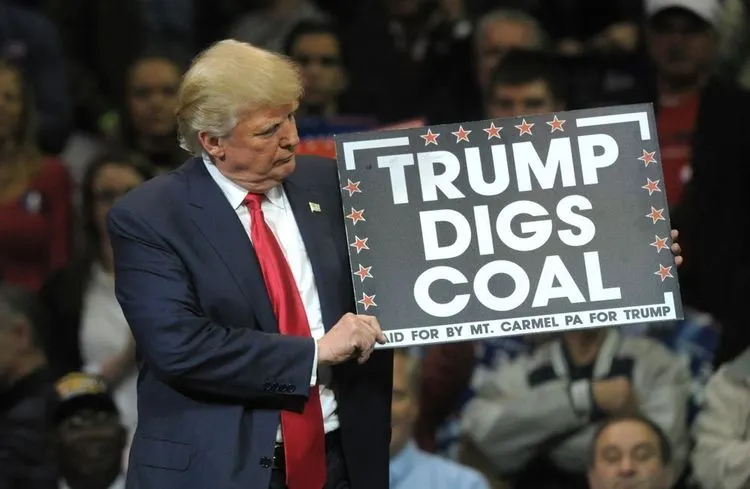
Although mining policies are not officially on the US election ballot, the fate of many existing and perhaps future projects hinges on the results of the November 3 election. Some mining companies could years of hard work fall apart with a victory by Democratic candidate Joe Biden, or they could breathe a sigh of relief with four more years of President Donald Trump. <% {"name": "BoxSeenNews", "newsHeadline":" 2 Shares for the Price of 1", "link": "/news/2-shares-price-1-very-unique-gold-stock"} %> **Giant Alaska Mine**
Currently, the most contentious mining project is the Pebble copper-gold mine in Alaska, which has faced objection from environmental groups for years for its potential impact on the Bristol Bay area, which is home to the world’s largest sockeye salmon fishery.
_

Pebble mine site. Credit: Wikimedia Commons_ Over the months leading up to the election, Biden has promised to block the mine from proceeding, calling the area “no place for a mine”, a view that was shared by the previous Obama administration. Several senior senators including Lisa Murkowski and Dan Sullivan have also denounced the project, echoing the same environmental and social concerns expressed by many before them. President Donald Trump previously said it would take another look at the proposed mine, which would become North America’s largest if approved. **Fate of the Arctic** Speaking of Alaska, the Trump administration is [looking to](https://www.bloomberg.com/news/articles/2020-08-17/trump-charts-arctic-drilling-rights-sale-in-likely-election-row) [spur oil development](https://www.bloomberg.com/news/articles/2020-08-17/trump-charts-arctic-drilling-rights-sale-in-likely-election-row) in the state’s Arctic National Wildlife Refuge with a plan to auction off drilling rights, starting in the fourth quarter of 2020. This would make the entire 1.56 million acre coastal plain home to not just polar bears and caribou but also oil companies.
On the other hand, Biden has vowed to permanently protect the refuge, stating that any drilling activity could be a “big disaster”. However, falling crude prices — coupled with legal uncertainties and public opposition — could deter companies from bidding regardless of the election outcome. **Copper Mine in Minnesota** Elsewhere, another copper mine in the state of Minnesota could face backlash should Biden be victorious. For years, conservationists have voiced their concerns about the Twin Metals underground mine, specifically the threat it poses to the protected waterways and forest in the Boundary Waters Canoe Area Wilderness. _ Pose Lake, Minnesota.

Credit: Wikimedia Commons_ Although Biden did not join other Democratic presidential candidates in [committing to block the mine](https://www.boundarywatersaction.org/scorecard2020), it is still expected that he would at least offer a tougher stance than the Trump administration, which began analyzing a proposed mine plan earlier this year. **Pipelines in Peril** Arguably the most controversial oil pipeline in the US right now is the Keystone XL, which is proposed to 830,000 barrels of crude daily from Canada’s Alberta province to Nebraska. Biden has vouched to block Keystone, which could be done by withdrawing Trump’s presidential permit. But his administration could also stop defending federal land crossings in court or ignore a new application. _ Dakota Access pipeline, central Iowa. Credit:_ _Wikimedia Commons_ The US$3.8 billion Dakota Access pipeline, which has also drawn massive protests, is also in jeopardy. In fact, the project has been operating without a permit following a court decision last summer that allowed it to stay open while an environmental review is conducted.

However, many believe that shutting down a three-year-old pipeline ferrying more than 500,000 barrels of crude oil each day would be a drastic step, so its eventual fate remains anyone’s guess. **Critical Minerals** Under the Trump administration, several mining regulations have been loosened, especially when it comes to minerals that the government deems to be critical (i.e. reliant on China).
Among these are uranium, which is a big part of the US nuclear sector, and rare earth elements that are used in weapons to shore up its national defense. In September, Trump signed an [executive order](https://www.whitehouse.gov/presidential-actions/executive-order-addressing-threat-domestic-supply-chain-reliance-critical-minerals-foreign-adversaries/) in hopes of bolstering the domestic mining of 35 critical minerals identified by the government. <% {"name": "BoxNewsletterUnder", "companyName": "the US","companyTickerSymbol": "Elections"} %>