
Google’s AI Dreams Are Going Nuclear
Google and Kairos Power push nuclear innovation to fuel AI-era energy demands on the TVA grid.
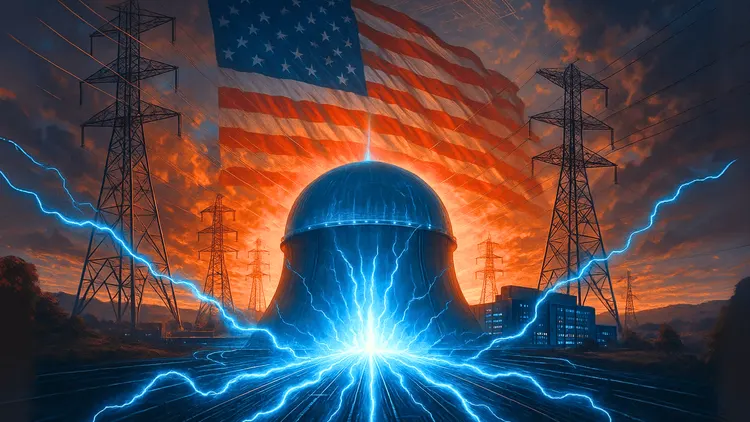
The U.S. nuclear industry has long been stuck in the past, plagued by massive cost overruns and delays. Now, Google and Kairos Power are trying to change that narrative with a bold move in Tennessee. By 2030, the tech giant and the nuclear startup plan to connect an advanced reactor to the Tennessee Valley Authority grid, a project that could mark the beginning of a new era for American energy.
A Historic Agreement
Google, seeking clean and reliable power for its data centers, has joined forces with Kairos Power to deploy the Hermes 2 reactor. The TVA has agreed to purchase 50 megawatts of electricity from the project, making it the first U.S. utility to sign an offtake deal with an advanced nuclear plant. That output, enough to power roughly 36,000 homes, will help feed Google’s facilities in Tennessee and Alabama.
The structure of the deal is groundbreaking. Rather than saddling consumers with the risk of experimental technology, Google and Kairos will absorb the financial burden. TVA’s role is to provide a guaranteed revenue stream through the purchase agreement, ensuring stability without exposing households to the first-of-a-kind costs.
The Reactor That Could Change Everything
Hermes 2 is not a traditional light-water reactor. Instead, Kairos is betting on a fluoride salt–cooled design that operates at near atmospheric pressure. This approach allows for cheaper materials and offers safety advantages compared to conventional high-pressure systems. It is smaller too, producing just 50 megawatts compared to the 1,000 megawatts generated by older U.S. reactors. On a commercial scale, Kairos expects output to reach 75 megawatts.
If successful, Hermes 2 could set the blueprint for standardized, repeatable reactor construction. That scalability is the holy grail for nuclear startups, promising to finally break free from the cycle of billion-dollar overruns and decade-long delays that doomed projects like Georgia’s Plant Vogtle.
Why Google Is In
For Google, this project is about more than power. It is about meeting the insatiable demand of artificial intelligence while sticking to its carbon-free commitments. The company has already placed orders with Kairos for reactors totaling 500 megawatts, slated to come online through 2035. By backing Hermes 2, Google is positioning itself as both a customer and a catalyst for nuclear’s long-awaited comeback.
Amanda Peterson Corio, Google’s global head of data center energy, framed it as a push for commercialization. Hermes 2 is the test case, the bridge from theory to scalable reality. If it works, Google could deploy reactors at data hubs around the world, reducing reliance on fossil fuels while ensuring uptime for its digital empire.
A Region Steeped in Nuclear History
The choice of Oak Ridge, Tennessee, is symbolic. This is where America’s nuclear story began with the Manhattan Project during World War II. Today, Oak Ridge National Laboratory remains a cornerstone of nuclear research, and TVA—created in the Great Depression to electrify the region—remains a federal utility. The Hermes 2 project signals that the region could once again become the nucleus of innovation in nuclear energy.
Kairos CEO Mike Laufer sees Oak Ridge as more than just a site. He sees it as a launchpad. The company’s goal is to refine a supply chain, train a workforce, and establish a standardized model that can be rolled out across multiple sites. If it succeeds, the Tennessee Valley could become the epicenter of advanced nuclear construction in the United States.
The Stakes
The U.S. has been reluctant to build nuclear after decades of financial and political setbacks. But with climate goals looming and electricity demand rising, advanced reactors offer a potential breakthrough. The Google-Kairos-TVA collaboration is designed to show that nuclear can be smaller, safer, cheaper, and faster to build. If Hermes 2 delivers, it could unlock a wave of private-sector partnerships that finally breathe life back into America’s nuclear ambitions.
Yet the risks are real. Costs remain undisclosed, and the NRC still needs to approve an operating license before Hermes 2 can go live. But unlike past failures, this time private capital—not taxpayers—will shoulder the gamble. For the nuclear industry, that is a critical shift.
Conclusion
The Hermes 2 reactor is more than a 50-megawatt machine. It is a test of whether advanced nuclear can finally deliver on decades of promises. By bringing Google’s financial power, Kairos’ innovation, and TVA’s grid into alignment, the project could prove that America is ready to build nuclear again. If successful, it will not just power data centers. It will power a new era of clean, reliable, and scalable energy for the U.S.