
Europe could raise the legal cannabis level
The EU decides to increase the legal THC content to 0.3%.
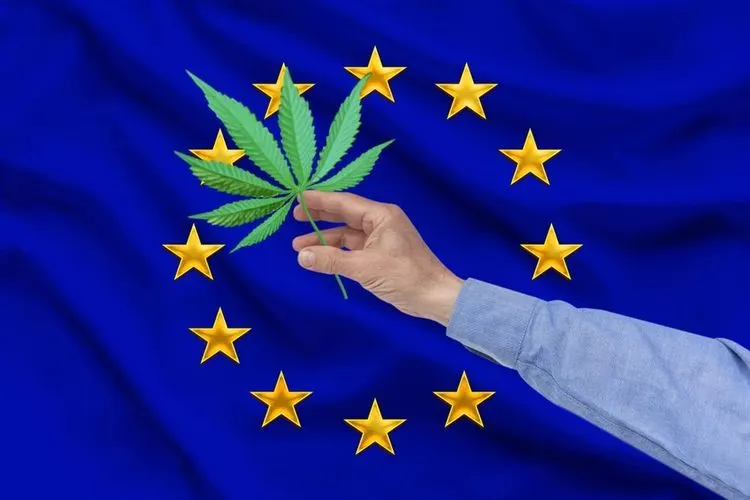
Big day for European hemp farmers and the CBD industry as the approval of THC in industrial hemp has been decided by parliament. Although it is still low compared to countries like Switzerland, this THC limit increase in Europe would certainly loosen it up. A lot is going on in the world of legal cannabis. Sign up for our newsletter to always be up to date.
Hemp farmers in Europe have been pushing for change for some time. The 0.2% THC limit introduced many years ago made it difficult and reduced the number of possible strains. Parliament has now voted to increase this limit to 0.3%, which is foreseen in the reform of the common agricultural policy. But will she actually get through? Where did the 0.2% come from? The first time a standard was set for a European THC limit for industrial hemp was in 1984 when it was set at 0.5%. In the 1970s it was reduced to 0.3%.
At the time, 0.3% was the line separating low-THC hemp (usually high-CBD flowers, but there are also high-CBG strains) and high-THC cannabis. In 1999 this fell back to the previous 0.2%, with the original goal of preventing the cultivation of high-THC marijuana in industrial hemp fields with low-THC levels. The proposal to raise the THC limit is not new and has been going on for quite some time. Before we go any further, it should be noted that between the 1970s when the THC limits were lowered to 0.3% and 1999 when they were further lowered to 0.2%, Europe had 0.3 % THC in hemp worked without massive, adverse problems.
This means that this norm has been in place for at least 20 years, which makes it seem almost silly that it would have to be advocated later, or that an argument against an increase from 0.2% to 0.3% is based on fear negative impact on people or businesses. If this hadn't happened in the more than 20 years of recent history that has been the norm, how would it pass as a legitimate argument now? It also sheds light on this idea that we cannot learn from history or trust it at all. Cannabis has been used for thousands of years, and there is ample evidence of how, when and where cannabis was used. Still, it is mainly treated as if this story is meaningless, with paid research studies being the end result, although often they are not. This inability to learn from history is frustrating, and it becomes all the more apparent how much of a problem it is when Europe argues for not raising a THC limit to a level where it has been working perfectly for years Has.
It should also be noted that while this vote took place almost a week ago, no major publications have yet covered everything. In fact, the only publications covering the news are hemp-related. Why it matters If a person didn't know much about cannabis, they might expect that THC could simply be removed in any percentage. Unfortunately, it doesn't work that way, and different strains of cannabis have different amounts of THC. Not only that, CBD often rises in relation to THC, which means that many strains have been counted because to reach the CBD level, you would have to accept over 0.2% THC. While raising it to 0.3% doesn't mean it's all included, it would mean more strains can be grown. Is that a done deal? Unfortunately not. It is great that Parliament voted, but the decision does not depend on Parliament alone. The policy for passing and / or changing laws in the EU is for three different bodies to approve them or take a decision.
Last week's vote was not about the passing of laws, but simply about defining Parliament's position on the proposed reform of the common agricultural policy. In order for it to actually come into force, two other bodies must agree: the Council of the European Union and the European Commission. The three bodies are scheduled to begin negotiations on the agricultural policy reforms in mid-November. This assumes that questions related to the coronavirus do not force postponements.
It is difficult to say which direction the legislation will go. Europe is more inclined to relax restrictions than other locations, but at the same time it is constantly going back on itself. The inclusion of cannabis extracts in the novel foods category alone was a step backwards, which was only made 1.5 years ago. It may be hard to imagine that Europe is not taking up the agricultural recommendations, but nothing is saying that it doesn't have to either.
So while the European Industrial Hemp Association is looking forward to it, it could happen soon. When it comes to regulating cannabis, things usually don't make sense ... almost everywhere. So if you expect a straight line towards legalization, you are expecting way too much. Perhaps the THC limit in Europe will really be raised. And maybe it won't. But it's just too early to say that.