
EU Suspends US Trade Deal as Greenland Dispute Escalates
Brussels calls Washington's bluff: The inside story of how a real estate ultimatum froze the transatlantic economy and put €93 billion in trade on the chopping block.
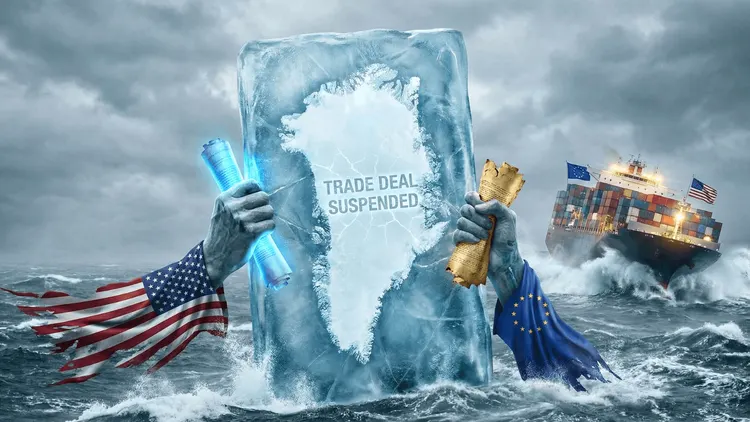
It turns out you cannot buy the world’s largest island by threatening your allies with a trade war. As of this morning, the "Turnberry Deal", the fragile transatlantic trade truce struck just last July, is officially on ice. The European Parliament has suspended all work on ratifying the agreement, a direct and blunt retaliation against President Trump’s recent ultimatum regarding the purchase of Greenland. Bernd Lange, chair of the Parliament’s trade committee, delivered the message with diplomatic clarity this morning, stating that business as usual is impossible while the territorial integrity of a member state is under active threat.
This suspension effectively kills the framework hammered out at Trump’s Scottish golf course in July 2025. The pact was already controversial in Brussels; it required the EU to slash duties on US industrial goods while Washington maintained a rigid 15% tariff wall. Despite the lopsided terms, European leaders had previously swallowed the bitter pill in hopes of buying peace and shielding their exporters from further volatility. That peace lasted exactly six months. The legislative machinery required to lower EU duties has now ground to a halt, meaning the reprieve on US tariffs is gone.
The catalyst for this collapse is as geopolitical as it is surreal. Over the weekend, the White House issued a stark warning that Denmark, along with seven supportive allies, Sweden, Norway, France, Germany, the Netherlands, Finland, and the UK, must facilitate the "complete and total purchase" of Greenland by the United States. Failure to comply by February 1, 2026, will trigger a 10% tariff on all goods from these nations. If the island isn’t sold by June 1, the levy jumps to 25%. This isn't just about diplomatic feelings; it's about the bottom line. The targeted nations represent the industrial heart of Europe, and the tariffs would hit everything from German machinery to French luxury goods.
Europe is not just shielding itself; it is preparing to fire back. With the Turnberry deal suspended, the diplomatic ceasefire that paused retaliatory measures is set to expire. Unless a miracle occurs in the next two weeks, the EU will reactivate tariffs on €93 billion ($109 billion) of US exports on February 7. The retaliation list is a strategic selection of politically sensitive American exports, including Kentucky bourbon, Harley-Davidson motorcycles, and Boeing aircraft. Furthermore, France is leading the charge to deploy the EU’s Anti-Coercion Instrument for the first time. Known in Brussels corridors as the "trade bazooka," this legal tool allows the bloc to bypass slow consensus-building and impose rapid, sweeping sanctions on any country attempting to force policy changes through economic blackmail.
The timing could not be more dramatic. The suspension was announced while world leaders are gathered at the World Economic Forum in Davos. Inside the conference halls, the tension is palpable. President Trump, fresh from mocking French President Emmanuel Macron’s sunglasses, took the stage to declare "America is back," while simultaneously demanding the annexation of an ally's territory. For now, the ball is in Washington's court. The EU has drawn a red line: no trade deal while the Greenland threat remains. As the February 1 deadline looms, the transatlantic alliance isn't just frayed, it's actively unravelling.