Emmanuel Macron defeats Marine Le Pen
French President re-elected - incumbent wins with a projected 58% of the vote
 Gabriel ThomasSeptember 13, 2026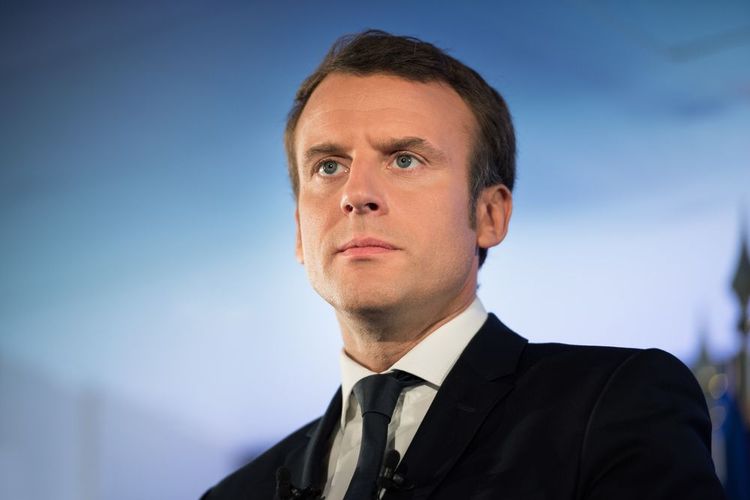
Emmanuel Macron will be re-elected for a second term as France's president after beating his far-right rival Marine Le Pen in Sunday's run-off, according to polling firms' projections based on the initial results.
Le Pen acknowledged shortly after the first projections that Macron received more than 58 percent of the vote and vowed to continue fighting with her Rassemblement National party in June's National Assembly elections. About 28 percent of voters did not turn out, the highest abstention rate since 1969.
Speaking to supporters in front of the Eiffel Tower in Paris, Macron acknowledged that he must lead a divided nation in his second term, after many supported his rival or not choice went.
"Our country is riddled with doubts and divisions," he said. "Today's election requires us to consider all of the needs of the people and respond effectively to them and the anger expressed."
Macron's victory, first elected in 2017, signifies continuity in economic and foreign policy and is a relief for investors and France's EU and NATO allies amid Russia's invasion of Ukraine. A victory for the Eurosceptic Le Pen, who wanted to pull France out of NATO's military command structure, would have been a geopolitical earthquake comparable to Brexit or the election of Donald Trump.
"I am pleased that we can continue our excellent cooperation," wrote Ursula von der Leyen, President of the European Commission, on Twitter after congratulating Macron.
Mario Draghi, Italy's Prime Minister, called Macron's victory "great news for all of Europe", while Mateusz Morawiecki, Poland's Prime Minister, wrote on Twitter: "Europe's future is in our hands. Congratulations Emmanuel Macron".
In the US, President Joe Biden congratulated Macron and described France as "our oldest ally and an important partner in tackling global challenges". Biden said he looks forward to "working closely" with his French counterpart on a range of issues including "supporting Ukraine, defending democracy and fighting climate change."
But the extreme right has not grown as strongly in France since World War II, and Macron will lead a deeply fractured society. More than half of voters voted for nationalist, Eurosceptic candidates from the extreme right or left in the first round two weeks ago.
"Tonight's result is an overwhelming victory in itself," Le Pen said in her concession speech. "For French and European leaders, it is a testament to the great opposition to them from the French people, which they cannot ignore, and the widespread desire for major change.
If the results are confirmed, Macron will become the Be the first French president to be re-elected in 20 years and the first to win another term while maintaining full control of the government since the current electoral system was introduced in 1962. Previously, re-elected presidents had rival prime ministers in the National Assembly dominant parties "cohabited".
But as with nationalists and populists elsewhere, support for the French far-right has grown in the years of Macron's first term. Five years ago, Macron beat Le Pen 66 percent to 34 percent. Defeated in 2002 the centre-right incumbent Jacques Chirac Le Pen's father, Je an-Marie Le Pen, with 82 percent to 18 after the Front National leader unexpectedly advanced to the second round.
Macron seemed vulnerable at the start of this year's campaign. At a certain point, his lead over Le Pen was within pollsters' margin of error, as his competitor paraded the country highlighting poverty and the cost of living while downplaying her divisive policies on migration, nationality and Islam.
In the first round on April 10, Macron led with 28 percent of the vote, ahead of Le Pen with 23 percent and far-left candidate Jean-Luc Mélenchon with 22 percent.
Over the past two weeks, Macron and Le Pen have courted Mélenchon's 7.7 million voters, with Macron emphasizing his green commitment and Le Pen her actions to support the working class by cutting taxes on food and fuel.
Macron, 44, will now try to secure control of the lower house in June, without which he can hardly pass legislation or implement reforms.
His first term in office was marked by the anti-government gilets jaunes demonstrations that began in 2018, then the Covid-19 pandemic that swept the world in early 2020, and finally the invasion launched by Vladimir Putin in February of this year in Ukraine.
Macron's labor reforms and tax cuts from his first term have been welcomed by foreign investors and French companies, as has his EU-backed pandemic program "whatever the cost" to help employers and workers through the crisis.
However, many French say they despise Macron for his arrogance and lack of concern for the poor. The so-called Republican front, where voters are supposed to keep a far-right candidate out of power by voting for the other candidate even if they don't like it, has eroded.
Jackie Boissard, a finance clerk holding a European and French flag, celebrated Macron's victory on the Champs de Mars with "mixed feelings tonight".
"I'm happy he won, but I'm also very concerned that the far right is doing so well.
In the capital's 16th arrondissement, where Le Pen delivered her concession speech, longtime far-right voter Maurice Blanc said: "We have to throw ourselves into the next battle for the parliamentary elections with all our might in order to be able to have a say in the fate of the country at this crucial time."