Delta-8 THC: Authorities become aware of legal loophole
CBD cigarettes may no longer be legal.
 Justin Wong (JW)September 6, 2026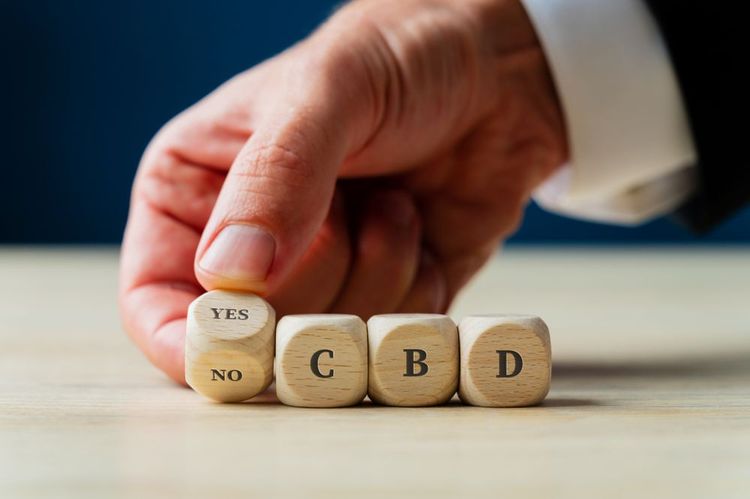
August Battles was barely out of high school when he and a friend decided to capitalize on the 2018 Farm Bill - which Congress and President Donald Trump legalized the American hemp industry - and started selling "CBD" cigarettes ", that is, cigarettes that contain the federally legal cannabis sativa variety with low THC and high CBD content.
According to the company, Vance Global's "guilt-free cigarettes" are now available in 12,000 stores across the country. But the market is fickle and consumer tastes are changing rapidly. After the CBD boom turned into bankruptcy, Battles switched to Delta-8 THC, the hemp-derived cannabinoid that is almost identical to the "real" THC in marijuana, which is federally banned.
Delta-8-THC gets you absolutely high, but since the starting material is hemp, Delta-8 products remain federally legal - and can be found in smoke shops, novelty stores, bodegas, gas stations, and online across the United States. But maybe not much longer.
As the health authorities announced on Tuesday, the federal government is finally becoming aware of this blatant loophole in the federal drug law. And the players in the hemp industry believe that action may soon follow.
On Tuesday, the federal Centers for Disease Control and Prevention and Food and Drug Administration issued warnings alerting the public to the "serious health risks" posed by Delta-8-THC products.
According to the FDA, poison centers received 660 calls between December 2020 and July 2021 from people who had consumed Delta-8 THC - many of them unintentionally, almost all children, dozens of whom were hospitalized with very familiar-sounding symptoms: lethargy, indistinct Speech, irregular heartbeat, sedation, and even "coma". The warnings echo the warnings issued over the past decade regarding "normal" adult cannabis products containing THC - raised by people, sometimes children, but often adults, who have over-consumed.
Battles suspects a similar phenomenon is at play. "These people in the hospital were most likely because they were too high," he said. One big difference is that Delta-8 THC, unlike the strictly regulated adult cannabis, is completely unregulated. And, as the FDA pointed out, there are no labeling, product quality, or safety requirements.
The same goes for products that contain CBD. And the FDA took action against CBD products, too, but because of mislabeling or claims of health benefits that weren't supported by research. The other big difference - and the one that's causing problems for the Delta-8 THC industry - is that Delta-8 products, unlike CBD, can cause harm.
Last month, Vance Global launched a line of Delta-8 THC gums that are "as highly potent as possible," according to Battles, who wanted to avoid the predictable complaints of unsatisfied (and unpitted) customers who weren't getting their money's worth was.
"Half a gummy bear will kick your bum," he promised. So when the CDC and FDA indicated they were keeping an eye on the matter, Battles was "definitely not surprised".
To date, none of the Delta-8 vendors or distributors contacted for this item have reported any changes in the attitudes of vendors, dealers, or customers due to warnings from the FDA / CDC. But they interpreted the warning from the federal authorities as a clear signal.
"It's the first blow to the industry, so to speak," Battles said. "They did the same thing with CBD". It wouldn't be the first. To date, 16 states have banned or restricted the sale of Delta-8 products, including cannabis-friendly states like Colorado, Michigan, and Nevada. The bans in these states are due in part to complaints from the adult cannabis industry, which rightly sees Delta-8-THC products as an existential threat.
But the federal government could also take action. For years, the FDA has pondered standards and regulations for CBD products. Because Delta-8 has intoxicating, psychoactive properties, the FDA could act faster. To make matters worse, since the appearance of Delta-8-THC products about two years ago, the market has been flooded by companies that offer the product - often without age restrictions.
"The FDA is responding as it always does," said Lo Friesen, founder and CEO of HeyLo Cannabis, a Washington-based licensed adult cannabis company. "But this time it's even bigger because it's everywhere".
Some Delta-8 THC suppliers would welcome regulation. Chase Slappey is the co-founder of Atlanta-based ATLRx, which markets and sells Delta-8 THC and CBD products online and in stores across Georgia.
Unlike products sold in truck stops and shabbier stores - like the products the CDC and FDA warned about Tuesday - ATLRx's products are lab tested and have unique QR codes that provide lab results for deliver the entire panel, "he said.
"If you eat too much, you freak out, especially if you have no tolerance. It's natural," he said. "But there are a lot of bad players out there who don't make Delta-8 properly themselves. At the moment the Delta-8 market is not affected. If anything, the FDA may inadvertently have raised awareness and interest.
However, if a crackdown does emerge, Friesen believes the FDA will begin cease and desist orders targeting a few Delta 8 companies, starting with the largest or most unscrupulous - almost a repetition of the FDA's crackdown on the CBD- Industry.
"We'll see the same cycle with Delta-8 products," she predicted. This could lead to an amendment to the Agriculture Act that clarifies which hemp derivatives are legal and which are not, and which require regulation.
Above all of this, of course, hovers the legalization of cannabis at the federal level. If the Delta-9 THC found in marijuana were legal, the demand for Delta-8 THC - a synthetic product created to meet the market inefficiency created by the drug ban - would disappear. If marijuana is legalized at the federal level, Delta-8 will no longer matter.
But if the federal government includes Delta-8 in the Controlled Substances Act, the whole drama will repeat itself in a few years or months, with another cannabis product out of the law. As ATLRx's Slappey noted, "There's always a different cannabinoid".