China groans under "Covid" lockdown
Sharp decline in consumer and industrial production highlights the toll of Xi Jinping's coronavirus strategy
 Gabriel ThomasOctober 5, 2026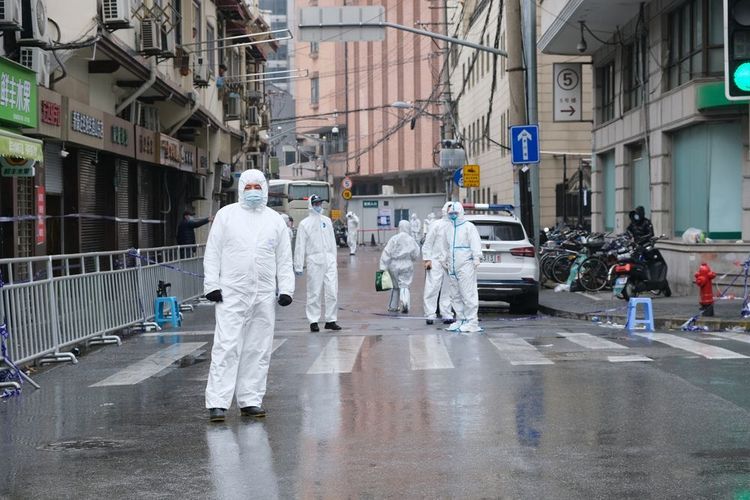
China's economic activity fell sharply in April as a spate of shutdowns across the country poses the biggest challenge to the country's growth prospects since Covid-19 emerged more than two years ago.
Retail sales, the main gauge of consumer activity in the country, which fell back in March, fell 11.1 percent year-on-year, while economists polled by Bloomberg had forecast a 6.6 percent fall.
Industrial production, which supported China's rapid economic recovery after the initial Covid shock in early 2020 and was expected to rise slightly despite recent restrictions, fell 2.9 percent.
The data is the clearest sign of the mounting economic toll China's crackdown on the coronavirus it is trying to combat through city-wide lockdowns, mass testing and quarantine centers. Eliminating infections is a priority for President Xi Jinping ahead of his candidacy for a third term this year.
The zero-Covid strategy has largely contained the virus over the past two years, but cases rose dramatically in 2022 following an outbreak of the highly contagious Omicron variant, most notably in Shanghai, which was quarantined in late March at.
Dozens of cities and hundreds of millions of people across China have been placed under full or partial lockdown in policies that are likely to have far-reaching implications for global supply chains.
The Chinese economy has already been under pressure from a liquidity crunch among heavily leveraged real estate developers and a general slowdown in the real estate market as home sales have slumped.
Over the weekend, the government cut the benchmark mortgage lending rate for first-time buyers from 4.6 percent to 4.4 percent, the latest in a series of easing measures aimed at supporting one of the country's key economic drivers.
"The government is under increasing pressure to introduce new stimulus to stabilize the economy," said Zhiwei Zhang, chief economist at Pinpoint Asset Management, adding that cutting mortgage rates is "a step in that direction."
However, the effectiveness of these measures depends on how the government will refine the zero-tolerance policy against the Omicron crisis," he said.
Last week, authorities said citizens would not be allowed to leave the country for "non-essential" reasons and introduced tougher measures in Shanghai nearly seven weeks after a city-wide lockdown was imposed. A city official said Monday that authorities intend to reopen Shanghai as much as possible from June 1.
China's gross domestic product rose 4.8 percent year-on-year in the first quarter. The government is targeting growth of 5.5 percent this year, the lowest official target in three decades. Economists have already lowered growth forecasts for the second quarter.
Analysts at Australian bank ANZ kept their growth target of 5 percent for 2022 on the assumption that the stimulus measures will "make up for the loss in economic activity over the past two months". However, they expressed pessimism about China's medium-term prospects as they expect supportive measures to be withdrawn next year.
"The implications of the Shanghai lockdown are far-reaching," they wrote. "The economic and technological integration with the rest of the world is in danger".
The unemployment rate examined was 6.1 percent in April, the highest level since February 2020.