
Can Coal Fuel the Next Wave of Electronic Advancements?
Harnessing Coal's Hidden Potential for Cutting-Edge Electronics
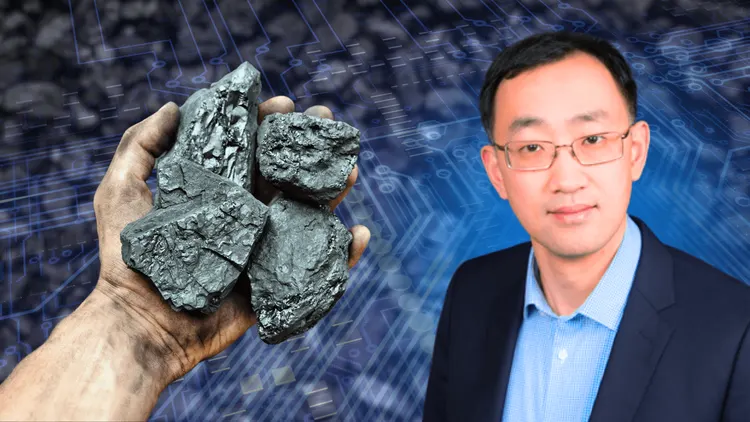
In a groundbreaking discovery, researchers from the US National Energy Technology Laboratory (NETL), the University of Illinois Urbana-Champaign, the Oak Ridge National Laboratory, and the Taiwan Semiconductor Manufacturing Company have unveiled a revolutionary approach to utilizing coal in cutting-edge electronic devices. Contrary to the conventional perception of coal as a bulky and dirty substance, their study, published in the journal Communications Engineering, reveals that it can be transformed into high-purity materials only a few atoms thick. These carbon dots, converted from coal char, can be interconnected to create atomically thin membranes with immense potential for applications in two-dimensional transistors and memristors, ushering in a new era of advanced electronics.
The Promise of Ultra-Thin Materials
In the relentless quest for smaller, faster, and more efficient electronics, the ultimate frontier lies in devices constructed from materials just one or two atoms thick. Devices cannot be smaller than this limit, and their diminutive scale often results in faster operation and significantly reduced energy consumption. While ultrathin semiconductors have been extensively investigated, an equally critical aspect is the development of atomically thin insulators – materials responsible for blocking electric currents – essential for building functional electronic devices like transistors and memristors.
Coal Char-Derived Carbon Layers as Insulators
Enter atomically thin layers of carbon with disordered atomic structures, which exhibit remarkable insulating properties for the construction of two-dimensional devices. The collaborative team of researchers has demonstrated that such carbon layers can be derived from carbon dots originating from coal char. The University of Illinois Urbana-Champaign group, led by Qing Cao, has pioneered the use of coal-derived carbon layers as the gate dielectric in two-dimensional transistors constructed on semimetal graphene or semiconductor molybdenum disulfide. The results are nothing short of astounding, achieving more than a twofold increase in device operating speed while consuming less energy.
A Unique Advantage
Unlike other atomically thin materials, coal-derived carbon layers possess a distinct advantage. They are amorphous, lacking a regular crystalline structure, and thus do not have boundaries between different crystalline regions that act as conduction pathways. This unique characteristic eliminates the problem of "leakage" where undesired electrical currents flow through the insulator, resulting in substantial additional power consumption during device operations. The absence of "dangling bonds" on the surface of these layers further contributes to their superior performance by avoiding the slowing down of mobile charges, thereby enhancing the transistor switching speed.
Empowering AI with Memristors
Beyond the realm of transistors, the research team has also explored the potential of coal-derived carbon layers in memristors – electronic components capable of both storing and operating on data, a breakthrough with profound implications for AI technology. These devices store and represent data by modulating a conductive filament formed through electrochemical reactions within the insulator. Here again, coal-derived carbon layers shine, enabling the rapid formation of such filaments with minimal energy consumption. The atomic-sized rings within these layers confine the filament, leading to enhanced data storage fidelity and reliability, ultimately empowering AI applications.
Bridging the Gap to Industrial-Scale Manufacturing
While the achievements thus far are remarkable, the journey is far from over. The next frontier is to demonstrate that these coal-derived carbon layers can be manufactured on a large scale. The semiconductor industry, including collaborators at Taiwan Semiconductor, has shown immense interest in the capabilities of two-dimensional devices. The University of Illinois Urbana-Champaign, in continued collaboration with NETL, is committed to developing a scalable fabrication process for coal-based carbon insulators, poised to revolutionize industrial settings and the electronics landscape in the coming years.
This groundbreaking research highlights the potential of an unlikely candidate, coal, to drive the future of advanced electronics. It signifies a monumental step towards creating smaller, more efficient, and energy-saving electronic devices, setting the stage for innovations that could shape the technological landscape for years to come.
Conclusion
In a surprising turn of events, coal, often associated with the past, has emerged as a key player in the future of advanced electronic devices. The ingenious transformation of coal char into atomically thin carbon layers has opened new doors for two-dimensional transistors and memristors. These breakthroughs hold immense promise for smaller, faster, and energy-efficient electronics, with the potential to revolutionize industries and empower artificial intelligence. As researchers continue to push the boundaries of what is possible, the integration of coal-derived carbon insulators into industrial processes could redefine the world of electronics as we know it.