Business leaders warn of the end of globalization
Executives and investors meet in Davos to discuss the growing economic and financial challenges
 Ibrahim Al-TarikOctober 5, 2026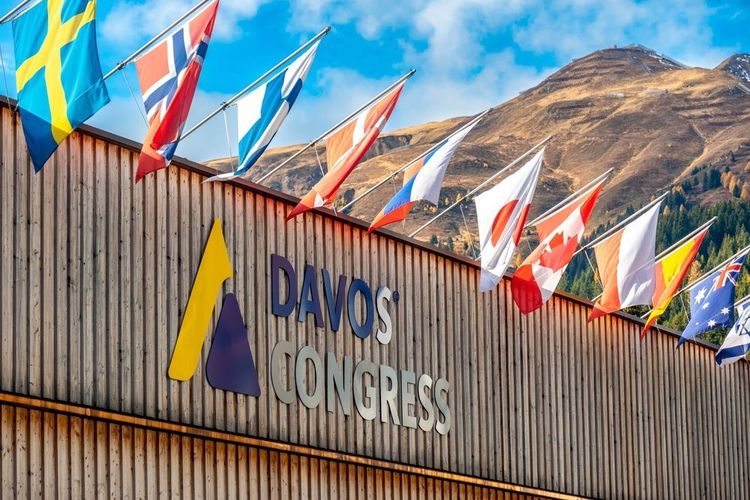
The three-decade era of globalization is threatening to reverse itself, according to business leaders and investors as leaders prepare to meet in Davos, Switzerland for the first time since the coronavirus pandemic began.
The geopolitical ramifications of the Russian war in Ukraine, combined with the disruption to global supply chains caused by the virus, the recent market turmoil and the rapidly deteriorating economic outlook, pose important strategic decisions for business leaders and investors, several have explained in interviews.
"US-China tensions have been exacerbated by the pandemic and Russia's invasion of Ukraine - all of these trends raising serious concerns about a world decoupling," said José Manuel Barroso, chairman of Goldman Sachs International and former president of the European Commission .
Onshoring, renationalization and regionalization are the latest trends for companies slowing the pace of globalization, he added: "[Globalization faces] frictions from nationalism, protectionism, nativism, chauvinism, if you will, or even sometimes xenophobia , and it's not clear to me who's going to win."
"According to the head of one of the largest private equity groups in the world, almost nobody has seen these conditions 'during their career as an investor.' Charles 'Chip' Kaye, chief executive officer of Warburg Pincus, said that geopolitics since the fall of the Berlin Wall was "on the fringes of our thinking" and that this has "given some oxygen to global growth"
.You don't optimize the economic outcome [as geopolitical tensions rise], you create friction in
the system.However, geopolitics is now the focus of investment decisions as the "rather strong tailwind for asset prices" created by years of falling inflation and low interest rates is coming to an end.
"You don't optimize the economic outcome, you create friction in the system," he said of the Increasing geopolitical tensions
In recent weeks there has been increasing talk of de-globalisation in companies spoken. According to data provider Sentieo, mentions of nearshoring, onshoring and reshoring in corporate earnings releases and investor conferences are the highest since at least 2005.
The topic will be high on the agenda for participants at the World Economic Forum in Davos this week. Since the last gathering in January 2020, global events have disrupted the supply chains that underpin the globalization that the WEF advocates.
"Companies say: I need to have my production closer to my customers," said Jonathan Gray, President of the Blackstone Group.
The head of Asia's largest pharmaceutical company said the era of globalization based on outsourcing functions to cut costs was over.
Christophe Weber, CEO of Takeda, headquartered in Tokyo, Japan, said drugmakers would continue to seek growth in international markets, particularly in China due to the great potential. However, the focus of the companies has shifted to a more sustainable form of globalization: "It's about decluttering the supply chain".
"It would be too short to say that globalization is over, but the globalization that people have in their heads is no longer true," said Weber. "The globalization that existed just a few years ago, trade without constraints and the idea that the world is flat is gone.
Takeda has implemented a dual sourcing policy to build more redundancy into its supply chains, Weber added: " I never thought [outsourcing] would work in the long term, but I think it's clear to everyone now."
A shift away from globalization is also taking place in the consumer goods industry, according to Rachid Mohamed Rachid, chairman of Valentino and Balmain.
Some luxury companies are rethinking their strategy, which usually relied heavily on global branding, selling to tourists and shipping goods all over the world: "The business has gone local... Shops in London, Paris or Milan are now more than earlier to the local population".
In the last two years, companies have started to "orient themselves locally and act locally instead of acting globally," he said on the busine FT's ss of Luxury conference earlier this week. "In different markets like the US, Europe, Asia and even smaller markets like Latin America and Africa, people are now looking locally and I'm sure there will be a lot of local business."
Dominik Asam, Airbus Chief Financial Officer, warned that this could have serious economic consequences.
"If a significant part of the decades-long gains in productivity brought about by globalization were to be reversed in a short space of time, it would push up inflation and lead to a large, protracted recession," he said. "Precisely because of this, I believe that the major economic powers will come to the conclusion that they must do everything in their power to avert such a devastating scenario.
Barroso made a less cooperative spirit at the political level within the G20 compared to the financial crisis in the in 2008. Political leaders should distinguish between serious geopolitical differences and the need to tackle challenges such as public health and climate change, he said.
Germany's central bank governor Joachim Nagel named deglobalization as one of the "three Ds", which would add to inflationary pressures alongside decarbonization and demographics.
The move away from globalization is being "fueled by geopolitical tensions and the desire to reduce economic dependencies," said the Bundesbank president after a meeting of G7 finance ministers and central bank governors in Koenigswinter earlier this week.