Trump Urges NATO Allies to Boost Defence Spending to 5% of GDP
Trump’s 5% NATO Defence Spending Proposal Sparks Global Debate
 Editorial Team (ET)October 5, 2026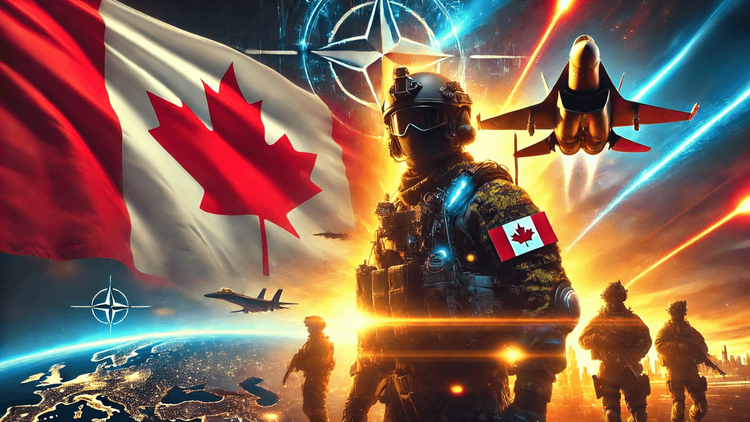
In a statement that sent ripples through the geopolitical landscape, U.S. President Donald Trump announced on Thursday that the United States will urge NATO member countries to boost their defence spending to 5% of GDP. Speaking virtually at the World Economic Forum in Davos, Switzerland, Trump characterized the proposed increase as long overdue, asserting that NATO’s previous targets were insufficient to meet modern security challenges.
“I’m going to ask all NATO nations to increase defence spending to 5 per cent of GDP, which is what it should have been years ago,” Trump declared. He also noted his previous efforts to ensure member nations met the existing 2% target, a standard many countries had failed to achieve prior to his first term.
Canada’s Defence Spending Shortfall
For Canada, this ambitious proposal would necessitate a dramatic surge in defence expenditures. Currently spending approximately 1.37% of GDP on defence, the Canadian government remains far below NATO's existing 2% benchmark. Prime Minister Justin Trudeau has pledged to meet the 2% target by 2032, but experts question whether this timeline aligns with NATO's evolving expectations.
David Perry, president of the Canadian Global Affairs Institute, estimates that meeting Trump’s proposed 5% target would cost Canada an additional $100 billion annually—a monumental leap for a country that has struggled to address its current defence obligations.
“We don’t have any plan to reach 2%,” Perry noted, “so any target beyond that is going to add another degree of complexity and difficulty.”
A New Era of NATO Spending?
Trump’s remarks underscore a broader shift within NATO, where defence spending is increasingly viewed as a baseline rather than an aspirational goal. In July 2024, then-NATO Secretary-General Jens Stoltenberg declared that the 2% target should now serve as the floor, not the ceiling, for defence contributions.
Poland, for example, has already exceeded the 2% benchmark, allocating 4.12% of its GDP to defence. However, no member nation currently reaches the 5% threshold proposed by Trump. Even the United States, with its massive military budget, spends roughly 3.38% of GDP on defence, according to NATO estimates.
Canada’s Strategic Dilemma
Canada’s reluctance to accelerate its defence spending could leave it vulnerable to mounting international criticism. Analysts suggest that Ottawa has underestimated the growing importance of defence contributions within NATO, particularly under Trump’s renewed leadership. “Canada has significantly misread this to be something that was a phenomenon of the first Trump administration,” Perry explained, highlighting the country’s lack of a concrete plan to meet the alliance’s standards.
Prime Minister Trudeau defended his government’s record, pointing to increased investments in Arctic security and northern defence. However, critics argue that these measures fall short of what is required to maintain Canada’s standing within NATO.
The Financial and Political Fallout
Raising defence spending to 5% of GDP would represent an unprecedented financial commitment for NATO member countries, including Canada. The political implications are equally significant, as governments face the challenge of balancing domestic priorities with international obligations.
For Canada, this could mean reallocating funds from other critical areas, such as healthcare and infrastructure, to meet NATO’s expectations. The prospect of such drastic budgetary changes is likely to ignite intense debate within Parliament and among the Canadian public.
Conclusion
Trump’s push for a 5% defence spending target signals a pivotal moment for NATO. While the proposal aims to bolster collective security in an increasingly volatile world, it also raises pressing questions about fiscal responsibility and global priorities.
For Canada, the road ahead is fraught with challenges. Meeting even the existing 2% target has proven elusive, and Trump’s latest proposal will only amplify the pressure on Ottawa to step up its defence commitments. Whether Canada can navigate this complex landscape remains to be seen, but one thing is certain: the stakes have never been higher.