
Trump Goes Heavy Metal: Rare Earths Take Center Stage in Landmark China Trade Deal
Trump Secures Rare Earth Deal With China in Landmark Trade Pact That Prioritizes Critical Minerals and Student Access
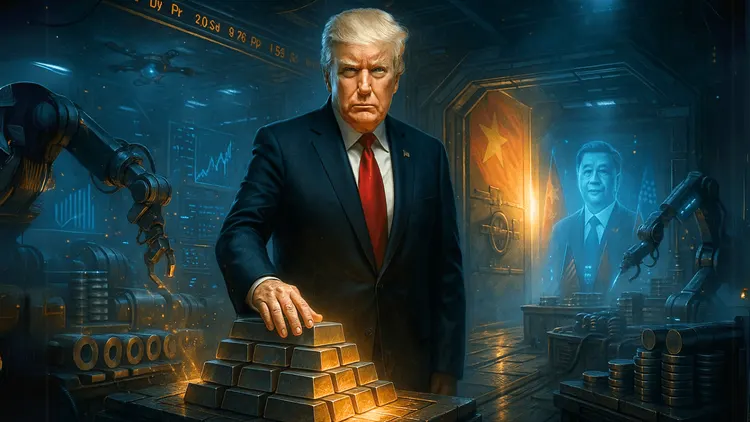
In a move that stunned global markets and recalibrated geopolitical expectations, former President Donald Trump declared that the United States has completed a sweeping trade framework with China. The linchpin of this deal? China’s agreement to supply rare earth elements and magnets “UP FRONT,” as Trump put it, in exchange for American concessions including visas for Chinese students and a pause on tightening tech export controls.
It’s a power play straight out of the Trump playbook—bold, disruptive, and strategically timed. The announcement followed intense negotiations in London, where U.S. and Chinese officials worked feverishly to finalize the long-promised Geneva agreement. While the ink hasn’t officially dried, Trump’s language was unequivocal: “OUR DEAL WITH CHINA IS DONE, SUBJECT TO FINAL APPROVAL WITH PRESIDENT XI AND ME.” That message, posted in his unmistakable all-caps style, sent a jolt through the market, briefly lifting U.S. futures before nervous traders pulled back on lingering doubts about the fine print.
Rare earths—those obscure yet essential elements used in everything from electric vehicles to guided missiles—have become the new oil in the 21st century. And China, which controls over 80% of global production, has long held that card close to its chest. Trump’s claim that Beijing will front-load its shipments of these materials into the U.S. adds a potent twist to the unfolding narrative of resource nationalism and supply chain decoupling.
But let’s not pretend this was a one-sided victory. In return, the U.S. will maintain tariffs at a reduced level, allowing China to retain a 10% baseline rate. Meanwhile, Washington scores a far steeper tariff position, totaling 55% when factoring in pre-existing levies, fentanyl-linked charges, and other trade tools dating back to Trump’s first term. Trump framed this as a win for American trade policy, declaring, “RELATIONSHIP IS EXCELLENT!”
Yet despite the bravado, questions hang in the air like summer smog in Beijing. Will Xi Jinping really allow shipments of rare earths to flow freely while still negotiating final terms? Will China receive its promised student access and export relaxations before delivering the goods? The sequencing of implementation remains a strategic gray zone, and both sides are playing chess—not checkers.
Adding to the drama is the fact that the Geneva accord, brokered in May, included a 90-day truce on new tariffs—essentially freezing a trade war that had grown dangerously close to boiling over. That clock is ticking, with the August deadline fast approaching. This London round of talks was supposed to cement the Geneva promises into a tangible, enforceable framework. Trump’s social media reveal beat official joint statements to the punch, once again placing him squarely at the center of a news cycle with global implications.
On the ground, U.S. Commerce Secretary Howard Lutnick reinforced the rare earth narrative, saying Beijing has committed to speeding up exports critical to both U.S. auto manufacturing and defense contracts. Yet Trump’s own words hint that America expects action first—China must deliver the minerals before receiving any tangible concessions.
Meanwhile, Xi’s team has remained tight-lipped. China’s Ministry of Commerce declined to comment on the specifics of the framework. Chief trade negotiator Li Chenggang offered only a measured hope that “progress will be conducive to building trust.” It’s classic diplomatic restraint in the face of Trump’s megaphone diplomacy.
There’s also the strategic lens to consider. With electric vehicles, advanced weapons systems, and clean tech all relying heavily on rare earths, the stakes of this deal go well beyond tariffs. Control over these resources is a key pillar of national security, and Trump’s messaging implies that Washington is taking back some leverage by locking in raw material access.
At the same time, the student visa component offers a glimpse into how soft diplomacy remains a bargaining chip. Trump, who has previously targeted Chinese influence on campuses, called the inclusion of Chinese students “GOOD WITH ME,” signaling a rare moment of policy pragmatism in his hardline approach.
Still, this deal doesn’t fix everything. It skirts around structural trade imbalances, China’s market dumping practices, and intellectual property concerns. It’s not a reset. It’s a recalibration. A transactional truce with geopolitical undertones.
But what it does achieve—at least on paper—is clarity in a murky trade war. Both sides get something tangible. The U.S. gets upfront access to rare earths. China gets to send students and hold on to lower tariff ceilings. The rhetoric is loud, but the chessboard hasn’t moved all that much.
The real test will be enforcement. Will China truly honor the upfront delivery of materials critical to American supply chains? Will the U.S. ease export controls without blowback from the defense community? Will this so-called “done” deal collapse under the weight of mutual mistrust and shifting political winds?
For now, Trump has once again made headlines by redefining the rules of diplomacy via digital decree. Whether this latest move cements a legacy of strategic deal-making or invites future conflict remains to be seen.
But one thing is certain: rare earths are no longer rare in importance. They’re the beating heart of modern industrial power. And this latest deal, if implemented, gives Washington a new line of supply, even if it comes with strings—and suspense.