
The Great Resource Grab: China’s Global Mining Takeover Gains Momentum
China’s billion-dollar mining spree is redrawing the global resource map as Western rivals scramble to catch up
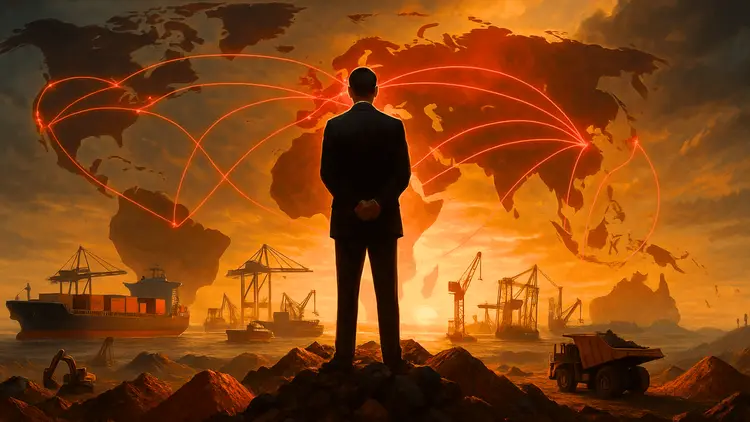
Chinese mining acquisitions are surging to heights not seen in over a decade as Beijing intensifies its global scramble for the raw materials that fuel the world’s economy. With geopolitical friction sharpening and resource nationalism on the rise, China’s mining companies are moving quickly, striking billion-dollar deals in regions many Western firms now view as too risky. The result is a global shift in the balance of mining power—one where Beijing is confidently rewriting the rules.
In 2024, China recorded more than ten overseas mining deals valued over $100 million each, a level of activity not witnessed since 2013. That momentum hasn’t slowed. This year alone, China’s Zijin Mining has committed $1.2 billion for a gold mine in Kazakhstan, while Baiyin Nonferrous Group finalized a $420 million deal for Brazil’s Mineração Vale Verde copper and gold mine. These transactions are not simply opportunistic acquisitions. They are part of a deliberate, well-financed campaign to secure the minerals critical to future industries.
China already dominates the processing of key materials like lithium, cobalt, and rare earths. What it doesn’t control—at least not yet—is the full pipeline of raw material supply. That’s changing. From the Andes to West Africa to Central Asia, Chinese firms are planting flags, often in jurisdictions Western miners are abandoning. In regions like Mali, where military-led governments are driving resource nationalism, Chinese companies have shown a willingness to accept lower returns or less favorable terms, if it means control of the asset. It’s a long game. And it’s working.
Part of this global push is fueled by necessity. China is the largest consumer of almost every industrial mineral on the planet. Whether it’s copper for power lines, lithium for EV batteries, or rare earths for advanced electronics, the nation’s appetite is immense. But it’s more than just demand. This is also about security. Chinese leadership sees critical minerals as strategic assets and, in a world increasingly divided by ideology and policy, securing these resources is seen as vital to national stability and industrial sovereignty.
Private equity players like Appian Capital Advisory have taken notice. The firm sold its Brazilian copper and gold mine to Baiyin Nonferrous in April, and founder Michael Scherb explained the urgency behind China’s deals. “They’re trying to get a lot of M&A done before geopolitics get difficult,” he said. That window may be closing fast. Nations like Canada, the United States, and Australia have already tightened the screws on Chinese investment in critical sectors, pushing China to look elsewhere.
Western governments are also scrambling to reduce their own reliance on Chinese supply chains. From Washington to Brussels, policymakers are funding alternative supply routes, striking strategic partnerships, and backing new domestic mines. But competing with China’s speed, financial firepower, and political flexibility is proving difficult. Where the West sees risk, China sees opportunity. And where Western firms are bogged down by ESG concerns, permitting delays, or investor scrutiny, Chinese firms often come armed with state-backed financing and a mandate to move fast.
The Belt and Road Initiative has long been China’s outward-facing economic strategy, building infrastructure and influence across the developing world. But while roads and railways may be modest in size, the resource deals are anything but. According to Christoph Nedopil at the Griffith Asia Institute, Chinese mining investments have remained large-scale and strategic, particularly in metals tied to China’s tech ambitions like battery materials and renewable energy inputs.
What’s striking is how much savvier Chinese dealmakers have become. Just a few years ago, the state would pick a preferred buyer and back them exclusively in overseas acquisitions. Today, Chinese companies are competing against each other for the same assets, showing a level of commercial aggression and internal competition that signals confidence. As Appian’s Scherb put it, “That implies they don’t fear losing to the West anymore.”
The shift is also visible in the jurisdictions where China is most active. In Africa, where coups and unstable regimes have scared away many Western mining giants, Chinese firms continue to ink deals. Lawyers working on the ground confirm that Chinese companies are actively courting governments, offering financing and operational support in exchange for long-term control. They’re often willing to absorb political risk and lower profits for strategic access.
This isn’t just about metals. It’s about leverage. Control of upstream mining assets gives Beijing significant influence over the global supply of everything from copper and nickel to graphite and manganese. These materials aren’t just industrial inputs—they are the building blocks of the green transition, from wind turbines to solar panels to electric vehicles. In the modern industrial economy, they are as strategic as oil was in the twentieth century.
The pace of Chinese acquisitions suggests a coordinated strategy to front-run the West, locking down future supply before new geopolitical barriers emerge. As more countries screen Chinese investment and impose export controls on strategic minerals, China’s push has become more urgent. The concern isn’t just about buying what’s available—it’s about buying it before anyone else can.
According to Standard Chartered’s global head of metals and mining Richard Horrocks-Taylor, dealmaking from Chinese miners is unlikely to slow. “In the next few years we are likely to continue to see a healthy level of dealmaking activity from Chinese mining companies,” he noted. That sentiment echoes across the banking sector, where analysts and advisors agree: China is not just buying mines. It’s buying the future.
Groups like CMOC, MMG, and Zijin Mining have emerged as some of the most active players in this landscape. Backed by state lenders, they are armed with billions in low-interest loans, ready to deploy at a moment’s notice. And while Western firms are still evaluating projects through a lens of IRR and shareholder returns, China is playing by a different playbook—one where resource security, industrial policy, and strategic influence outrank short-term profits.
John Meyer of SP Angel says it plainly. “Every time someone gets close to mining lithium, the Chinese come running with a cheque book.” That aggressive posture has spooked regulators in places like Canada, where Chinese bids are increasingly blocked on national security grounds. But rather than back off, Beijing is simply shifting its focus to countries less aligned with the U.S. and Europe, where political relationships can override market considerations.
This new era of global mining competition is setting up a high-stakes battle over control of the minerals that will shape the next century. Whether the world shifts to electric vehicles or scales up solar and wind, it will need copper, cobalt, nickel, and rare earths in volumes never seen before. Whoever controls the mines controls the market. And right now, China is winning that race.
The question for the rest of the world is no longer whether China will dominate mining—but whether anyone else can catch up. With geopolitical tensions rising, resource nationalism spreading, and the climate clock ticking, the stakes have never been higher.
Conclusion
China’s global mining spree is more than just a spree—it’s a calculated, state-backed race to secure the economic high ground of the 21st century. As the world tilts toward clean energy, digital infrastructure, and industrial reshoring, critical minerals have become the new oil. Beijing knows it. The West is waking up to it. But the pace and scale of China’s acquisitions mean it may be too late to stop what’s already in motion.