
Is this the next big disruption for the travel industry?
A new supersonic jet might help the sector to regain traction.
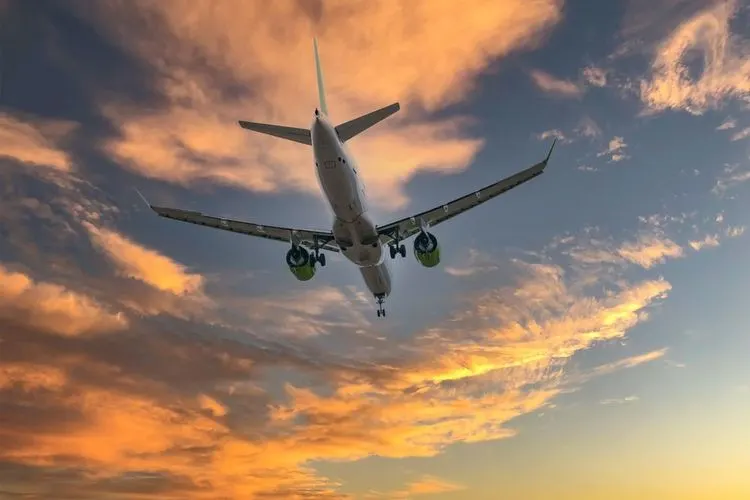
With air travel down 60% last year and losses of over $ 370 billion, the aviation industry is the sector hardest hit by the pandemic. And the suffering is not over yet. In the best-case scenario, the aviation industry will continue to suffer from the pandemic until 2023. The worst-case scenario is that it will only return to 2019 levels in three or four years. But all of that downtime has revived the idea of the supersonic jet, and ripe for drastic change, the airline industry could see a change beyond COVID-19. New types of commercial aircraft are about to be launched, aiming to get passengers "anywhere in the world in four hours for $ 100" at some point. Last year, aviation startup Boom Supersonic unveiled its supersonic Overture passenger jet, which is set to become the next generation of Concorde - and fixes the problems of the failed British-French airliner that was ridiculously expensive and ecologically disastrous. The now discontinued Concorde cost $ 12,000 for a return flight in the 1990s. It was a great idea with an absurdly poor execution. The next generation versions believe they will get it right. Some of the most visible startups working on supersonic and hypersonic projects include Boom Supersonic and Aerion from Florida. Boom Supersonic CEO Blake Scholl told CNN Travel that the company's long-term plan is to fly passengers to anywhere in the world for just $ 100. We wouldn't expect that price to be hit anytime soon, but it sounds good in a headline. Right now, Boom is targeting a price of $ 5,000 for a round-trip ticket from New York to London. That's five times the current tariffs, but still cheaper than the Concorde. This is not going to turn travel traffic upside down. Not yet. But at some point it could. Overture, the Mach 2.2 commercial airliner slated to air in 2026, will be 199 feet long, carry between 65 and 88 passengers, and fly twice as fast as the average airliner. It could then fly from New York to London in just 3.5 hours, which is currently a 7-hour flight. Boom says the company currently has $ 6 billion in pre-orders for Overture aircraft. Supersonic passenger jets will also address another problem that Concord failed to address: pollution. The global aviation industry produces around 2% of all man-made CO2 emissions, and of course the faster you fly, the more fuel you use. Here, too, the promises are far in the future. The next generation of supersonic aircraft will indeed cause more pollution than our existing commercial aircraft. Some studies assume that the new supersonic aircraft will use five to seven times as much fuel per passenger as today's aircraft. But the longer-term goal is to make them carbon neutral, even if the starting point is a little too "Concordian". According to CNN Travel's interview with Scholl, Boom Supersonic plans to eventually build a “carbon neutral” aircraft that runs on alternative fuels that use the same amount of carbon that is emitted in flight In other words, the plan is to suck carbon out of the atmosphere, liquefy it in jet fuel, and run the aircraft on it. Florida-based Aerion announced its plans in March for a Mach 4+ airliner called the Aerion AS3 that can carry 50 passengers. Production is scheduled to begin in 2023. In addition, NASA itself plans to test an X-59 QueSST prototype over major U.S. cities in 2023, and Spike Aerospace will begin testing next year and aim for commercial flights by 2028.