
Liz Truss resigns - battle for succession begins
Conservative Party sets high hurdle for PM race: Sunak first favourite
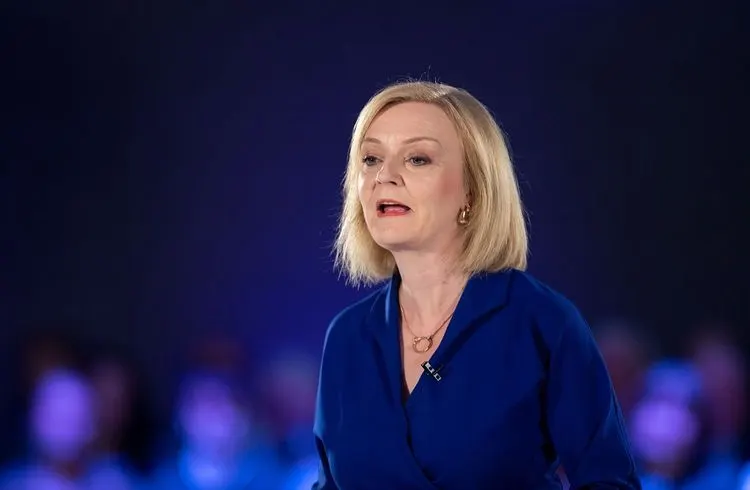
Rishi Sunak, former Chancellor, has emerged as the first favorite to be prime minister after Liz Truss ended a 44-day tenure marred by economic and political turmoil.
Truss' resignation made her the shortest-serving Prime Minister in British history. Her time in the Number 10 will be remembered for desolate economic policies and a catastrophic slump in Conservative Party support.
Sunak, who ran for Tory leadership against Truss in the summer, correctly predicted his rival would trigger a panic in markets if she pushed ahead with a massive package of debt-financed tax cuts.
"Rishi is the clear favourite," said a cabinet minister, and bookies agreed that the 42-year-old would become the country's first non-white prime minister.
But Sunak is disliked by some Tory MPs and party members for his role in Boris Johnson's ouster in July - his resignation as chancellor helped oust the then-Prime Minister - and he might find it hard to reconcile his deeply divided to reunite the party.
Johnson's supporters are urging him to return as the only possible "Stop Sunak" candidate. "Hope you've enjoyed your holiday boss," tweeted Tory MP James Duddridge, a former parliamentary adviser to Johnson. "Time to come back. A few issues at the office that need addressing."
Penny Mordaunt, who also ran for the Tory presidency in the summer, is considered Johnson's most dangerous challenger. Suella Braverman, who was forced to resign as Home Secretary on Wednesday, could also run.
But the rules of the Tory leadership contest appear to favor Sunak and his well-organized campaign team, who have been preparing for weeks to oust Truss.
To run in the election, a candidate needs the votes of 100 MPs by Monday, a number Johnson would struggle to match. Many colleagues are still angry about his behavior in office and his role in the "Partygate" affair.
Sunak has strong support among MPs. In the last vote in July, he received 137 votes compared to 113 votes for Truss and 105 for Mordaunt. Party members preferred Truss.
Sir Graham Brady, leader of the 1922-strong Tory MPs committee, said if just one candidate received enough support, the new leader would be confirmed on Monday when nominations close.
Otherwise the Chair will be elected by Friday 28th October. MPs will reduce the list to two candidates and party members will then vote online to determine the outcome.
Since there are 357 Conservative MPs, a maximum of three can vote. "We have set a high bar, but one that is achievable by any serious candidate who has a reasonable chance of success," said Brady.
Another innovation is that MPs will hold a non-binding vote on a list of two candidates later Monday to give party members guidance on which candidate is best suited to unite the fragmented faction. Many Tory MPs believe this will also favor Sunak.
Jeremy Hunt, the chancellor who has prepared a debt reduction plan for October 31, is a former Sunak supporter. Tory MPs believe Sunak would keep him at Treasury if he became Prime Minister.
Truss was urged to resign by senior party figures on Thursday, leaving demoralized Tory MPs facing the challenge of electing the UK's third prime minister within months.
In a brief statement at Downing Street, she said she had informed King Charles of her resignation as leader of the Conservatives so that a new party leader and prime minister could be elected next week.
During Truss's premiership, which only began on September 6, her economic strategy fell apart, her chancellor, Kwasi Kwarteng, was sacked and Braverman was forced to resign as home secretary on Wednesday. The opposition Labor Party has gained a lead of over 30 points in several recent polls.
Treasuries were largely calm on the news of Truss' resignation, having rallied ahead of her statement. The yield on the benchmark 10-year Gilt was up 0.03 percentage point to 3.9 percent in late afternoon London trading. The yield on the 30-year government bond fell 0.04 percentage point to 3.95 percent, up slightly. Sterling held onto most of its gains against the dollar, up 0.4 percent on the day at $1.126. It had previously climbed above $1,133.