
From Curbside to Clouds: Uber Taps Joby and Blade
Uber and Joby Aviation are teaming up to make Blade’s helicopter and seaplane flights just a tap away, signaling the next big leap in urban air mobility.
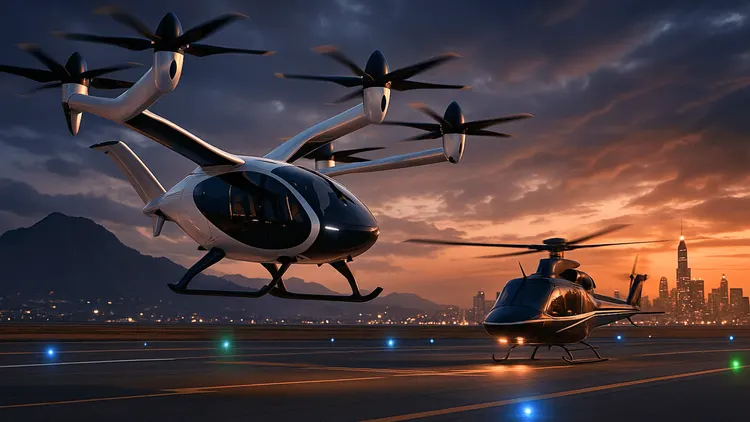
Joby Aviation’s stock has taken off on the back of a deal that signals the dawn of a new era in urban air travel. The California-based electric air taxi pioneer saw its shares jump more than five percent after announcing that Uber will soon integrate Blade’s helicopter and seaplane services into its app. For investors and commuters alike, this move is more than a headline—it is a glimpse of how the skies above our cities may soon be as busy as the roads below.
Starting next year, Blade’s helicopter and seaplane routes will be bookable directly through Uber, opening up quick trips across New York, the Hamptons, and parts of Southern Europe. The tie-in comes just weeks after Joby acquired Blade’s passenger operations, cementing its ambition to dominate short-haul air mobility. Uber, already the world’s largest ride-hailing platform, is effectively handing Joby the keys to its vast customer base.
The partnership between Uber and Joby is not new. The two companies have been aligned since 2019, when they began collaborating on electric vertical takeoff and landing technology. In 2021, Joby acquired Uber’s Elevate unit, a bold step that brought the dream of urban air mobility closer to reality. Now, with Blade folded into the Uber ecosystem, Joby has created a bridge from today’s helicopter commutes to tomorrow’s silent, emissions-free air taxis.
JoeBen Bevirt, Joby’s founder and CEO, called the integration the “natural next step” in a global partnership that could one day redefine how people think about distance and time. Uber President Andrew MacDonald echoed that sentiment, calling it the next generation of travel. Their shared vision is simple yet audacious: skip the traffic, rise above the gridlock, and make flight as easy to book as a car ride.
Joby’s progress on its electric aircraft makes that vision increasingly tangible. The company recently completed a milestone flight between two U.S. airports in FAA-controlled airspace, a significant step toward certification. Its first aircraft intended for full inspection testing is now in final assembly, with FAA evaluations expected to begin early next year. Commercial launch plans are set for Los Angeles and New York, markets notorious for congestion and tailor-made for fast, short-hop air taxis.
Major partners are lining up. Delta Air Lines has invested in the project, betting on a seamless integration between ground and air travel. Virgin Atlantic has expressed interest in bringing the model to London, and Toyota, a key investor, is poised to provide the industrial muscle to scale production. The momentum is unmistakable.
Investors are watching the market closely. Research suggests the global air taxi market could expand sevenfold by 2033, climbing from just over $1 billion to more than $7 billion in value. With a projected annual growth rate above 20 percent, this is not just a niche—it is a frontier industry. For Joby, being the first mover means the chance to define the sector before competitors catch up.
The inclusion of Blade’s current helicopter routes into Uber’s app is, at its core, a transitional step. These gas-powered flights are not the endgame but rather the on-ramp. They give customers a taste of aerial mobility today, while acclimating them to the idea of regular sky commutes tomorrow. Once Joby’s EVTOLs win certification, they can slot seamlessly into a platform that millions already trust and use every day.
What Uber once did for cars, Joby and Blade now aim to do for the skies. This is not simply about speed but about reshaping how urban populations experience their cities. A trip that takes an hour in gridlock could be reduced to minutes in the air. For business travelers, weekenders, and even daily commuters, the promise of reclaiming lost time is powerful.
The financial markets have responded in kind. Joby shares climbed sharply on the announcement, a sign that Wall Street believes the company is turning promise into execution. Uber, while only modestly impacted in trading, stands to gain by embedding itself in the next evolution of mobility, one that could transform its platform into more than just a ride-hailing service.
The journey toward quiet, zero-emission, on-demand flights is still in its early stages, but the direction is clear. With Blade’s operations now under Joby’s control and Uber providing the digital gateway, the path is set for a future where the line between road and sky disappears.
Conclusion
Joby’s rise is more than just a stock market story—it is a symbol of how quickly transportation is evolving. The integration of Blade into Uber’s app represents a bridge from today’s helicopter flights to tomorrow’s silent electric air taxis. Backed by global partners, advanced technology, and a surging market opportunity, Joby is not just chasing the dream of flying taxis—it is building the infrastructure to make them real. The age of urban air mobility is no longer a fantasy. It is boarding soon.